A bubbling cheese topping, sweet onions, and savory broth make French onion soup a comforting bowl with a little bistro character. The ingredients are simple; the onions just need some patient cooking.
This French onion soup recipe works for a quiet evening at home or as part of a dinner with guests. Toasted bread and melted Gruyère make it feel especially generous.
The guide below covers everything from slowly browning the onions to finishing the bowls with a golden, stretchy layer of cheese.
Follow each stage in sequence, using the cooking cues as well as the timings. You do not need restaurant equipment to make this familiar French-style soup at home.
💛 Why You’ll Fall in Love with This French Onion Soup
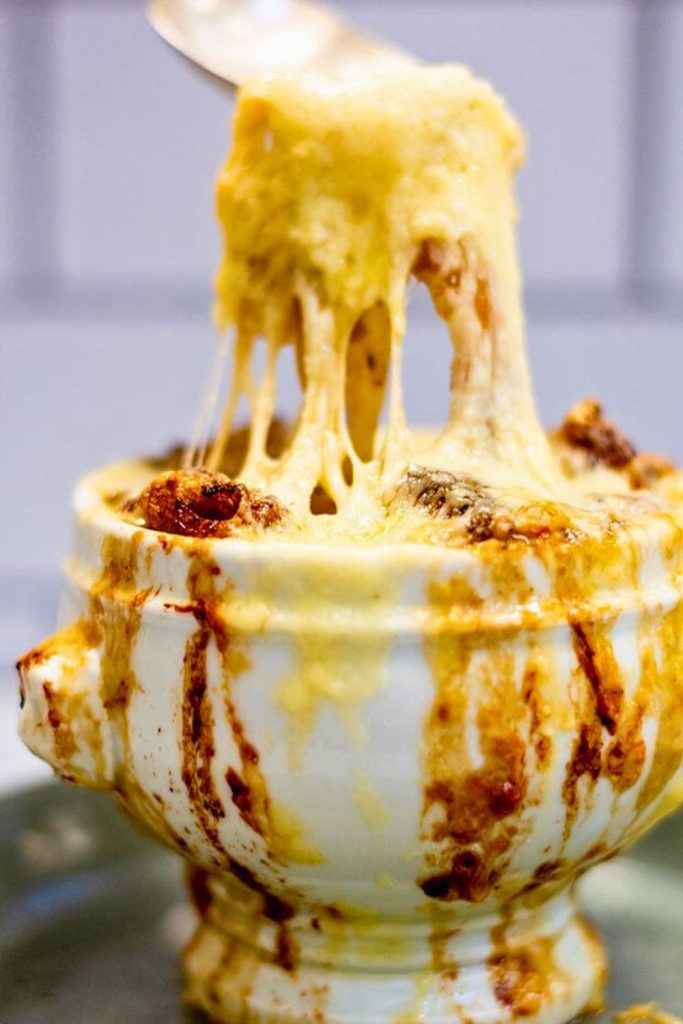
French onion soup can look more complicated than it is. Once you separate the process into caramelizing, simmering, and topping, the method becomes much easier to follow.
Here is what makes this version worth preparing:
1. Deep Flavor from a Patient Cook
Onions develop sweetness and color as they slowly brown. Dry sherry, herbs, and beef stock then turn that caramelized base into a savory soup with several layers of flavor.
2. A Familiar Shopping List
Onions, garlic, broth, bread, and cheese form the core of the recipe. A heavy pot and careful heat control are more important here than specialty tools or unusual ingredients.
3. A Golden Bread-and-Cheese Finish
The Gruyère-topped baguette slices give the soup its recognizable finish. Their undersides soften in the broth while the cheese bubbles and browns above.
4. A Convenient Make-Ahead Base
Cook the onion-and-broth mixture ahead, refrigerate it properly, and reheat it when needed. Add freshly toasted bread and cheese at serving time to keep the topping from becoming soggy.
5. Onions with a Softer, Sweeter Character
A long cook changes the onions from sharp and firm to soft, golden strands. Their natural sweetness becomes the central flavor rather than the bite of raw onion.
🛒 Ingredients You’ll Need for the Perfect French Onion Soup

Use the ingredient table below for the quantities and the role each ingredient plays.
| Ingredient | Amount | Why It Matters |
|---|---|---|
| Yellow onions | 3 pounds (6 large) | Slow cooking softens the onions and develops the soup’s sweet, caramelized base. |
| Olive oil | 2 tablespoons | Combines with butter for cooking the onions; use a little extra to brush the bread. |
| Unsalted butter | 2 tablespoons | Adds richness while the onions soften and brown. |
| Granulated sugar | ½ teaspoon | A small amount supports the sweetness; patience is still needed for browning. |
| Garlic cloves | 2 large, minced | Brief cooking releases its aroma without scorching it. |
| Dry sherry | ½ cup | Loosens browned bits from the pot and adds a dry, complex note. |
| Beef stock/broth | 8 cups | Forms the savory liquid base; check its salt level before seasoning. |
| Salt | 1 to 1½ teaspoons | Add according to the stock’s saltiness and your taste. |
| Black pepper | ½ teaspoon (or to taste) | Balances the sweet onions with a mild peppery edge. |
| Bay leaf | 1 whole | Adds a background herbal note; remove before serving. |
| Fresh thyme sprigs | 2–3 sprigs | Gently flavors the simmering broth; remove the stems. |
| Baguette slices | About 10–12 slices | Toasting makes a firm base for the melted cheese. |
| Gruyère cheese | 8 ounces, shredded | Provides a nutty flavor and a smooth, browned topping. |
👉 Optional finishing herbs: A little fresh thyme or chopped chives adds color and a fresh aroma.
🥣 How to Make French Onion Soup (Step-by-Step Guide)

Making French onion soup from scratch is mostly a matter of building one layer at a time. First come the onions, then the broth, and finally the bread and melted cheese.
These detailed steps explain what to look for at each stage so you can control the flavor and texture.
🔪 Step 1: Prep the Onions Like a Pro
Begin with 3 pounds of yellow onions, approximately six large ones. The weight is the more useful measure because onion sizes vary.
Since the onions form the foundation of the soup, prepare them evenly before you start cooking.
Trim the ends and peel off the dry skins. Remove any damaged or dried-out outer layers, then halve the onions so they sit securely on the cutting board.
Peel and trim the whole batch first, then slice them. Keeping the preparation in stages makes a large quantity of onions easier to manage.
Slice lengthwise, following the grain from the root end toward the stem end, to make long strips. Aim for reasonably even slices so they soften at a similar rate.
💧 If slicing makes your eyes water: Well-fitting kitchen onion goggles or swimming goggles can help shield your eyes from the irritating vapors.
🍳 Step 2: Caramelize the Onions (Don’t Rush This!)
Caramelizing is the slowest part of the recipe, and it is where much of the flavor develops.
Heat a large Dutch oven or heavy soup pot over medium heat with 2 tablespoons olive oil and 2 tablespoons unsalted butter. Let the butter melt.
Add the sliced onions. The pot may look very full initially, but their volume will fall considerably as they release moisture and soften.
Cook uncovered for about 10 minutes, stirring occasionally. When the onions begin to soften, stir in ½ teaspoon granulated sugar.
Continue cooking to develop color rather than stopping when the onions are merely soft.
Allow roughly another 30–45 minutes, uncovered, stirring more often as the onions brown. Reduce the heat if they catch or darken too quickly; aim for an even, deep golden color rather than burnt edges.
💡 Let the color guide you: Pan size, heat, and onion moisture affect the timing. Gentle, attentive cooking is more useful than trying to hit an exact minute.
🧄 Step 3: Add Garlic and Deglaze with Sherry
When the onions are deeply golden, add the garlic and wine to complete the base.
Stir in 2 large minced garlic cloves and cook for approximately 1 minute, until fragrant without letting the garlic scorch.
Pour in ½ cup dry sherry. Stir and scrape the bottom of the pot to release the browned onion bits into the liquid.
Simmer for about 3 minutes, until most of the sherry has reduced. The mixture should remain moist but no longer look flooded with wine.
🥂 Choose dry sherry: A sweet variety changes the balance and can make an already sweet onion base too sugary.
🍲 Step 4: Build the Broth
Now turn the concentrated onion mixture into soup.
Add 8 cups beef stock or broth. A well-flavored beef base gives this version its hearty character; other stocks will produce a different, lighter flavor.
Add 1 bay leaf, 2–3 fresh thyme sprigs, and ½ teaspoon black pepper. Start with up to 1 teaspoon salt, depending on the stock, and adjust toward the listed 1–1½ teaspoons only after tasting.
Bring the soup to a gentle boil, reduce the heat, and partially cover. Simmer for 30 minutes to let the onions, stock, and herbs come together.
🎯 Remove the bay leaf and thyme stems before filling the serving bowls. Taste the broth and make any final seasoning adjustment.
🥖 Step 5: Prepare the Toasty Crouton Topping
The bread topping needs enough crispness to hold the cheese before it meets the hot soup. Toasting it first makes that possible.
Cut a baguette into ½-inch slices, about 10–12 in total. Diagonal cuts give wider pieces if you prefer that shape for your bowls.
Arrange the slices in one layer on a baking sheet. Lightly brush both sides with extra olive oil so the surfaces toast evenly.
Bake in a preheated 400°F oven for 6–8 minutes, checking for crisp, lightly golden edges.
🧀 Step 6: Shred the Cheese
While the bread toasts, prepare the Gruyère for the topping.
Grate an 8-ounce block on the coarse side of a box grater. Loose shreds are easy to distribute across the soup and bread.
Gruyère brings a nutty, savory flavor and melts into a smooth layer. It complements the sweet onions without disappearing into the broth.
🧀 Grating tip: Freshly grated cheese generally melts more smoothly than shreds coated with anti-caking ingredients.
🥣 Step 7: Assemble the Bowls
With the soup hot and the topping ready, assemble the bowls just before broiling.
- Ladle the hot soup into bowls specifically rated for broiler use. Ordinary oven-safe dishes are not automatically safe under a broiler.
- Scatter a small portion of Gruyère directly over the broth for a little melted cheese beneath the bread.
- Float 1–2 toasted baguette slices on each bowl.
- Divide the remaining grated cheese over the bread, covering its surface generously.
💡 No broiler-safe bowls? Keep the soup in ordinary serving bowls and melt the cheese on the bread separately using a broiler-safe tray.
🔥 Step 8: Broil to Perfection
A brief spell under the broiler gives the topping its final color and texture.
Set the filled broiler-safe bowls on a suitable baking sheet. Broil for approximately 2–4 minutes, watching continuously because cheese can burn quickly.
Take the bowls out when you see:
- Cheese bubbling across the surface
- Golden patches around the edges
- A lightly crisp top with melted cheese underneath
For the separate-toast option:
- Distribute the cheese over the toasted baguette slices.
- Broil them on a broiler-safe baking sheet until melted and lightly browned.
- Use a spatula to transfer the cheese toasts onto the filled soup bowls.
🎉 Both methods give you the same contrast of warm broth, softened onions, and a browned cheese topping.
🌿 Step 9: Garnish & Serve with Style
A small garnish is all the soup needs before serving.
- Add a few fresh thyme leaves or a scattering of chopped chives.
- Leave the bowls briefly so the bread takes up a little broth. Remember that broiled bowls and their contents will still be very hot.
Serve carefully and allow each spoonful to cool enough to eat comfortably.
Each bite should bring together savory stock, sweet onion strands, and bread carrying a layer of melted cheese.
🥄 Serving tip: Break through the topping with your spoon, then scoop down into the onion broth to get all the layers together.
💡 5 Pro Tips for Making the Best French Onion Soup
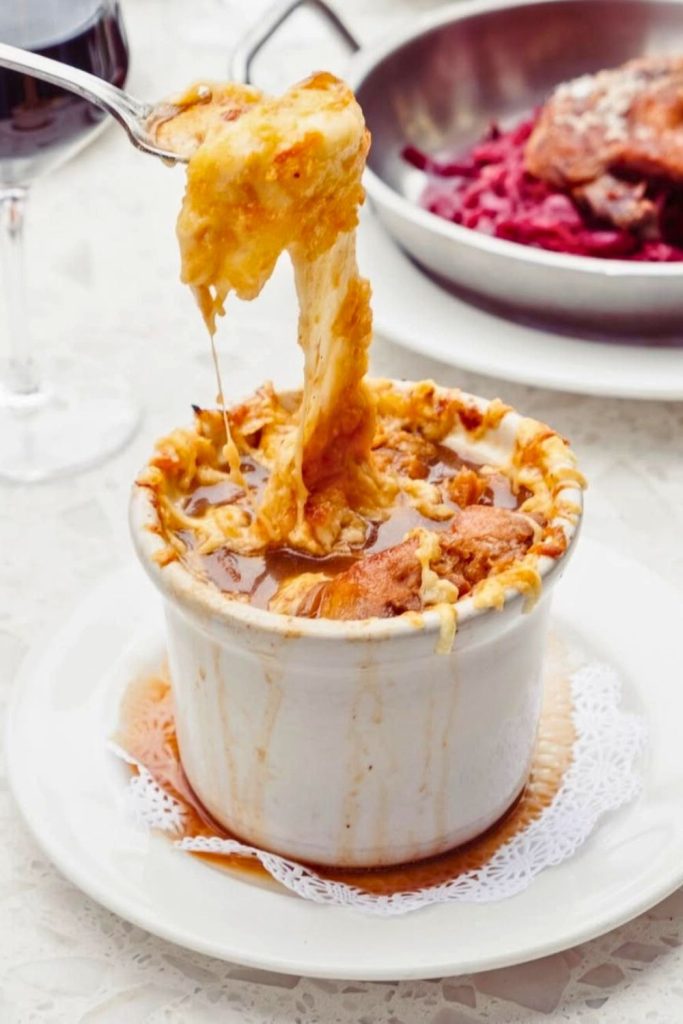
The following five pointers help you control the parts of French onion soup that make the biggest difference.
1. Give the Onions Enough Time
Turning the burner up too far can scorch the onions before they develop an even golden color. Keep stirring and lower the heat whenever the bottom begins to catch.
🕒 Plan for a slow start: This method allows 10 minutes to soften the onions and another 30–45 minutes to brown them. Color and texture matter more than an exact finishing time.
2. Keep the Wine Dry
Dry sherry adds complexity and a little acidity that balances the onions and beef stock. Let it reduce before adding the broth.
🍷 If sherry is unavailable, try a dry white wine such as Sauvignon Blanc. Avoid sweet wine unless you specifically want a sweeter soup.
3. Choose a Well-Flavored Beef Base
A good beef stock can add body, but a flavorful broth also works. Taste the product you use; richness, color, and salt content vary more by preparation than by the label alone.
🧠 Stock tip: Homemade stock is useful if you have some ready. Whether homemade or purchased, it should taste good before it goes into the pot.
4. Prepare the Soup Base Ahead
The onion and broth flavors can become more rounded after a night in the refrigerator. Leave the bread and cheese separate until you are ready to serve.
📦 Refrigerate the soup promptly in shallow containers and use within 3 days. Reheat on the stove to a boil and at least 165°F, then add freshly prepared cheese toasts.
5. Vary the Cheese Thoughtfully
Gruyère is a dependable choice for its nutty flavor and melting texture, but the topping can accommodate a blend of cheeses.
🧀 Mix in a little Parmesan for a sharper note or mozzarella for extra stretch. Keep enough flavorful melting cheese to complement the onion broth.
🔄 Variations of French Onion Soup to Try
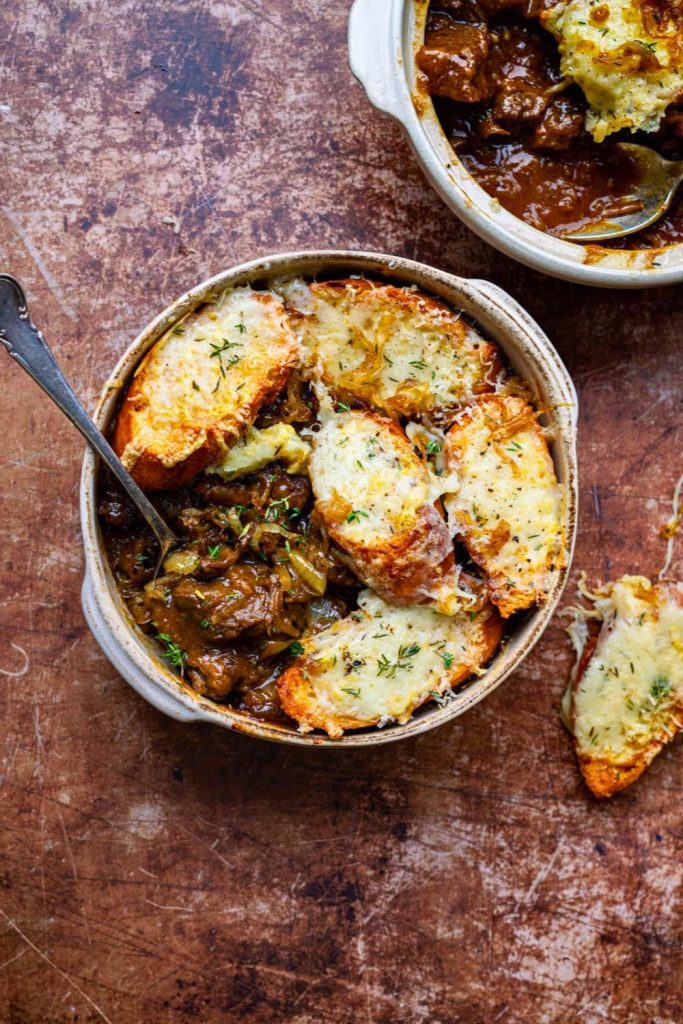
Once you are comfortable with the main method, these variations offer different ways to build on the same onion-soup foundation.
| Variation | What’s Different |
|---|---|
| Classic French Style | Follow the main combination of beef stock, dry sherry, and Gruyère. |
| Vegetarian French Onion Soup | Use a full-flavored vegetable stock and cheese made with vegetarian rennet; check other labels as needed. |
| White Wine Twist | Replace the sherry with an equal amount of dry white wine for a brighter note. |
| Red Wine & Shallots Version | Use red wine in place of sherry and include some thinly sliced shallots with the onions. |
| Cheddar & Ale Onion Soup | Pair sharp cheddar with a little dark ale for a pub-style variation. |
| Vegan French Onion Soup | Choose plant-based butter, vegan cheese, vegetable stock, and vegan bread; verify any wine is suitable too. |
| Mushroom Onion Soup | Stir in separately sautéed cremini or portobello mushrooms for an earthy addition. |
| Caramelized Leek Variation | Replace part of the onion quantity with well-cleaned, sliced leeks for a gentler onion flavor. |
💬 Final Thoughts: A Classic Worth Repeating
This French onion soup combines everyday ingredients with a patient cooking method. Sweet caramelized onions, savory stock, and cheese-covered toast make it a satisfying choice for both a simple dinner and a more leisurely meal.
The slicing and stirring take some effort, but they are the steps that give the soup its character. Let the onions develop fully before moving on.
Keep the method handy for an evening when you have time to cook the onions slowly. Prepare the broth ahead if that makes serving easier, then finish the cheese topping fresh.
French Onion Soup

🍽 You May Also Love:
If you would like more comforting dinner ideas, try one of these recipes next:
🥣 Hearty Chicken Noodle Soup for Fall Nights
Shredded chicken, noodles, and vegetables come together in a warm, familiar soup for a cool evening.
🍖 Easy Braised Beef Short Ribs for Sunday Dinner
Short ribs become tender during a slow braise in stout and savory onions, ideal for a relaxed weekend meal.
🍔 Best Sloppy Joes Recipe for Weeknight Dinners
A homemade savory-sweet sauce turns ground beef into the classic sandwich filling for an easy family dinner.

Dana Brooks is a home-cooking writer at Feastbears, where she shares easy family recipes, cozy dinners, quick desserts, and beginner-friendly kitchen tips. Her goal is to make everyday cooking feel simple, warm, and enjoyable for busy home cooks.