
A pot of vegetable beef soup is an easy answer when you want a warm, substantial meal with meat, vegetables, and savory broth.
This version combines browned beef with colorful vegetables, then simmers everything until the meat is tender and the broth tastes full and balanced.
The method suits a weeknight dinner, a family gathering, or make-ahead lunches.
Follow the six cooking steps to brown the beef, build the broth, add the vegetables in stages, and finish the soup without overcooking anything.
The tips, variations, and serving ideas that follow help you adjust the recipe while keeping its hearty character.
🥣 Why You’ll Love This Vegetable Beef Soup
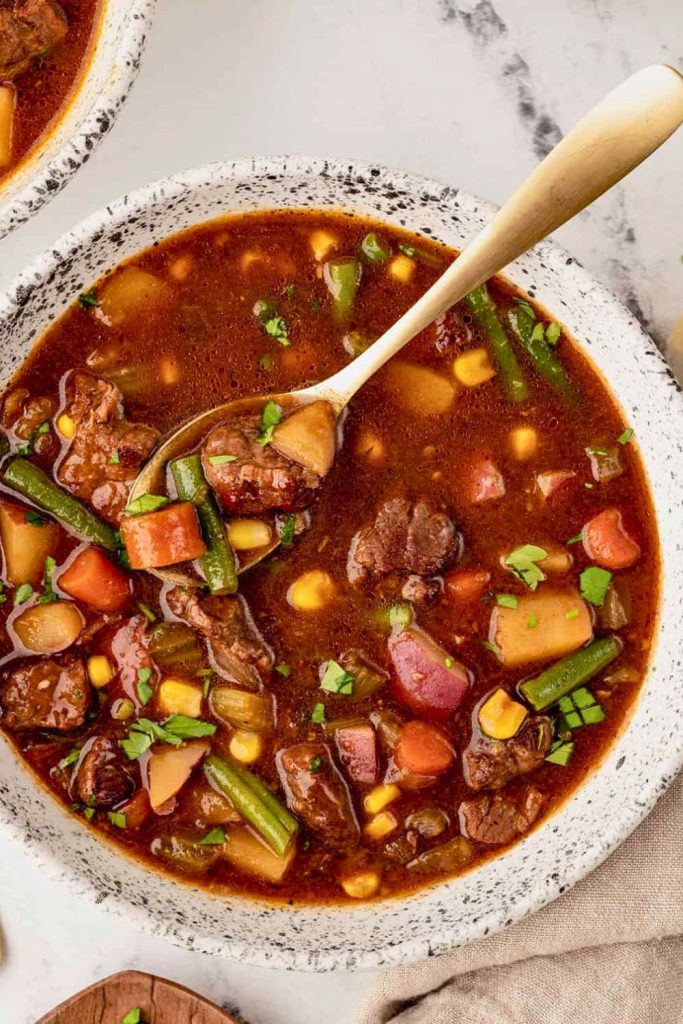
This recipe stands out for its tender beef, practical vegetable mix, and deep one-pot flavor:
- Beefy Goodness in Every Bite Browning the chuck roast creates a caramelized surface and starts building savory depth.
- The chuck roast is seared until golden, locking in incredible flavor.
- At this stage, as it simmers, the beef becomes melt-in-your-mouth tender, infusing the broth with richness.
- Loaded with Fresh Vegetables Carrots, celery, potatoes, green beans, peas, and corn supply varied color and texture.
- Carrots, celery, potatoes, green beans, peas, and corn bring a rainbow of color, texture, and nutrients.
- Here, each vegetable is added at just the right time so they stay vibrant, not mushy.
- A Deep, Savory Broth Tomato paste, diced tomatoes, beef broth, and herbs combine into a full-flavored base.
- The tomato paste, diced tomatoes, beef broth, and herb blend create a deep, savory base.
- During this step, bay leaves and lemon juice add brightness, balancing the richness of the beef.
- Simple but Satisfying The orderly method develops the taste of a long simmer through approachable steps.
- Even though it tastes like it simmered all day, this soup comes together with easy steps anyone can follow.
- It is made with everyday pantry ingredients so that you won’t need a fancy shopping trip.
- Useful for Many Occasions Serve it beside crusty bread for a relaxed Sunday dinner.
- Make it for a Sunday dinner with crusty bread.
- At this point, pack leftovers for work lunches; the flavors are even better the next day.
- At this stage, freeze extra portions for a quick and nourishing meal anytime.
🥕 Ingredients You’ll Need
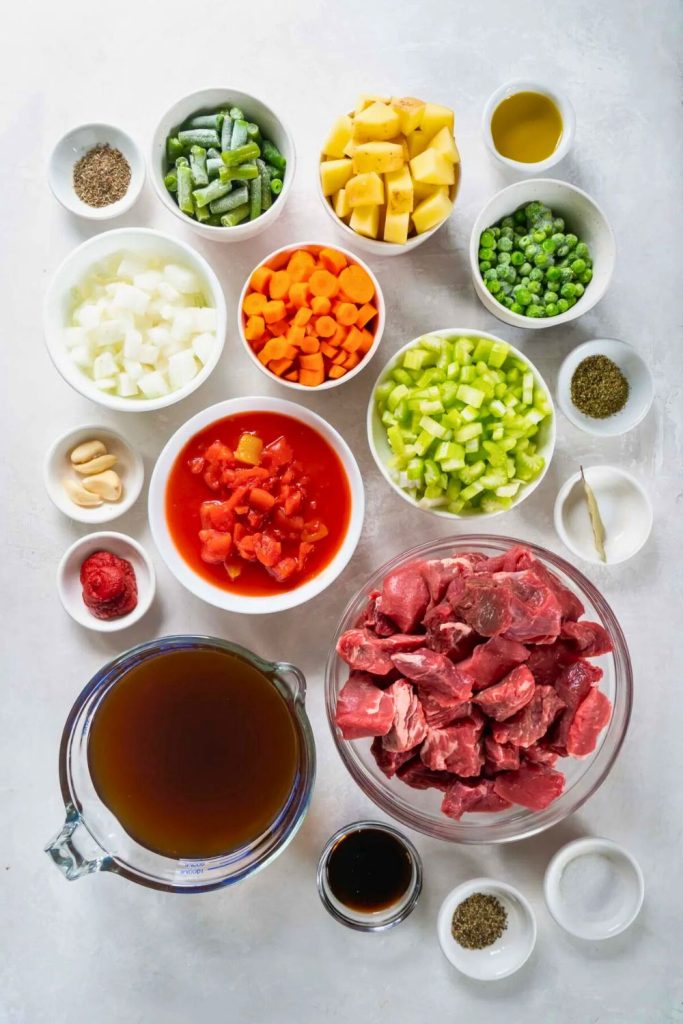
Remember that here’s a handy table that breaks down all the ingredients:
| Category | Ingredients | Details & Notes |
|---|---|---|
| Seasoning Mix | 2 tsp dried basil | Adds herby freshness |
| 1 ½ tsp dried thyme | Earthy and aromatic | |
| 1 ¼ tsp oregano | Classic Italian-style flavor | |
| 1 tsp crushed rosemary | Strong, pine-like notes | |
| 2 tsp sugar | 3 stalks of celery (diced) | |
| 1 tbsp beef bouillon | Deepens the savory broth | |
| Beef | 1 ½ lbs chuck roast | Cut into bite-sized cubes; tender when simmered |
| Salt & pepper | To season the beef before searing | |
| ¼ cup flour (for dusting) | Helps thicken soup & browns the beef | |
| Vegetables | 1 large onion (chopped) | Flavor base for the broth |
| 3 stalks celery (diced) | Adds crunch and aroma | |
| 3 carrots (sliced) | Sweetness and color | |
| 4 garlic cloves (minced) | Rich, savory flavor | |
| 3 oz tomato paste | Deep tomato richness | |
| 2 cans (14.5 oz each) petite diced tomatoes | Builds the broth | |
| 3–4 red potatoes (cubed) | Hold shape well; creamy texture | |
| 2 cups fresh green beans (chopped) | Bright and crisp | |
| 1 cup frozen peas | Added at the end for sweetness | |
| 1 ¾ cups corn kernels | Sweet, juicy, and hearty | |
| Liquids & Extras | 7 cups beef broth | Rich base for the soup |
| 2 bay leaves | Infuses subtle herbal flavor | |
| 3 tsp lemon juice | Lightens and balances flavors | |
| Cooking Oils | 3 tbsp olive oil (divided) | For searing beef and sautéing vegetables |
🥩 How to Make Vegetable Beef Soup in 6 Steps
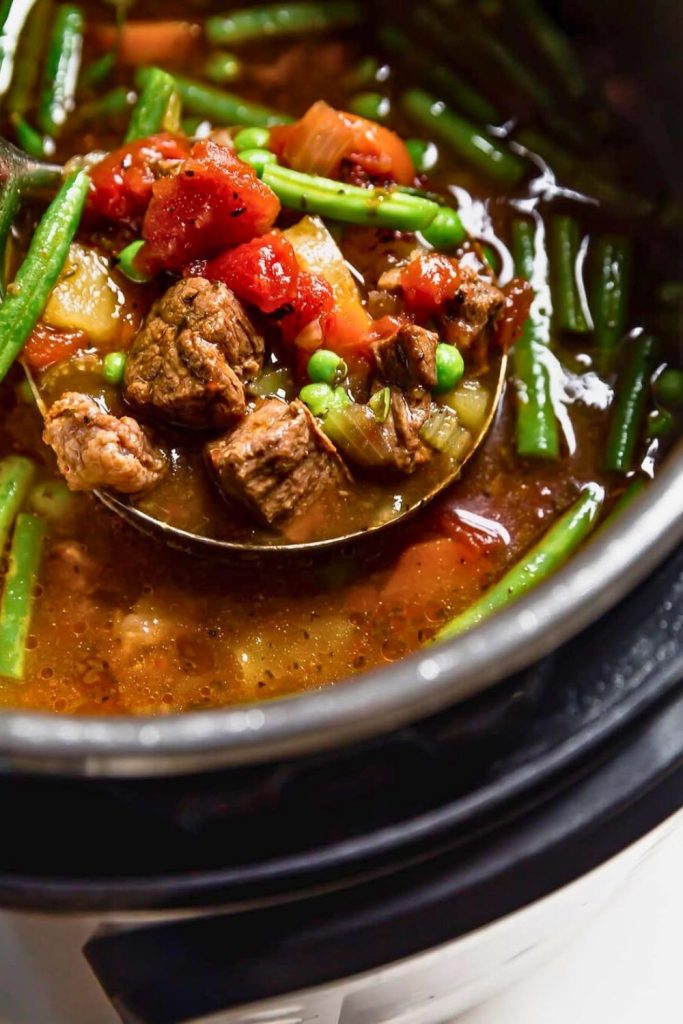
One useful detail: homemade vegetable beef soup is pure comfort in a bowl, but the secret lies in building layers of flavor step by step.
Rather than adding everything at once, the recipe builds flavor through a deliberate series of cooking stages.
From searing the beef to adding vegetables at an excellent time, this method guarantees a soup that is hearty, rich, and never mushy.
Consider the main reasons into six easy but essential steps.
🥩 Step 1: Prep and Season the Beef
A key point is that the foundation of this soup is the beef, so choosing the proper cut and prepping it properly is key.
- Choose your cut: Chuck roast is the classic choice because of its marbling. As it simmers, the fat renders down, leaving beef that is fork-tender and flavorful. If you may’t find chuck, stew meat, brisket, or even short ribs will work.
- Cut into bite-sized cubes: Make each piece about 1 inch. This size ensures even cooking and gives the soup easier to eat. You do not want oversized chunks that are awkward in the bowl.
- Season well: Sprinkle generously with salt and freshly ground black pepper. Do not be shy, seasoning now builds flavor into every layer of the soup.
- Coat the beef cubes lightly with flour. This thin layer encourages browning and helps form a caramelized crust during searing.
- Helps brown the beef when searing (creating that deep caramelized crust).
- Here, naturally thickens the broth as the soup simmers, giving you a rich texture instead of a watery one.
👉 Helpful tip: Use a resealable plastic bag or a large mixing bowl to coat the beef with flour. It keeps things tidy and ensures every piece is evenly covered.
As you work, note that at this stage, your beef should look slightly powdery, seasoned, and ready for the hot pan.
🔥 Step 2: Sear the Beef
Next comes the step that transforms your soup from “good” to incredible —the sear.
- During this step, heat 2 tablespoons of olive oil in a large Dutch oven or heavy-bottomed pot over medium-high heat. The oil should shimmer before adding the beef.
- At this point, add the beef in batches. Crowding the pan is the biggest mistake people make. When the beef pieces touch, they steam instead of browning. Space them out so each cube has contact with the hot surface.
- At this stage, sear for about 3 minutes per side until deep golden brown. Resist the urge to move them around too much; let them sit so the crust develops.
As the beef sears, you will notice delicious brown bits forming on the bottom of the pot. This is called the fond, and it is pure flavor. Do not worry about scraping it up yet; scrape it up in the next step.
👉 Helpful tip: If your beef releases too much moisture, raise the heat slightly. A hot pan is the secret to that caramelized crust.
After all batches are seared, set the beef aside on a plate, juices and all. Those juices will go back into the pot later to enrich the broth.
🧅 Step 3: Build the Flavor Base
With the beef out of the pot, it is time to work on the flavor foundation. This is where onions, carrots, celery, garlic, and tomato paste come together to create depth.
- Add a little more olive oil (about 1 tbsp) to the pot.
- Add 1 chopped onion and sauté until slightly translucent, about 1 minute. Listen for that sizzle; it means the onion is caramelizing, not steaming.
- Here, add diced celery and sliced carrots. Stir them around for about 3 minutes, letting them soften slightly.
- Add the garlic and tomato paste. Minced garlic (4 cloves) infuses warmth, while tomato paste (about 3 oz) brings extra body and color. Stir until the paste darkens a bit; it is a sign the sugars have caramelized.
Next, pour in:
- 2 cans of petite diced tomatoes
- During this step, the seasoning mix (basil, thyme, oregano, rosemary, sugar, beef bouillon)
- 2 bay leaves
- At this point, 3 teaspoons of lemon juice (a brightness booster that cuts through richness)
It also helps to remember: finally, add 7 cups of beef broth and return the seared beef (plus its juices) to the pot. Stir well, bring to a boil, then reduce the heat to low. Cover and let simmer for 1 hour.
👉 Pro tip: Do not rush this simmer. That hour allows the beef to tenderize and the flavors to meld. Your kitchen will smell amazing by this point!
🥔 Step 4: Add the Potatoes and Green Beans
After simmering for an hour, your beef should be on its way to tender perfection. Now it is time for hearty vegetables.
- Potatoes: Use red potatoes, cut into ½-inch cubes. Red potatoes hold their shape well in soup, unlike russets, which tend to fall apart and thicken the broth too much. Gold potatoes also work for a smooth consistency.
- At this stage, green beans: Fresh green beans, trimmed and cut into thirds. Their bright green color and crispness add freshness to the soup.
Remember that stir them in, sprinkle with a pinch of salt, and cover again. Let simmer for 30 minutes.
👉 Helpful tip: The timing here matters. If you added potatoes and beans at the beginning, they’d turn mushy. Adding them at the hour mark keeps them perfectly tender but not overcooked.
🌽 Step 5: Finish with Peas and Corn
For reliable results, now for the final touch: sweet, colorful vegetables that cook quickly.
- Here, peas: 1 cup frozen peas. They bring a burst of sweetness and a pop of green color.
- During this step, corn: 1 ¾ cups corn kernels. Juicy, slightly sweet, and perfect with beef.
Add them in and simmer for 15 minutes. That is just enough time to heat them through without losing their vibrant color and texture.
👉 Helpful tip: Always add quick-cooking vegetables like peas and corn at the end. If they simmer too long, they’ll turn dull and mushy, and the soup loses freshness.
🥄 Step 6: Taste, Adjust, and Serve
By this stage, your vegetable beef soup is ready. But just before serving, give it a taste and adjust:
- At this point, salt and pepper: Add more if needed. Broth flavors can vary, and your potatoes will soak up salt.
- Thickness: If the broth feels too thin, mash a few potato cubes in the pot or allow it to simmer uncovered for 5–10 minutes.
- At this stage, freshness: Add a squeeze of lemon juice or a sprinkle of fresh parsley to brighten the flavors.
For a balanced finish, now ladle the soup into big bowls, serve with crusty bread or dinner rolls, and enjoy. The beef will be tender, the vegetables perfectly cooked, and the broth hearty and satisfying.
✅ Tips for the Best Vegetable Beef Soup
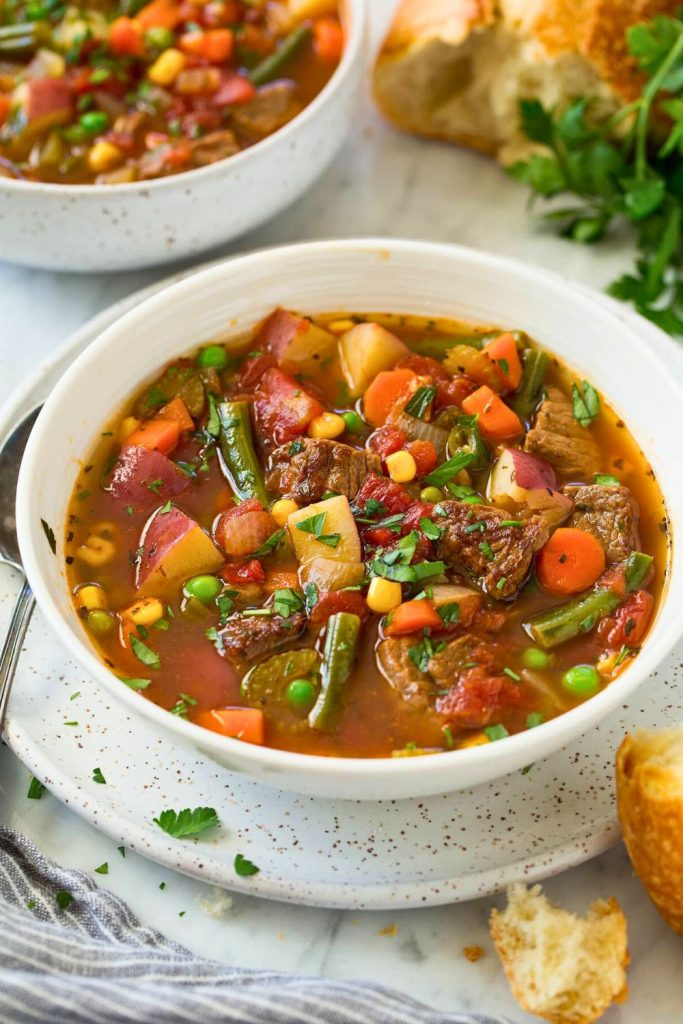
One useful detail: a good vegetable beef soup isn’t complicated, but these small details make all the difference between a decent pot of soup and one that has people asking for seconds.
🥘 Use a Dutch Oven
As you work, note that a Dutch oven is your best friend for this recipe. These heavy pots retain heat evenly, which means your beef sears beautifully and your soup simmers at a consistent temperature.
For the smoothest process, unlike thinner pots that create hot spots and risk burning, a Dutch oven ensures your beef cooks slowly and evenly, tenderizing without drying out.
👉 Do not have one? Use the heaviest pot you own. Just keep an eye on the heat since lighter pots can cause the soup to boil too aggressively.
🔥 Don’t Rush the Sear
The sear is where flavor begins. When you toss beef cubes into a hot pan, you are not just cooking them, you are creating that golden-brown crust that unlocks deep, caramelized flavor.
If you skip this or rush through it, you will miss out on one of the soup’s richest layers of taste.
👉 Think of searing as building a flavor “foundation.” Give each piece space, patience, and a few minutes per side. That sizzling sound? It is the start of something delicious.
🥔 Choose Your Potatoes Wisely
Not all potatoes behave the same way in soup:
- Here, red potatoes: Firm, waxy, and hold their shape well. Excellent for a cleaner broth.
- During this step, gold potatoes: Creamier but still hold their shape. They add richness without disintegrating.
- At this point, russet potatoes: High in starch. They break down easily and naturally thicken the soup.
It also helps to remember: 👉 Your choice depends on texture preference: clean and brothy (red/gold) vs. thicker and stew-like (russet).
⏳ Make It Ahead
This is the secret: soups almost always taste better the next day. As your vegetable beef soup sits overnight in the fridge, the flavors meld and deepen, giving you an even richer bowl.
👉 Plan ahead: make a big batch, refrigerate overnight, and reheat for the best results. This makes it well suited to meal prep or Sunday cooking for weekday dinners.
❄️ Freeze Leftovers
This soup is freezer-friendly and holds up beautifully for up to 3 months. Follow these directions:
- Let the soup cool completely.
- At this stage, transfer into airtight containers or freezer-safe bags (portioning into single servings helps).
- Label with the date.
When ready to enjoy, thaw overnight in the fridge and reheat on the stove. The vegetables stay intact, and the broth regains its depth with a low simmer.
🌟 Variations to Try
One of the best parts about vegetable beef soup is its flexibility. You may tweak it to fit your dietary needs, spice preferences, or whatever you have in the fridge.
🥦 Low-Carb Version
At this stage, skip the potatoes and swap in low-carb vegetables like zucchini, cauliflower, or even turnips. These keep the soup hearty but lighter, making it ideal for those cutting back on carbs.
🌶 Spicy Kick
Love a small amount heat? Add a dash of red pepper flakes, cayenne, or hot sauce. Start small and adjust so that the spice enhances, not overpowers, the comforting flavors.
👉 Helpful tip: Add spice when sautéing the vegetables so the flavors bloom in the oil.
🍗 Different Proteins
While chuck roast is the classic choice, you may change things up:
- Ground beef: Faster cooking and budget-friendly.
- Here, stew meat: Already pre-cut, though it may take longer to tenderize.
- Shredded chicken: A lighter version that is still hearty.
This soup is versatile enough to work with what you have on hand.
🌿 Herb Swap
When you’ve got fresh herbs in the fridge or garden, use them! Fresh thyme or rosemary adds brightness and a fragrant finish. Just remember: fresh herbs go in toward the end of cooking to keep their flavor vibrant.
🥖 Serving Ideas

Although the soup can stand alone as a meal, a thoughtfully chosen side makes the dinner feel more complete.
- During this step, crusty artisan bread: Perfect for dunking into the rich broth. The chewy texture balances the tender beef and vegetables.
- At this point, garlic breadsticks: Add a buttery, garlicky crunch alongside your soup.
- At this stage, a side salad with balsamic vinaigrette: Fresh greens provide a light, tangy contrast to the richness of the soup.
- Here, grilled cheese sandwich: A nostalgic, comfort-food pairing that makes the meal extra cozy.
👉 For a family dinner, set out a basket of bread, a salad, and a big pot of this soup. It is the kind of spread that invites everyone to linger at the table.
🍲 Final Thoughts
Tender beef, properly timed vegetables, and a savory broth make this soup a complete home-cooked meal.
The gentle simmer fills the kitchen with a rich aroma while turning simple ingredients into a dinner the whole family can share.
Enjoy it immediately, portion it for meal prep, or freeze some for a future meal; the soup is designed to reheat well.
Serve it with crusty bread or grilled cheese when you want a more substantial plate.
Hearty Vegetable Beef Soup

💡 Crave-Worthy Soups to Bookmark
For another comforting bowl, try one of these linked soup recipes:
- Quick Chicken Gnocchi Soup Recipe for Gen Z Foodies – Chicken, vegetables, creamy broth, and soft gnocchi make a cozy weeknight option.
- Healthy Cauliflower Soup Recipe for Millennials – Blended cauliflower and aromatic vegetables create a lighter, smooth soup.
- 15-Min Egg Drop Soup Recipe Perfect for Fall Nights – A quick broth-based soup finished with delicate egg ribbons.

Dana Brooks is a home-cooking writer at Feastbears, where she shares easy family recipes, cozy dinners, quick desserts, and beginner-friendly kitchen tips. Her goal is to make everyday cooking feel simple, warm, and enjoyable for busy home cooks.