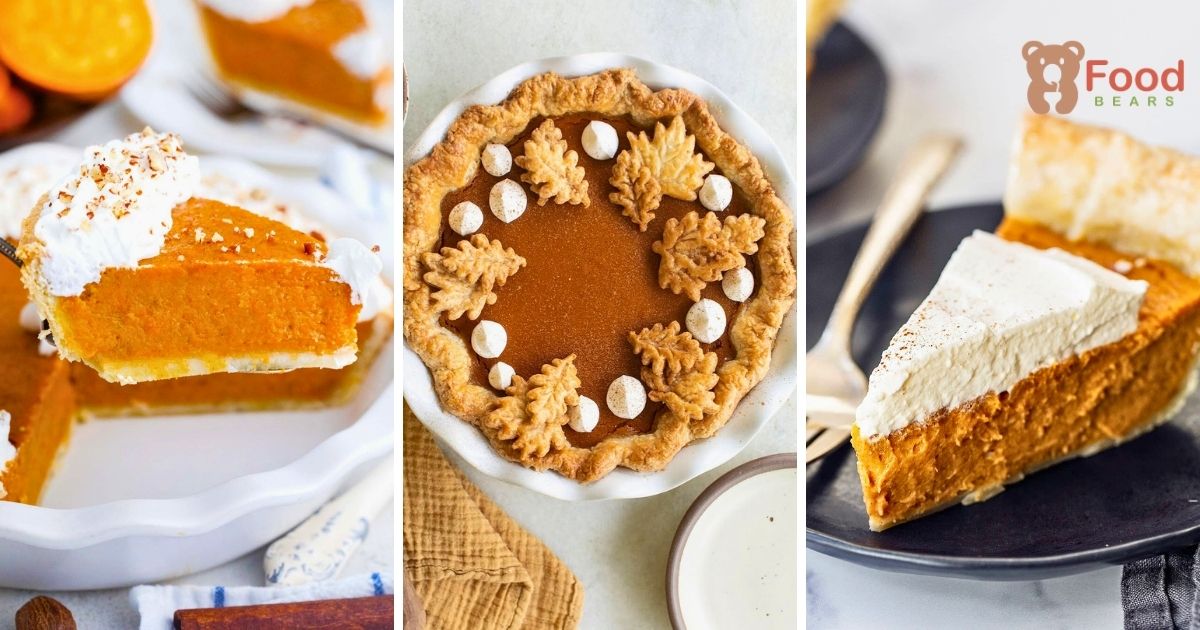
Homemade sweet potato pie combines a silky, warmly spiced filling with a crisp, buttery crust.
Compared with pumpkin pie, the filling has more natural body, deeper sweetness, and a distinctive earthy richness.
The original method below covers the entire process: roasting the potatoes, blind-baking the crust, mixing a smooth custard, and baking it in two temperature stages.
Set out the ingredients, allow enough cooling time, and work through the steps in order.
Why Sweet Potato Pie Deserves a Spot on Your Table
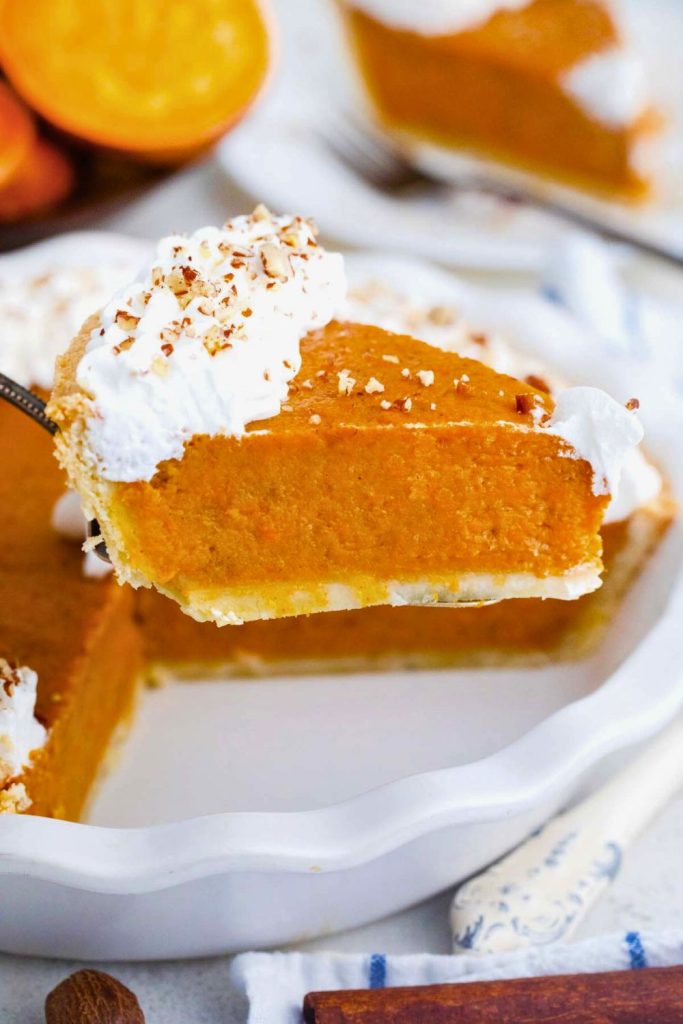
Sweet potato pie carries the comfort of a familiar dessert along with a strong place in Southern cooking traditions.
It has long been served at family gatherings and holiday tables, with recipes adapted and passed between generations.
Its history matters, but the pie also earns its place through flavor, texture, appearance, and a manageable baking process.
First comes Flavor. Roasted sweet potatoes develop a caramel-like sweetness that is rich without tasting one-dimensional.
Oven roasting concentrates that sweetness while preserving the earthy notes that keep the custard balanced.
Next is Texture. Sweet potatoes have more body than pumpkin purée, so the finished filling is creamy and substantial rather than watery.
Blending the roasted flesh until smooth produces a custard-like consistency that feels silky without becoming overly heavy.
The pie is also a reliable Crowd-pleaser for Thanksgiving, Christmas, and relaxed Sunday dinners.
Its golden-orange color looks festive, while cinnamon, ginger, and nutmeg give each slice familiar autumn warmth.
Finally, the recipe is Approachable for home bakers when the temperature changes and cooling periods are followed carefully.
Roast rather than boil the potatoes, blind-bake the crust, and mix the filling gently to protect its smooth consistency.
Ingredients You’ll Need

The table separates the crust and filling ingredients and includes practical notes for common substitutions.
| Category | Ingredient | Notes |
|---|---|---|
| Sweet Potatoes | 2 lbs sweet potatoes (about 2–3 medium-large) | Roasted, not boiled; yields ~2 ½ cups puree after baking. |
| Sugar | ¾ cup granulated sugar | Sweetens the custard; replace part with brown sugar for a deeper caramel note. |
| Eggs | 2 large, room temperature | Stabilizes the custard filling. |
| Milk | 1 cup evaporated milk | Whole milk, half-and-half, or coconut milk work as substitutes. |
| Vanilla | 2 teaspoons vanilla extract | Optional: replace with bourbon or dark rum for holiday flavor. |
| Spices | ¾ tsp ground cinnamon 1 tsp ground ginger ¼ tsp ground nutmeg | Freshly grated nutmeg adds better aroma; adjust spices to taste. |
| Salt | Pinch (optional) | Maintains sweetness and enhances flavor depth. |
| Crust | 1 pie crust (homemade butter crust recommended) | Store-bought is fine; blind-bake for crisp results. |
| Weights | Baking weights or dried beans | Needed for blind-baking crust. |
How to Make Sweet Potato Pie
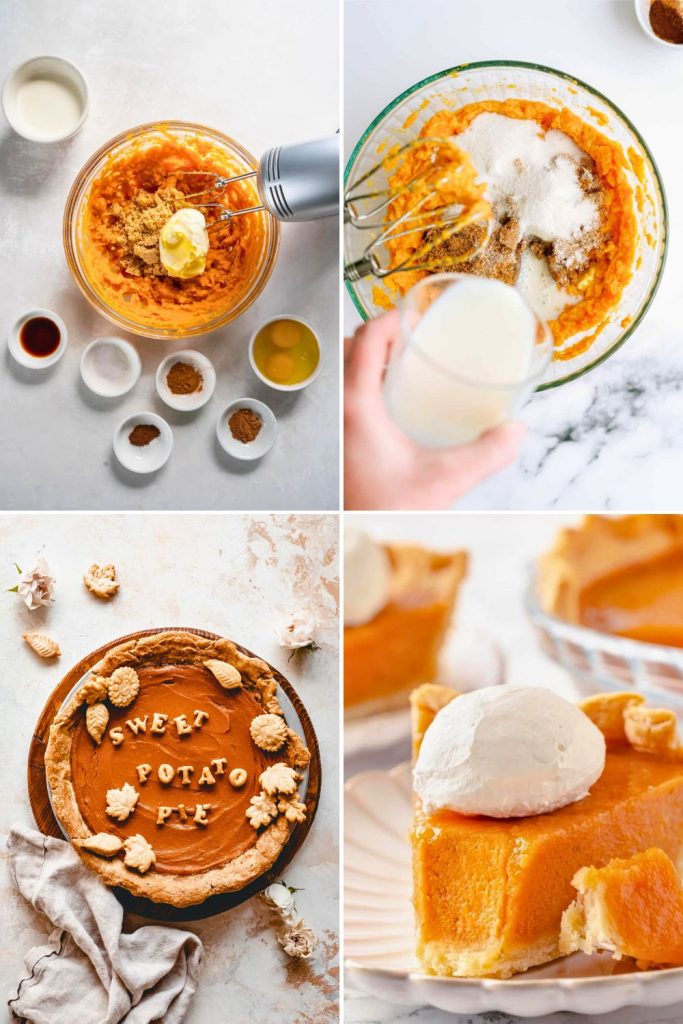
Sweet potato pie becomes much easier to manage when the work is divided into clear stages. Roasting, cooling, blending, blind-baking, filling, and final baking each have a specific purpose.
Treat each stage as support for the next: a crisp crust holds the filling, a smooth purée creates the custard, and complete cooling gives the pie clean slices.
Let us dive into each step of this pie-making journey.
Step 1: Bake the Sweet Potatoes
The filling begins with properly roasted sweet potatoes. Their moisture level and smoothness directly affect the finished custard.
Preheat the oven to 375°F (190°C). Pierce the sweet potatoes several times with a fork, then set them on a foil-lined baking sheet to catch any caramelized drips.
Bake for about One hour, or until they are fork-tender and practically collapsing in on themselves. You will know they are ready when the skin puckers and a knife slides in with no resistance.
Roasting tip: Do not boil the sweet potatoes for this pie. Boiling introduces water, while roasting concentrates their natural sugars and reduces excess moisture.
Cool the roasted sweet potatoes for at least 30 minutes. This protects your hands during peeling and allows the flesh to firm slightly for easier handling.
Step 2: Prepare the Pie Crust
While the sweet potatoes cool, it is time to set up the crust. This is the stage at which you can decide whether to opt for a classic homemade option or a convenience store-bought one.
- Butter crust made from scratch:: Crisp, flaky, and unbeatable in flavor. Rolling it out, folding, and crimping the edges may take extra effort, but the payoff is incredible.
- Store-bought crust: Perfect when you are short on time. Be sure to choose a quality brand with a rich, buttery flavor.
Whether the crust is homemade or purchased, blind-baking is important because it protects the bottom from becoming soggy beneath the custard.
Here is how to do it:
- Heat the oven to 425°F for homemade pastry or 400°F for a purchased crust.
- Cover the bottom and sides of the pastry with a fitted sheet of parchment.
- Add pie weights or dried beans to hold the crust flat and limit shrinkage.
- Blind-bake for 20 minutes, shielding the rim with foil if it colors too quickly.
When blind-baking is complete, lift out the parchment and weights carefully. The crust should look lightly golden and feel dry on the surface.
This short head start helps the crust stay crisp after the sweet potato filling is added.
Step 3: Peel and Puree the Sweet Potatoes
By now, your roasted sweet potatoes should be cool enough to handle. The skin will peel right off, almost like paper slipping away from a present. It is oddly satisfying.
Discard any scorched or overly caramelized bits, though do not be shy about sneaking a taste; they are delicious. Chop the flesh lightly to break it down into smaller pieces.
Transfer the peeled sweet potato flesh to a food processor. Pulse until completely smooth and no visible fibers remain.
Measure about 2½ cups of purée for a standard 9-inch pie.
Step 4: Mix the Filling
Place the smooth sweet potato purée in a large mixing bowl and add the remaining filling ingredients:
- ¾ cup sugar
- 2 large eggs (room temperature)
- 1 cup evaporated milk
- 2 teaspoons vanilla extract
- ¾ teaspoon cinnamon
- 1 teaspoon ground ginger
- ¼ teaspoon nutmeg
- A pinch of salt (optional, but recommended)
Start whisking everything together until uniform. But here is the key: Whisk slowly and gently. You want the ingredients blended, not aerated. Introducing too much air creates bubbles, which expand during baking and can cause cracks or a dry texture.
Mixing tip: Whisk only until the custard is uniform. Excess beating adds air and can make the baked surface less smooth.
At this stage, the filling should smell warmly spiced and have an even golden-orange color.
Step 5: Assemble the Pie
With your crust blind-baked and filling ready, it is time to bring the two together.
Pour the filling into the warm crust, smooth the surface with a spatula, and gently shake the pie dish to settle the custard evenly.
The assembled pie is now ready for its two-temperature bake.
Step 6: Bake to Perfection
Begin with high heat to set the crust and custard, then lower the temperature for gentle, even baking.
- Bake first at 400°F for 15 minutes so the crust and outer custard begin to set.
- Lower the oven to 350°F and continue baking for approximately 40 minutes.
You will know the pie is done when the edges are firm, the top is slightly puffed, and the center still has a subtle wobble. That jiggle is your friend; it means the custard will finish setting as it cools.
Avoid baking until the center is completely rigid. Removing the pie while it retains a slight central wobble helps preserve a creamy texture.
Step 7: Cool and Serve
Patience is hard when your kitchen smells this good, but cooling is essential. Place the pie on a wire rack and let it cool to room temperature at room temperature. This allows the custard to firm up and prevents slices from collapsing.
After cooling, garnish with whipped cream, cinnamon, toasted nuts, or caramel if desired, then cut with a clean sharp knife.
Sweet potato pie is versatile; it is stunning as a holiday dessert, but just as comforting with a cup of coffee on a quiet afternoon. Each bite is silky, spiced, and perfectly sweet, reminding you why homemade pies will always outshine store-bought.
5 Tips for the Silkiest Sweet Potato Pie
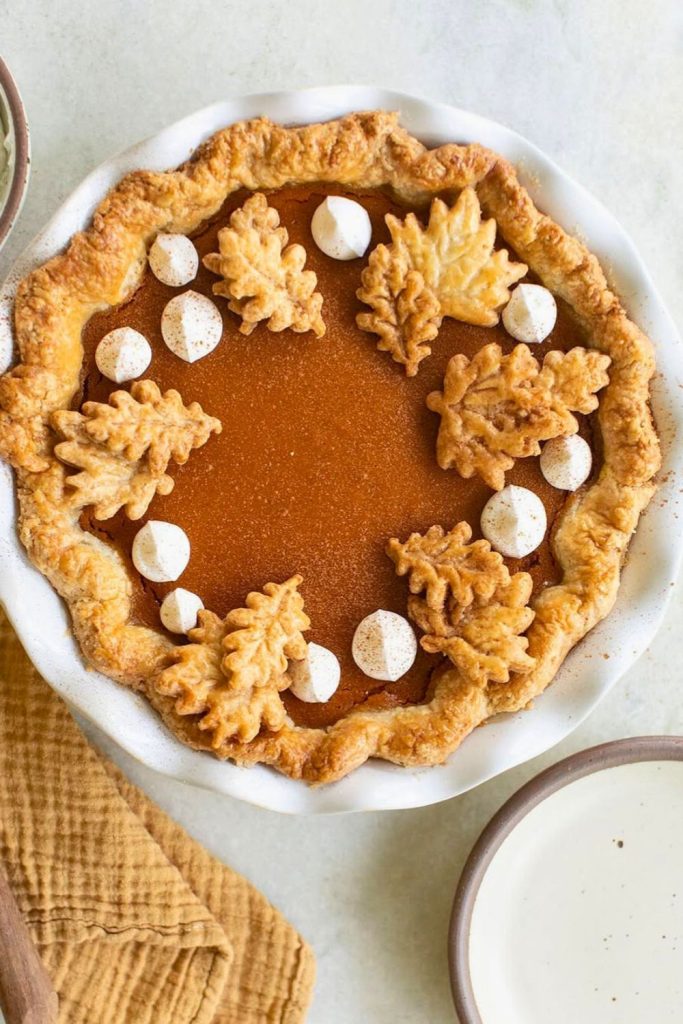
The following five tips focus on the details that produce a smooth filling, crisp crust, and clean slices.
1. Roast, Do not Boil
It is tempting to boil sweet potatoes to save time, but boiling adds water, which dilutes flavor and makes the filling soggy. Roasting concentrates sweetness, caramelizes natural sugars, and keeps the texture firm. Think of it as coaxing out the potato’s true character.
2. Use a Food Processor
Sweet potato flesh contains fibers that remain noticeable if it is only roughly mashed. A food processor creates the custard-like consistency this pie needs.
3. Whisk Gently, Not Aggressively
Whisking introduces air, and air creates bubbles. When baked, those bubbles expand, causing the custard to crack and lose creaminess. Instead, fold and whisk slowly, blend ingredients until uniform, but do not whip them. Treat it more like stirring honey into tea, not beating egg whites.
4. Blind-Bake the Crust
There is nothing worse than a soggy bottom. Blind-baking your crust (pre-baking with weights) ensures a crisp base that withstands the custard filling. Without this stage, all your hard work risks sinking into a mushy shell.
5. Pull It Out with a Jiggle
The filling should wobble slightly in the center when you remove it from the oven. Overbaking creates cracks and a dry texture. Underbaking means runny custard. That gentle jiggle? It is the sweet spot, literally.
Flavor Variations You’ll Love
Sweet potato pie is classic, but there is plenty of room to make it your own. A few simple swaps or additions can bring entirely new dimensions to the flavor.
| Variation | How to Do It | Why You’ll Love It |
|---|---|---|
| Brown Sugar Swap | Substitute all or part of the white sugar with brown sugar. | Contributes rich caramel undertones and depth of flavor. |
| Bourbon Twist | Blend in 1–2 tablespoons of bourbon to the filling. | Ideal for holidays, it layers in warmth and sophistication (the alcohol bakes off). |
| Coconut Cream Pie | Substitute evaporated milk with coconut milk. | Produces a tropical, dairy-free twist with natural sweetness. |
| Nutty Crunch | Scatter chopped pecans or walnuts on top before baking. | Contributes texture, crunch, and a toasty nut flavor. |
| Spiced Up | Blend in cloves, allspice, or cardamom to the spice mix. | Enhances the warmth of cinnamon, ginger, and nutmeg with bold complexity. |
| Chocolate Lovers | Mix ½ cup melted dark chocolate into the filling. | Produces a decadent, rich chocolate-sweet potato fusion. |
| Maple Syrup Magic | Substitute part of the sugar with pure maple syrup. | Delivers a subtle, earthy sweetness and pairs beautifully with fall spices. |
Serving Suggestions

Sweet potato pie can be served simply with coffee or dressed for a holiday dessert table. These options complement its warm spices without hiding them:
- Whipped cream finish:: A dollop of lightly sweetened whipped cream balances the pie’s richness. Add a sprinkle of cinnamon or nutmeg for garnish.
- Caramel Drizzle: A thin ribbon of caramel sauce adds indulgence and visual appeal. Well suited to dinner parties.
- Frozen pairing:: Vanilla is classic, but butter pecan or cinnamon ice cream takes it to the next level.
- Powdered-sugar finish:: A light shake of powdered sugar adds elegance without extra effort.
- Holiday dessert spread:: Serve alongside pecan pie, pumpkin pie, or apple pie for a festive dessert trio.
For a casual dessert, pair a warm slice with coffee or tea. For a celebration, use a cake stand and one restrained garnish.
Sweet Potato Pie vs. Pumpkin Pie
Although pumpkin and sweet potato pies share a custard structure and autumn spices, their natural flavor, moisture, texture, and culinary traditions differ.
- Flavor difference:: Pumpkin pie is mild, relying heavily on spices. Sweet potato pie is naturally sweeter, richer, and has an earthy, caramel-like depth.
- Texture difference:: Pumpkin can be watery, requiring more eggs and stabilizers. Sweet potato pie is denser and creamier, with a silky mouthfeel.
- Color difference:: Pumpkin pie is a muted orange, while sweet potato pie boasts a vibrant golden-orange that feels festive and inviting.
- Cultural Roots: Pumpkin pie is a beloved treat celebrated nationwide, especially in New England. Sweet potato pie has deep ties to the American South and African American culinary traditions, making it more than food; it is a heritage.
Both pies belong on a holiday table. Sweet potato pie is the stronger choice when you want a denser custard, deeper natural sweetness, and a pronounced roasted flavor.
Final Thoughts
Sweet potato pie brings together roasted vegetable sweetness, a creamy custard texture, warm spices, and a crisp pastry shell.
Roasting the potatoes and blending them thoroughly are the two details that give the filling its deepest flavor and smoothest finish.
Serve the pie for Thanksgiving, Christmas, a Sunday dinner, or any gathering that calls for a traditional Southern-inspired dessert.
Allow it to cool fully before slicing, then add whipped cream, toasted nuts, or another simple topping if desired.
Silky Southern Sweet Potato Pie

More Comforts from the Kitchen
Build out the rest of the meal with these linked FeastBears recipes:
- Soft and Fluffy Homemade Dinner Rolls – Buttery pull-apart rolls that belong beside a holiday meal.
- Easy Thanksgiving Stuffing Recipes – Classic and creative stuffing ideas for completing a festive spread.
- Quick Green Bean Recipes – Fresh vegetable sides that balance the richness of the pie and main course.
Together, these recipes cover bread, stuffing, vegetables, and dessert for a more complete holiday menu.

Dana Brooks is a home-cooking writer at Feastbears, where she shares easy family recipes, cozy dinners, quick desserts, and beginner-friendly kitchen tips. Her goal is to make everyday cooking feel simple, warm, and enjoyable for busy home cooks.