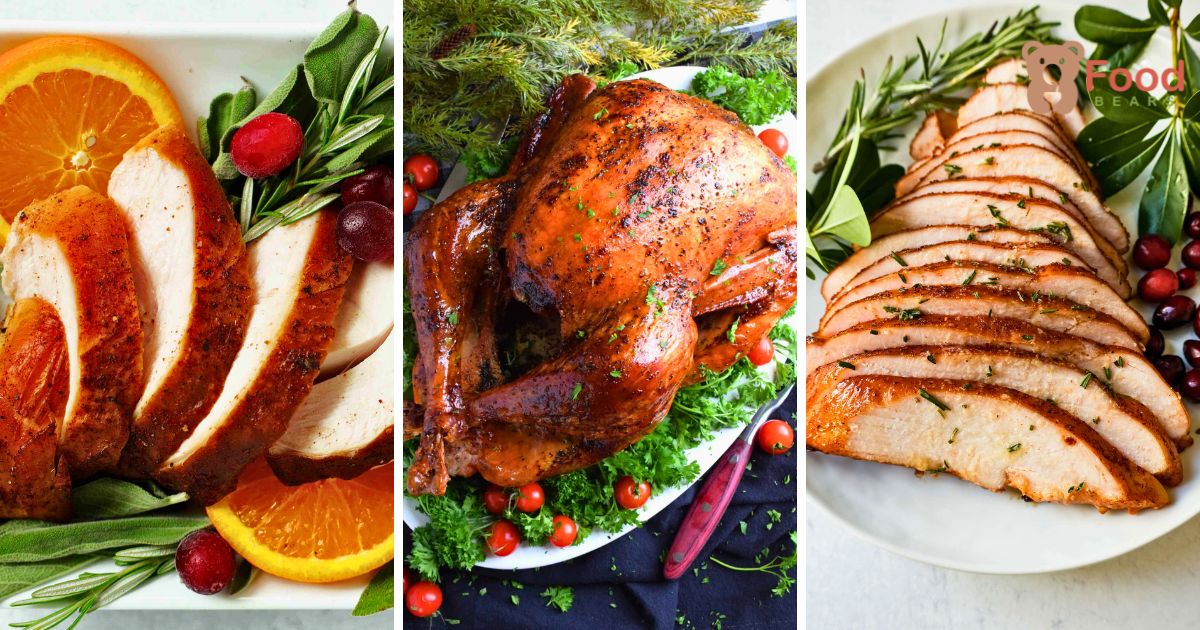
A well-smoked turkey combines juicy meat, deeply seasoned skin, and a gentle wood-smoke aroma. The challenge is keeping a large bird evenly cooked without drying the breast.
You do not need competition-level barbecue experience to succeed. Careful thawing, brining, steady smoker heat, and an accurate thermometer do most of the work.
This guide follows the original process from thawing and seasoning through smoking, resting, and carving.
Whether this is your first smoked holiday turkey or you are refining your method, the steps below will help you manage a 16- to 20-pound bird with confidence.
Why Smoke a Turkey Instead of Roasting?
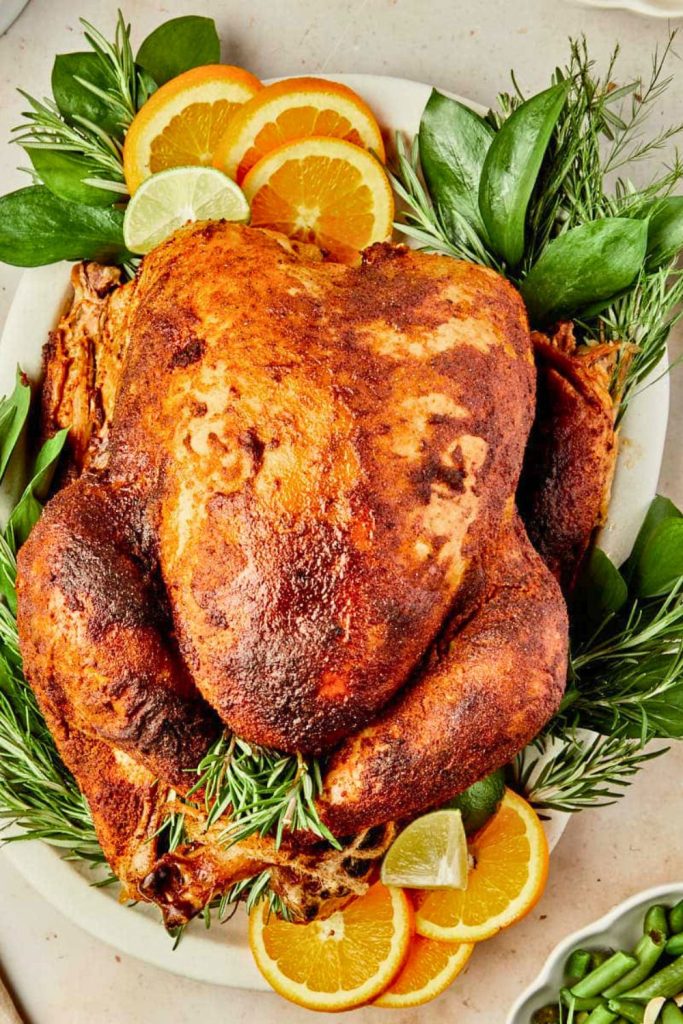
Roasting is familiar, but smoking adds a layer of flavor that an indoor oven cannot reproduce.
An oven surrounds the turkey with dry heat, so the breast can finish before the thighs are fully tender if temperatures are not watched closely.
A smoker uses indirect heat and aromatic wood, giving the meat time to absorb smoke while it cooks gradually.
The benefits of choosing the smoker include:
- A taste that lingers: Smoking infuses the meat with a depth that cannot be achieved in an oven. Think subtle hickory, fruity applewood, or nutty pecan working their way into every bite.
- Moisture retention: Slow heat means the juices stay locked inside. Additionally, techniques such as butter basting and brining help keep the meat tender and moist.
- Visual appeal: A smoked turkey develops a rich deeply golden skin with a slight smoke ring, making it the centerpiece of your holiday table.
- Flexibility using seasoning: Smoking allows you to experiment with rubs, aromatics, and flavored butters that can often overpower or dry out roasted turkeys.
- Hands-off cooking: After your smoker is set up and probes are inserted, you do not need to hover, as you would with an oven. The smoker does most of the work while you enjoy your holiday prep.
Ingredients for Smoked Turkey

| Ingredient | Amount (for ~20 lb turkey) | Purpose / Notes |
|---|---|---|
| Whole turkey | 16–20 lbs | Be sure it is fully thawed before prep. |
| Olive oil (or melted butter) | ¼–½ cup | Placed in a cavity or compound butter for aroma. |
| Steak rub or poultry rub | Generous coating | Adds flavor and color; go heavier since turkey is large. |
| Garlic cloves | 3–4, smashed | Adds moisture and flavor when stuffed inside the cavity. |
| White onion | ½–1 onion, chopped | Placed in a cavity for the steaming effect and richness. |
| Butter (whole stick) | 1 stick (unsalted preferred) | Can mix with herbs like rosemary, thyme, and garlic for basting. |
| Compound butter (optional) | ½ cup | Injected into the breast for extra juiciness (an optional butter-and-water injection). |
| Water + butter mix | ~1½ cups | Tucked inside a cavity for a fragrant, earthy profile. |
| Fresh herbs (optional) | Sprigs of rosemary, thyme, sage | Basic seasoning; adjust if the turkey is pre-brined. |
| Salt & pepper | To taste | For smoking, apple/cherry is mild, and hickory is stronger. |
| Wood chips/pellets | Apple, cherry, hickory, pecan | For smoking, apples and cherries are mild, while hickory is stronger. |
How to Make Smoked Turkey (Step-by-Step Guide)
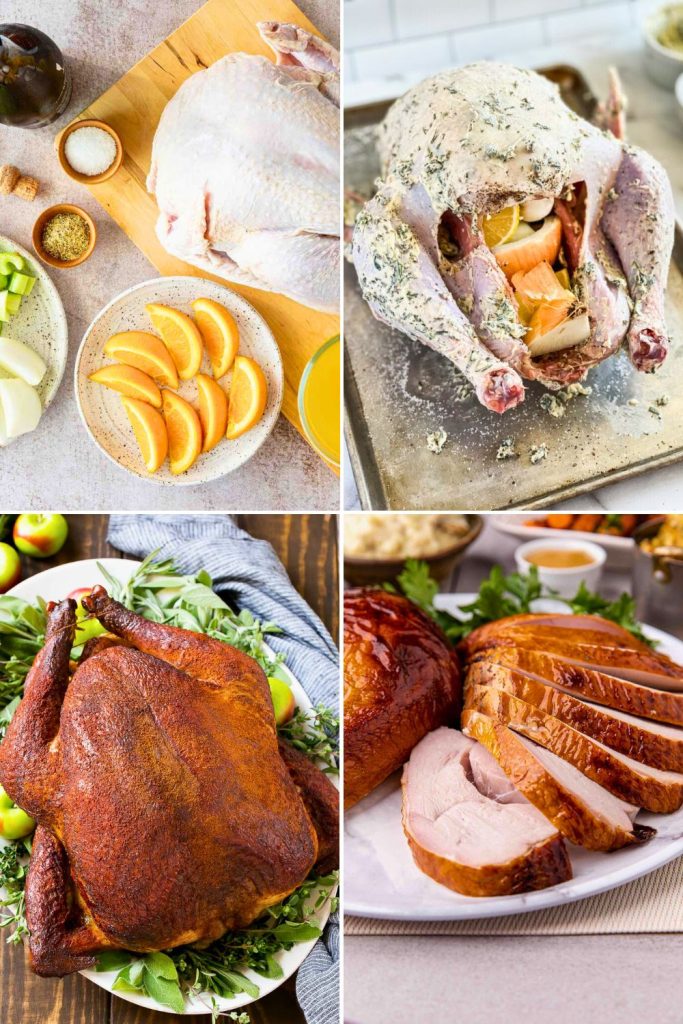
A 16- to 20-pound turkey may look intimidating on the smoker, but preparation makes the cook much easier.
Thaw the bird fully, season it ahead of time, stabilize the smoker, and rely on temperature rather than a strict cooking clock.
Below, I’ll show you the eight essential steps, incorporating tips and tricks from real-world cooking experience.
Step 1: Thawing Your Turkey the Right Way
This is the very first step, and it is one you can’t rush. A half-frozen turkey is a recipe for disaster because the outside may cook long before the inside is safe to eat. Nothing’s worse than slicing into the thigh and realizing it is still raw deep down.
For the safest method, thaw your turkey slowly in the refrigerator.
Plan on 24 hours for every 4–5 pounds of turkey. That means:
- A 12-pound bird → 3 days in the fridge.
- A 16-pound bird → 4 days.
- A 20-pound bird → 5 full days.
Thawing slowly maintains your turkey at a safe temperature the entire time.
Shortcut option: If you are behind schedule, you can submerge your turkey (still wrapped) in cold water, changing the water every 30 minutes. This method thaws at about 30 minutes per pound. But remember, it requires babysitting.
👉 Cook’s note: Never thaw on the counter. Room-temperature thawing leaves the outer meat in the “danger zone” for bacteria, while the inside remains frozen solid.
Step 2: Brining for Maximum Juiciness
Brining is the step that separates a dry, bland turkey from a tender, taste-packed one. Think of brining as giving your turkey a spa treatment. The saltwater solution helps the meat hold onto its juices while adding depth of flavor.
Basic wet brine formula (for 12–20 lb turkey):
- 1 gallon of water
- 1 cup kosher salt
- ½ cup sugar
- If desired, include bay leaves, garlic cloves, rosemary sprigs, peppercorns
Soak the turkey in the refrigerator for 12 to 24 hours.
Inspect your turkey label first. Many store-bought birds come “pre-brined” with a sodium solution already injected. If that’s the case, you can still brine, but reduce the salt by half to avoid over-salting.
👉 Alternative: If you do not want to deal with gallons of liquid, a dry brine (rubbing salt and seasoning directly on the turkey, then refrigerating uncovered for 24 hours) works beautifully and also helps dry the skin for crisping.
Step 3: Prepping the Turkey for the Smoker
After your bird is thawed and brined, it is ready to prep it for the smoker. This is where you build layers of flavor.
- Clear the cavities. Check both the central cavity and the neck cavity, and remove any giblets or other items that may be left inside.
- Dry the skin well. Use paper towels to thoroughly dry the skin. Moisture prevents browning and crisping.
- Apply the fat. Drizzle olive oil or melted butter over the entire turkey, rubbing it into the skin, under the wings, and into the thighs. This not only helps seasoning stick but also enhances color.
- Generously season. Apply your rub, whether it is a store-bought steak rub, a poultry seasoning, or your own blend. Do not be shy; turkey is a large bird and can handle a heavy coating.
- Include aromatics. Stuff the cavity with chopped onion, garlic cloves, and even a whole stick of butter. As the turkey smokes, these steam inside, releasing aroma and flavor into the meat.
👉 Cook’s note: Tuck the wings under the breast to prevent burning, and loosely tie the drumsticks. Do not tie too tightly; you want a small amount airflow so the turkey cooks evenly.
Step 4: Setting Up Your Smoker
You do not need a fancy smoker to nail this recipe; pellet grills, offset smokers, and even a gas grill with wood chips can work.
What matters most is steady, consistent heat.
- For smoker temperature, Start at 225–300°F. This lower range allows the smoke to penetrate the meat deeply.
- When choosing fuel, Fruitwoods, such as apple or cherry, produce a mild, sweet smoke. Hickory or pecan adds stronger, nuttier flavors.
- Setup note: Place a drip pan with a bit of water under the turkey. This catches drippings for gravy while also regulating heat and moisture inside the smoker.
👉 Golden rule: “If you are looking, you are not cooking.” Resist the urge to keep lifting the lid. Every time you open the smoker, you lose heat and extend cooking time.
Step 5: Smoking the Turkey
This is where the magic happens. After your bird is seasoned and your smoker has reached a steady temperature, it is ready to begin the cooking process.
- Position the thermometer probes. Place one probe in the thickest part of the thigh (avoiding bone) and one in the breast along the keel bone. This ensures you know what’s happening in both white and dark meat.
- cook to temperature, not time. For reference, a 20-pound turkey takes approximately 4 to 4.5 hours at 300°F. However, size, smoker type, and weather conditions can all affect the cook time. Trust your thermometer, not the clock.
- For the finishing temperatures,
- Breast → 160–165°F (it will rise during resting).
- Thigh → 165–170°F.
- Baste halfway through. Use melted butter mixed with garlic, onion, or herbs. Drizzle gently so you do not wash off your rub.
👉 Optional boost: Near the end of cooking, crank your smoker to 400–425°F for 10 minutes to crisp the skin and deepen color. Afterward, lower the heat again for a final smoke blast.
Step 6: Managing Uneven Cooking
Here is the reality: turkeys are tricky because the breast cooks faster than the thighs. This can be a significant issue with large birds, as their breast meat tends to dry out while the thighs remain moist.
How to balance it out:
- Choose a water pan. Placing water under the turkey helps buffer the radiant heat from the smoker, slowing the cooking process slightly and keeping the meat moist.
- Turn the turkey. Halfway through, spin the bird 180° to even out hot spots.
- Choose a foil tent. If the breast starts hitting temp too quickly, cover it with foil to slow it down while the thighs catch up.
👉 Remember: Check probe placement carefully. If your thermometer is too close to the bone or sitting shallow, you may get false readings. Confirm the reading in several spots to confirm.
Step 7: Resting Before Carving
Taking a smoked turkey off the heat is exciting, but carving too soon is the fastest way to lose all your hard-earned juiciness.
During the rest, the juices redistribute throughout the meat, rather than spilling onto your cutting board.
- Allow a rest of at least 15–20 minutes. For larger birds, 30 minutes is even better.
- How to rest: Place the turkey on a cutting board, tent it loosely with foil, and allow it to rest. Do not wrap it tightly, as that will steam the skin and make it soggy.
👉 Cook’s note: Use this ready to make your gravy. Those drippings (plus the neck and giblets you saved) are liquid gold.
Step 8: Carving Like a Pro
Next comes the show. Carving properly not only looks good but also helps keep the meat tender and juicy.
- Begin using the drumsticks. Slice through the joints to separate them cleanly.
- Remove the wings. Again, cut at the joint.
- Remove whole breasts. Run your knife along the keel bone to free one entire breast, then slice it cross-grain into even slices.
- cut thighs if serving. Many people prefer drumsticks and breast, but thighs are juicy and delicious too.
👉 Presentation tip: Arrange slices of breast meat on a platter, surround using drumsticks and wings, and garnish with herbs or citrus slices for a holiday-worthy display.
5 Tips for Smoked Turkey
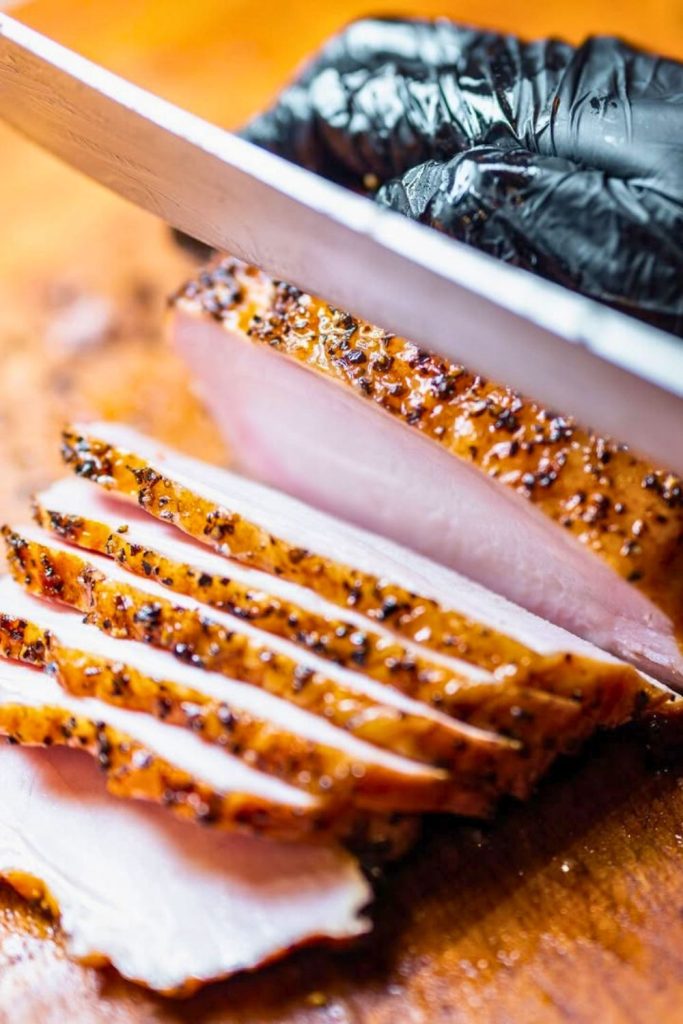
Although smoking a turkey may seem straightforward, but a few innovative techniques can take your bird from “pretty good” to unforgettable.
1. Thaw Completely Before Smoking
There is nothing worse than biting into turkey only to find parts undercooked. The thighs, especially, are the last to cook through. Always allow enough thawing time, typically 24 hours in the fridge for every 4–5 pounds of turkey. A fully thawed bird ensures even cooking and keeps you from serving a raw surprise.
2. Maintain Steady Temperatures
Consistency is all the ingredients. Rapid spikes or dips in heat can dry out your turkey. Keep your smoker in the 225–300°F range for most of the cook, only increasing the heat near the end to crisp the skin.
And remember: if you are looking, you are not cooking. Resist the temptation to keep lifting the lid; every peek adds time and messes with temperature stability.
3. Trust a Reliable Meat Thermometer
Throw away the pop-up thermometer that comes preloaded in some turkeys; they are unreliable. Instead, use a digital probe thermometer to check both the thigh and breast. Cook to temperature, not time. That’s how you ensure moist breast meat and fully cooked dark meat each time.
4. Brine for Maximum Moisture
Brining brings both flavor and juiciness. Even if your store-bought bird is pre-injected with a sodium solution, you can still brine; just cut the salt in half. Brining sets the foundation for a turkey that won’t dry out during hours in the smoker.
Flavor Variations to Try
A major advantage of smoking turkey is that you can customize it to match your taste preferences or holiday theme.
The addition of butter, garlic, onions, and even rosemary enhances taste, but you can take it further with creative spins.
Here is a table of delicious variations to inspire your next smoked turkey:
| Variation | How to Do It | Flavor Profile |
|---|---|---|
| Classic Butter & Garlic | mix rosemary, thyme, and sage into softened butter; rub it under the skin. | Rich, savory, aromatic. |
| Herb-Infused Butter | Smoke with applewood chips and baste with apple cider + butter. | Earthy, fragrant, holiday-inspired. |
| Citrus Brine Turkey | Include orange slices, lemon wedges, and apple cider to your brine. | Bright, fresh, slightly tangy. |
| Spicy Cajun Turkey | Use a Cajun seasoning rub; include cayenne and paprika for a kick. | Bold, smoky, spicy. |
| Maple-Glazed Turkey | Smoke with applewood chips and baste with a mixture of apple cider and butter. | Sweet, caramelized, with crispy skin. |
| Smoked Applewood Turkey | Subtle and sweet with a fruity smoke flavor. | Subtle and sweetness with a fruity smoke flavor. |
| Pecan-Smoked Turkey | Choose pecan wood chips; season with a rub heavy on brown sugar and chili powder. | Nutty, mildly sweet with gentle spice. |
👉 Each variation pairs very well with classic sides but also gives you flexibility to surprise your guests with something unique year after year.
Serving Suggestions for Smoked Turkey
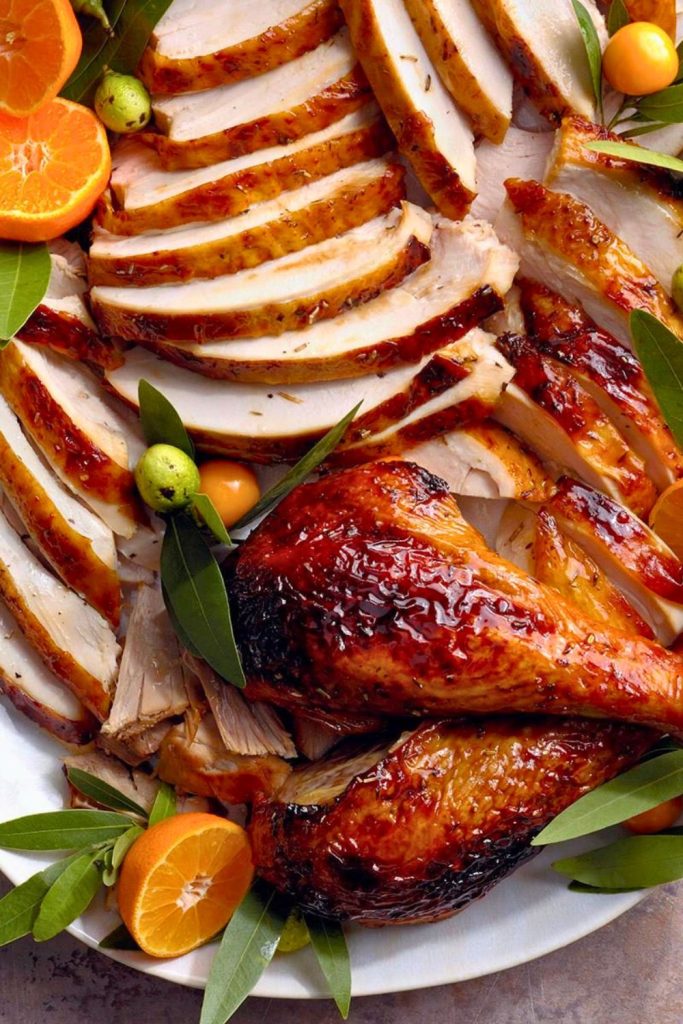
After your turkey is smoked, carved, and ready, the real fun begins pairing it with sides that complement its rich, smoky flavor.
Here are some ideas to round out your feast:
Classic Pairings:
- Mashed potatoes topped with smoked turkey gravy.
- Traditional stuffing or the cornbread dressing is baked with herbs.
- Cranberry sauce for a tart, tangy contrast.
Vegetable Sides:
- Roasted Brussels sprouts with bacon and balsamic glaze.
- Green bean almondine for a light, crisp option.
- Honey-roasted carrots with thyme.
Comfort Staples:
- Creamy mac and cheese for the kids (and adults).
- Sweet potato casserole with marshmallows or pecans.
- Buttery dinner rolls are ideal for mopping up juices.
Leftover Magic:
- Build smoked-turkey sandwiches layered using stuffing and cranberry sauce.
- Hearty turkey soup or chili for post-holiday dinners.
- Turkey pot pie using leftover dark meat and gravy.
Final Thoughts
Smoking a turkey takes planning, but the method is dependable when the bird is fully thawed, properly brined, and cooked over steady heat.
The reward is tender meat, browned skin, and a smoke aroma that turns the turkey into the centerpiece of the meal.
Give the cooked turkey enough time to rest, then carve it with a sharp knife and serve it with your favorite holiday sides.
Juicy Smoked Turkey
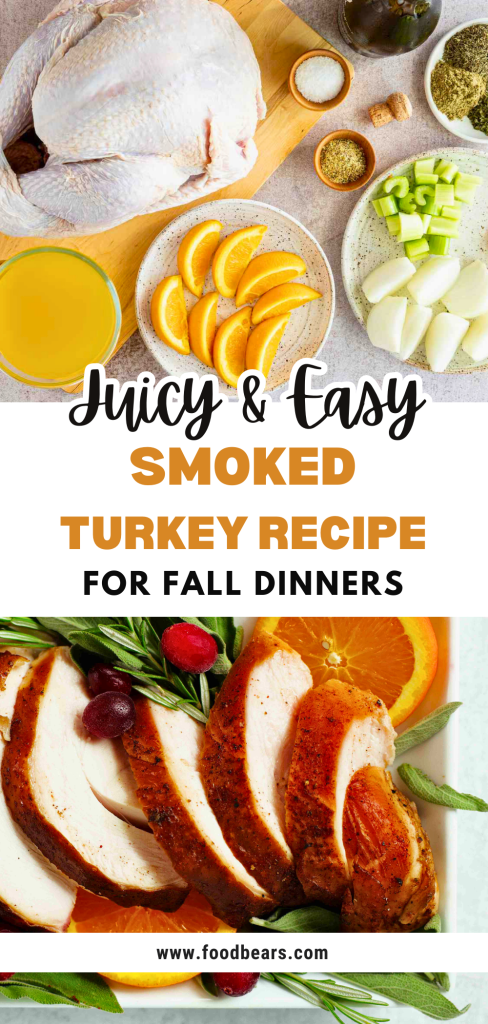
Recipes Your Guests Will Beg For
For more turkey ideas before or after the holiday meal, continue with these linked recipes:
- 25-Min Turkey Burgers Recipe for Healthy Eating – A fast and healthy weeknight option full of taste.
- Best Turkey Gravy Recipe Every Busy Mom Needs – Rich, smooth, and ideal for spooning over smoked turkey.
- Easy Turkey Sandwich Recipe for Family Dinners – A satisfying way to turn leftover turkey into dinner.

Dana Brooks is a home-cooking writer at Feastbears, where she shares easy family recipes, cozy dinners, quick desserts, and beginner-friendly kitchen tips. Her goal is to make everyday cooking feel simple, warm, and enjoyable for busy home cooks.