
Turkey gravy is the element that pulls a holiday plate together. It adds moisture to turkey, richness to mashed potatoes, and savory flavor to stuffing.
A smooth gravy begins with a properly cooked roux and hot stock added gradually.
Once those two steps are handled carefully, the consistency and seasoning are easy to adjust for the rest of the meal.
The method below keeps the original proportions while explaining how to produce a rich, silky gravy without lumps.
Why This Turkey Gravy Recipe Works Every Time
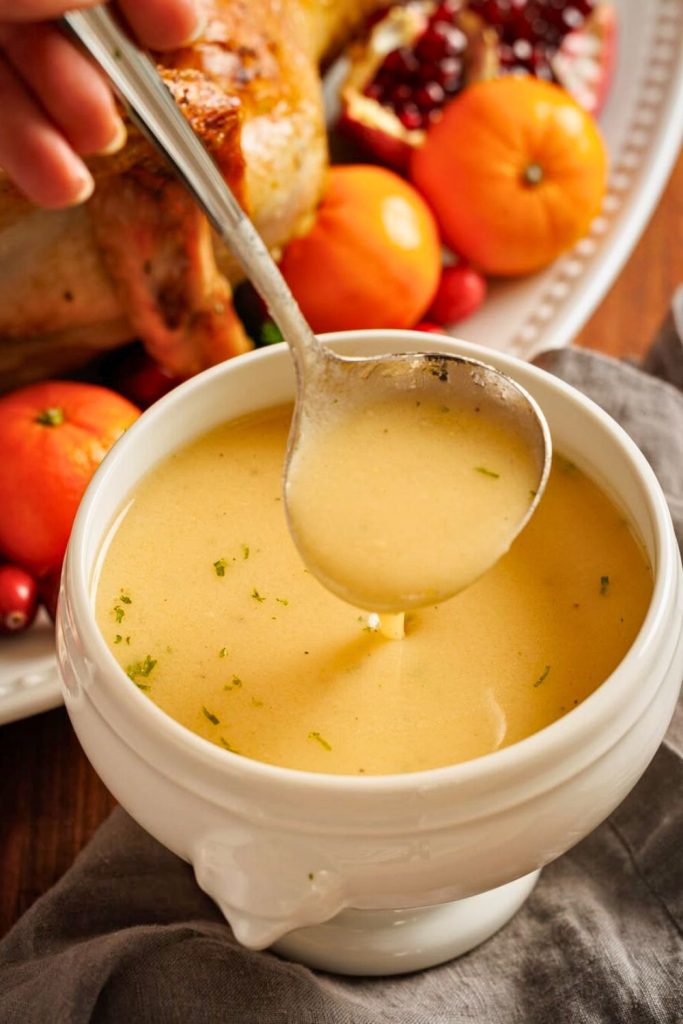
This recipe works because each stage solves a common gravy problem: the roux removes the raw flour taste, gradual whisking prevents lumps, and final seasoning builds depth.
The result is a flexible gravy that can be served medium-thick, reduced until richer, or loosened with additional warm stock.
Pay close attention to the roux color and the stock additions; those details matter more than complicated techniques.
1. The Roux is Properly Cooked
Most gravy disasters start at the very beginning. People melt butter, mix in flour, and immediately add liquid. That shortcut leaves you with a raw, chalky taste. This recipe avoids that mistake by slowly cooking the roux for 12–15 minutes.
- The flour flavor disappears.
- The butter and flour develop a nutty, toasted depth.
- The color deepens, creating a rich base for the gravy.
Think of it as building the starting point for a house; if it is weak, nothing above it will stand.
2. Stock is Added Gradually
Adding all the stock at once leads to lumps. Here, the hot stock is whisked in little by little, which:
- Keeps the texture silky smooth.
- Allows the roux to absorb each addition fully.
- Gives you complete control over thickness.
By the time half the stock is added, you will already see the gravy coming together beautifully.
3. Customizable Consistency
Everyone has a preference; some love thick gravy that clings to mashed potatoes, while others prefer a thinner pour. This method adapts to you:
- Use 6 cups of stock for a medium, versatile consistency.
- Use 5 cups for a richer, thicker texture.
- Choose 4 cups for ultra-thick gravy that feels almost like a sauce.
You are in charge of how it finishes.
Ingredients You’ll Need
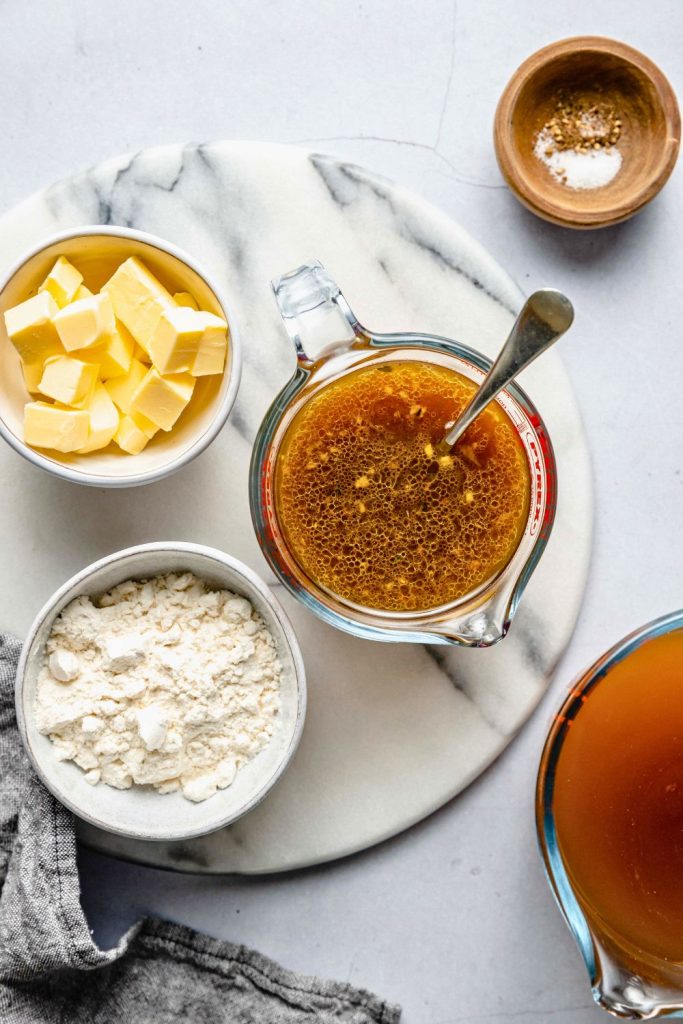
To make it easy, here is a clear ingredients table with details and substitutions.
| Ingredient | Exact Amount | Purpose / Notes | Substitutions / Tips |
|---|---|---|---|
| Butter | 4 oz (1 stick) | You can choose turkey drippings or unsalted margarine, but butter yields the best flavor. | Can choose turkey drippings or unsalted margarine, but butter gives best flavor. |
| All-purpose flour | ½ cup + 1 tablespoon | Fat for the roux adds richness and creaminess. | Gluten-free flour or cornstarch slurry (for GF option). |
| Turkey stock | 6 cups | Thickens the gravy when combined with butter to form a roux. | Chicken stock, vegetable stock, or homemade pan drippings with water. |
| Marmite (optional) | 2 teaspoons | Adds umami and deepens the color of the gravy. | Beef bouillon paste, soy sauce, or Worcestershire sauce for a similar effect. |
| Rosemary salt (optional) | ½–1 teaspoon | Infuses gravy with holiday herb flavor; adds aromatic depth. | Main liquid: provides depth and a savory backbone. |
| Black pepper | To taste (1–2 teaspoons) | Adds warmth, spice, and balance to the fullness of the gravy. | Regular kosher salt, or a homemade herb salt blend with sage, garlic, rosemary, and lemon. |
Note: The beauty of this recipe is its flexibility. If you do not have Marmite or rosemary salt, no worries, your gravy will still become delicious. But if you do include them, expect a big boost in both flavor and aroma.
How to Make Turkey Gravy

Making turkey gravy is not just about throwing together butter, flour, and stock. It is a process that builds flavor in layers, step by step.
Each part matters, from how you cook the roux to how slowly you include the stock to the secret ingredients that bring everything together.
The instructions cover the five essential steps to making the best turkey gravy of your life.
Step 1: Building the Roux – The Foundation of Flavor
At the base of the method, gravy is a sauce thickened by a roux, a mixture of fat (such as butter, oil, or drippings) and flour. It may look simple, but the way you handle this first step makes or breaks the entire gravy.
Most people go wrong here by rushing. They melt the butter, mix in the flour for 30 seconds, and then include the stock. The result? A sauce that tastes raw, chalky, and unfinished.
Here is how to do it right:
- Melt the butter over gentle heat. Place 4 ounces of butter into a heavy-bottomed saucepan over medium-low heat. The slow melting process keeps the butter from scorching and ensures even mixing with the flour.
- whisk in the flour. Add ½ cup plus 1 tablespoon of all-purpose flour. Stir continuously until the butter and flour combine into a paste. At first, it’ll look like wet sand. This is your roux starting to form.
- cook it out. Keep whisking and cooking the roux for 12–15 minutes. This is where the magic happens. The color will evolve in stages:
- Pale yellow → golden → nutty brown.
Each stage develops new flavors, removing the raw flour taste and adding depth.
- Pale yellow → golden → nutty brown.
- Aim for deeply golden. For turkey gravy, you do not need a Cajun-style dark roux (which can take an hour). Instead, a medium deeply golden is perfect; it adds richness without overpowering the turkey flavor.
Why the longer cooking time? since flour contains starch. When raw, that starch is harsh and floury. Cooking breaks it down, unlocking nutty, toasty flavors as ensuring it thickens smoothly later.
Consider it roasting coffee beans; the longer you roast, the more complex the flavor becomes.
👉 Cook’s note: Match the roux to the stock. A golden roux for turkey or chicken stock, a darker one for beef, and a light one for cream sauces.
Step 2: Adding Stock the Right Way
With the roux ready, it is ready to transform it into gravy by adding stock. This stage seems easy: pour in the liquid, right? However, if you do it incorrectly, you will have lumps or a watery sauce.
The secret? Patience and portioning.
- Choose hot stock. Cold liquid shocks the roux, causing it to form clumps. Always warm your stock before adding.
- Add little by little. Start with just ½ cup of stock. Whisk it in until uniform. It will seize up at first, almost like dough, but keep whisking, and it will loosen. Then add another ½ cup and repeat the process.
- Build gradually. Continue this process, whisking constantly, until half your stock is incorporated. By this point, the mixture will appear silky and creamy.
- Include the rest. Now you can pour in the remaining stock in larger amounts, still whisking to keep it smooth.
- Control the heat. Keep the pot at medium heat. Too high, and the roux can scorch. Too low, and it won’t thicken properly.
Adding the liquid gradually is what makes the gravy luxuriously smooth, rather than clumpy. Think of it like kneading bread; you wouldn’t dump all the flour at once. You add it little by little until the texture is right.
👉 Cook’s note: Whisk with energy! If your arm does not feel a small amount sore, you might not be whisking enough.
Step 3: Checking Consistency
After the stock is fully added, your gravy will look close to finished—but you are not done yet. The consistency has to be just right.
- Bring it to a boil. This is crucial. Roux reaches its maximum thickening power only once the liquid boils. If you skip this, you will misjudge the texture.
- Coat the spoon test. Dip a spoon into the gravy and pull it out.
- If the gravy coats the back of the spoon without dripping off like water, it is the right consistency.
- If it is too thick, whisk in more stock to thin it out.
- If it is too thin, let it simmer uncovered to reduce and thicken.
- Choose your style. Some people prefer thin gravy that spreads evenly across the plate, while others prefer thick gravy that clings to the mashed potatoes. Adjust stock levels to your preference:
- 6 cups stock → smooth, medium consistency (ideal for most dinners).
- 5 cups stock → thicker, clingy gravy.
- 4 cups stock → rich and dense, almost sauce-like.
This flexibility means you can offer gravy the way you (and your family) love best.
👉 Cook’s note: Always let the gravy rest at a simmer for 2–3 minutes before deciding on adjustments. Heat changes thickness, so judging too early can lead to errors.
Step 4: Secret Ingredients for Next-Level Flavor
A classic roux-and-stock gravy is good. But if you want a gravy that people talk about for years, it is time for some flavor boosters.
1. Marmite (or Beef Bouillon)
Marmite is a yeast extract beloved in England, and here, it is a secret weapon. Just 2 teaspoons stirred into your gravy adds:
- For savory depth, That savory, mouthwatering flavor that keeps you coming back for more.
- Color: Darkens the gravy beautifully.
Do not have Marmite? Use beef bouillon or even soy sauce for a similar umami kick.
👉 Caution: Marmite is salty, so season according to the salt level of your stock.
2. Rosemary Salt
This one is a practical solution. A blend of rosemary, sage, garlic, lemon zest, and salt, it is like capturing the essence of the holidays. Adding ½–1 teaspoon to your gravy instantly makes it taste festive and aromatic.
It is versatile too: sprinkle it on roast potatoes, rub it on turkey, stir it into stuffing. If you do not have rosemary salt, use plain salt plus a pinch of dried rosemary or thyme.
3. Black Pepper
To finish, no gravy is complete without black pepper. around 1–2 teaspoons is ideal, but adjust to taste. Freshly cracked pepper gives the best punch.
These ingredients take gravy from “good” to “legendary.” Instead of a one-note sauce, you get layers of nutty, savory, herby, peppery flavors that prepare every bite of turkey, mashed potatoes, or stuffing taste richer.
Step 5: Taste, Adjust, and Finish
This final step might be the most important: tasting and adjusting. Gravy isn’t a rigid recipe; it is about finding the right balance.
- Let flavors meld. After adding Marmite, rosemary salt, and pepper, let the gravy simmer for 2–3 minutes. This gives everything ready to dissolve and blend.
- Taste prior to adjusting. Grab a spoon and test:
- Too bland? Add more rosemary salt or a pinch of bouillon.
- Too salty? Add a splash of unsalted stock.
- Too plain? Add more black pepper or a dash of herbs.
- Prepare gradual adjustments. Always add seasonings little by little. You can always add more, but you can’t take it out.
- Offer hot. Gravy thickens as it cools, so serve it warm for the perfect silky pour.
Think of gravy as the peacekeeper of Thanksgiving dinner. It ties everything together, keeps the meal balanced, and brings harmony to the plate. A great gravy does not shout for attention, but everyone notices when it is missing.
Serving Ideas

Turkey gravy is one of those magical sauces that seems to improve everything it touches. While it is the traditional partner to roast turkey on Thanksgiving, its potential goes way beyond the bird.
Once you’ve mastered this recipe, you will find yourself reaching for it more than once because it transforms ordinary meals into comfort-food classics.
Here are some flavorful and creative serving ideas to inspire you:
1. Over Mashed Potatoes
This is the most traditional match of all. A scoop of creamy mashed potatoes without gravy feels incomplete, almost like a sandwich without bread. The silky, golden gravy soaks into the potatoes, making every bite rich, savory, and satisfying.
2. On Roast Turkey or Chicken
Of course, turkey gravy was born to pair with roast turkey. A generous drizzle across slices of tender turkey breast keeps them moist and flavorful. But do not stop there, it works equally well with roasted chicken, Cornish hens, or even duck.
3. With Stuffing or Dressing
Stuffing is already savory and herby, but when you top it with gravy, it becomes irresistible. The gravy binds the bread cubes together and brings an extra layer of holiday warmth.
4. On Biscuits or Dinner Rolls
Warm, flaky biscuits dipped in turkey gravy might remind you of traditional Southern comfort food. Dinner rolls get the same boost when you tear one open, drizzle in gravy, and you’ve got a bite of pure indulgence.
Fixing Common Turkey Gravy Mistakes
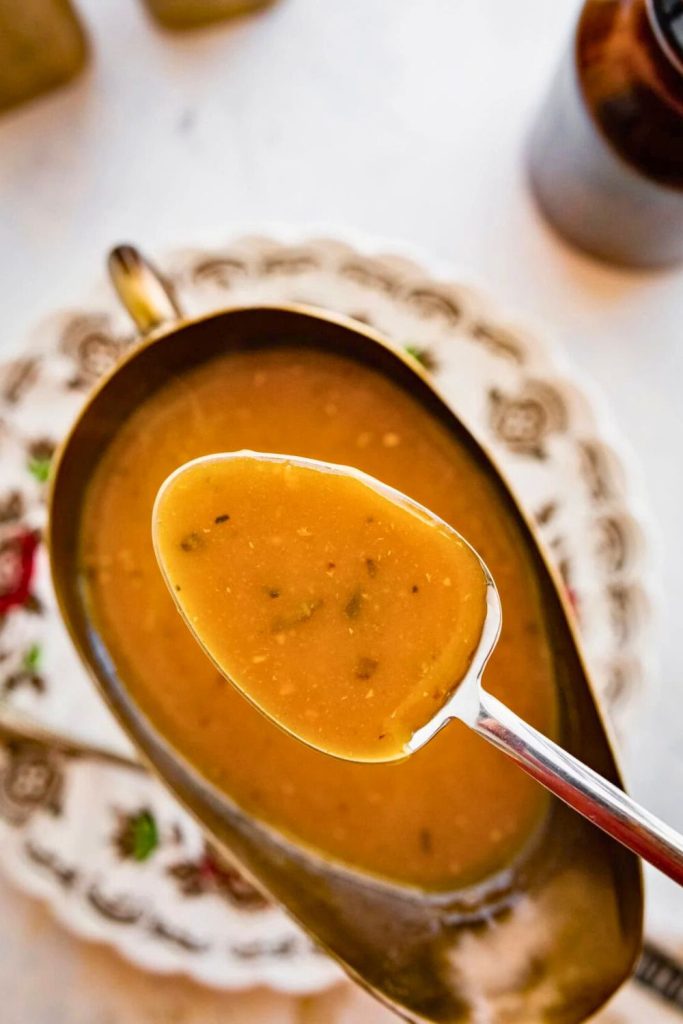
Even with the best intentions, things can go sideways when making gravy. Perhaps it is too salty, too thin, or just off. Do not panic, these issues are prevalent, and the good news is they are also fixable.
Let us go through the most frequent mistakes and how to rescue your gravy.
1. Lumpy Gravy
- Likely cause: Adding stock too quickly, not whisking enough, or starting with cold liquid.
- How to fix it: Use a whisk and beat vigorously until the lumps smooth out. If stubborn lumps remain, strain the gravy through a fine mesh sieve or use an immersion blender for a silky finish.
👉 Prevent it: Always include stock gradually and whisk constantly. Think of it like folding ingredients in baking: slow and steady wins the race.
2. Too Salty
- Likely cause: Using salty stock, adding too much Marmite or bouillon, or over-seasoning at the end.
- Fix: Dilute the gravy with unsalted stock or water. You can also mix in a splash of cream or milk to mellow the saltiness. In desperate cases, adding a peeled raw potato to the pot while simmering can absorb excess salt (remove it before serving).
To prevent it, Always taste your stock prior to starting and season gradually at the end.
3. Too Thin
- Cause: Too much stock or not enough roux.
- Fix: Simmer uncovered until the gravy has reduced and thickened. If you are short on time, combine thoroughly 1 tablespoon of softened butter and 1 tablespoon of flour (called a beurre manié) and stir it into the hot gravy; it thickens almost instantly.
👉 Prevent it: Start with less stock and include more only if needed.
4. Too Thick
- Cause: Too little stock or over-reduction.
- Fix: Whisk in additional stock or warm water, a small amount at a time, until the desired consistency is reached.
To prevent it, Keep stock handy during cooking so you can adjust on the fly.
Conclusion: The Unsung Hero of Thanksgiving
Turkey gravy may sit beside the main dishes, but it connects nearly everything on a holiday plate.
Cook the roux patiently, whisk in the stock in stages, and make final adjustments only after the gravy has simmered.
Taste before serving, then add pepper, rosemary salt, or another savory booster only as needed.
Silky Homemade Turkey Gravy

More Cozy Turkey Recipes to Try
If you are planning more turkey dishes, these existing recipes are natural next choices:
🥄 20-Min Prep Turkey Brine Recipe for Busy Nights – Quick prep, big taste, and guaranteed moist turkey.
🥣 30-Minute Turkey Soup Recipe for Chilly Fall Nights – The ultimate bowl of comfort for crisp evenings.
🍔 25-Min Turkey Burgers Recipe for Healthy Eating – Juicy, protein-packed, and weeknight-friendly.

Dana Brooks is a home-cooking writer at Feastbears, where she shares easy family recipes, cozy dinners, quick desserts, and beginner-friendly kitchen tips. Her goal is to make everyday cooking feel simple, warm, and enjoyable for busy home cooks.