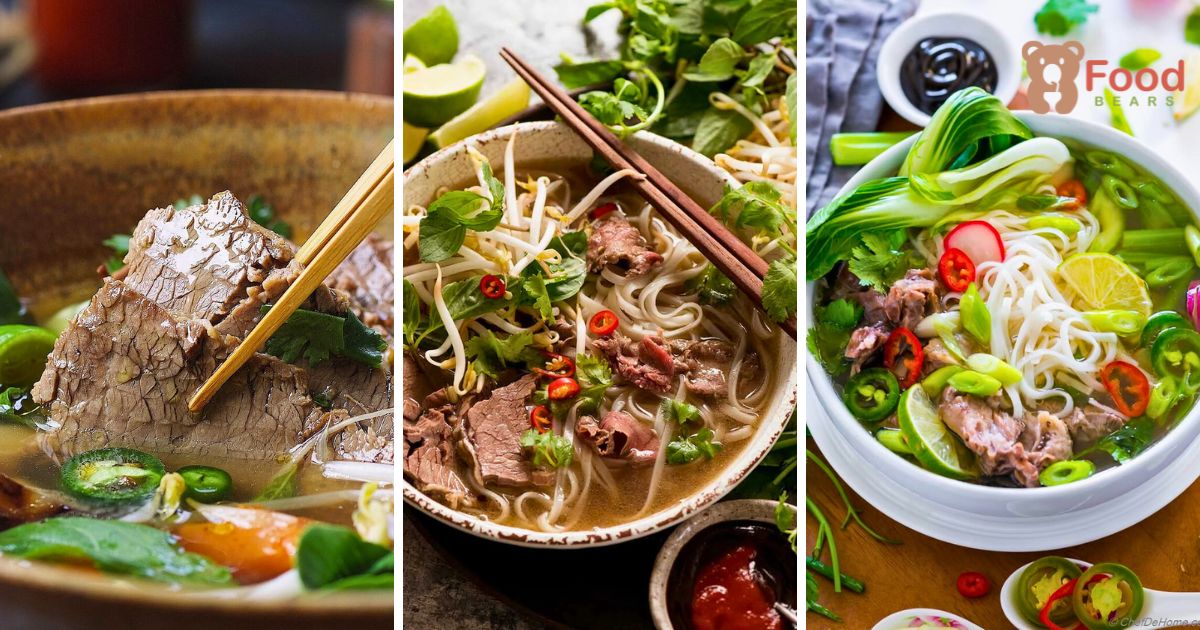
Imagine a steaming bowl of fragrant beef broth filled with tender rice noodles, thinly sliced steak, fresh herbs, and a bright squeeze of lime.
That inviting combination is pho—pronounced “fuh”—a Vietnamese noodle soup known for its aromatic broth and customizable fresh toppings.
Traditional beef pho may simmer for many hours, but this streamlined method builds a deeply satisfying broth in roughly two hours.
A flavorful beef base, fresh aromatics, whole spices, and fish sauce keep the process practical without sacrificing the savory character of the finished bowl.
The guide below follows the original process from choosing the beef and noodles to simmering the broth and arranging the garnishes, so you can build each bowl to taste.
What Makes Pho Special?
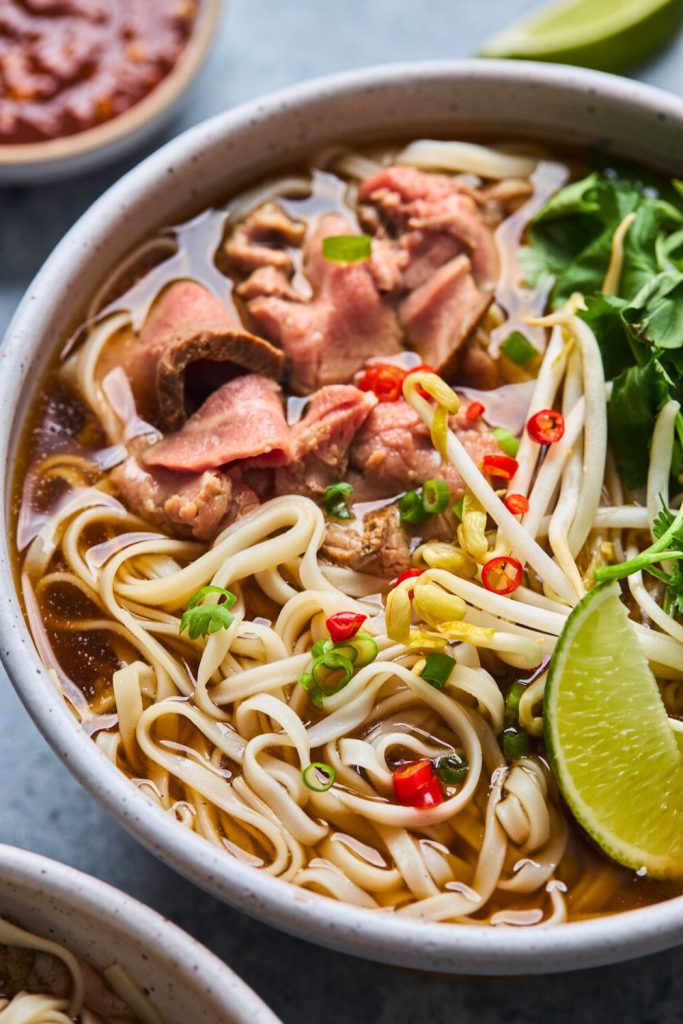
Pho is more than a simple noodle soup. Its appeal comes from the contrast between a deeply seasoned hot broth and the fresh ingredients added at the table.
The broth is the foundation. Traditional versions extract flavor from beef bones over a long simmer, along with toasted spices and aromatic vegetables.
This quicker approach starts with beef base, then builds complexity with onion, ginger, fish sauce, star anise, cloves, and cinnamon.
Serving is just as important as simmering. Bowls of noodles and beef are accompanied by herbs, lime, chilies, bean sprouts, hoisin, and sriracha.
Each person can adjust the heat, acidity, sweetness, and crunch, which means no two finished bowls need to taste exactly alike.
That combination gives pho several qualities people return to:
- Customizable: Every diner can finish the bowl with different garnishes and sauces.
- Comforting: The hot broth and noodles are especially welcome on cold days or whenever you want a soothing meal.
- Balanced: Savory, salty, sweet, fresh, acidic, and spicy flavors can all appear in a single bowl.
- Made for Sharing: Passing garnishes and condiments around the table makes the meal interactive.
Because the broth is rich but the toppings are crisp and fresh, pho manages to feel both hearty and refreshing.
Ingredients of Pho Soup
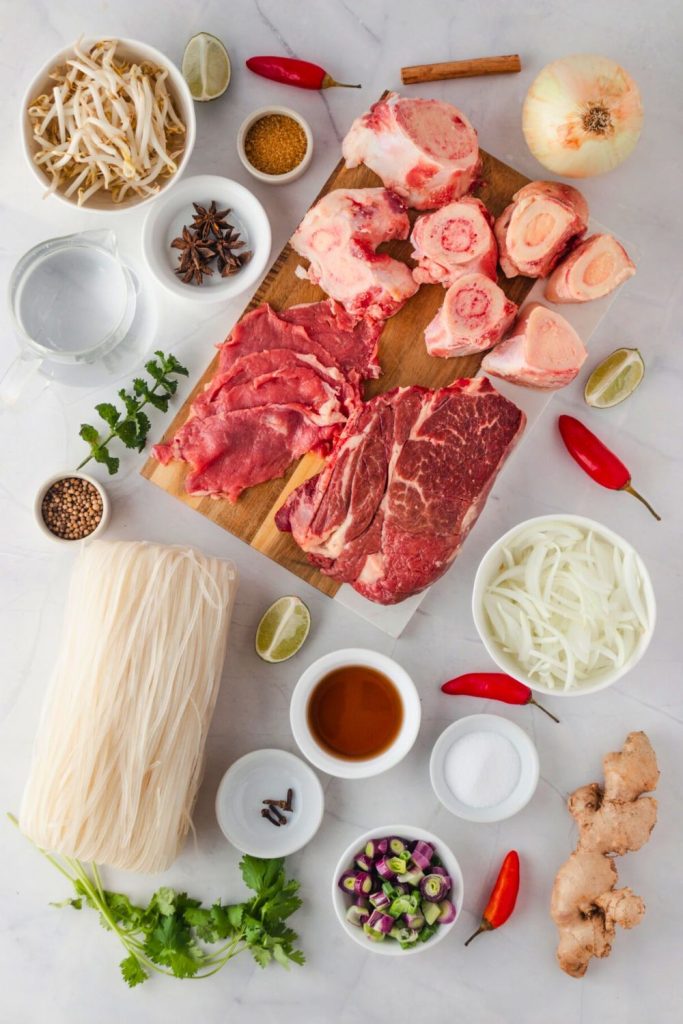
The ingredient list is easier to manage when it is divided into beef, noodles, broth seasonings, aromatics, whole spices, garnishes, and condiments.
| Category | Ingredient | Purpose and Tips |
|---|---|---|
| Beef | Thinly sliced ribeye, sirloin, or flank steak | Freeze for 30–40 minutes first, then slice across the grain so the hot broth can cook it quickly. |
| Noodles | Rice stick noodles (banh pho) | Medium-width noodles work well. Soak until flexible, then finish with a brief boil. |
| Broth Base | Beef base | Creates a savory foundation without the traditional two-day bone simmer. |
| Fish sauce | Use a fresh amber-colored sauce and add gradually for clean umami flavor. | |
| Salt | Add only after tasting the beef base and fish sauce. | |
| Sugar | A small amount balances the salty and savory notes. | |
| Aromatics | Onion | Use large pieces in the broth and reserve paper-thin slices for serving. |
| Ginger | Scrub and slice with the skin on to infuse the broth. | |
| Spices | Star anise | Contributes pho’s sweet, licorice-like fragrance. |
| Whole cloves | Use sparingly because their warm flavor is concentrated. | |
| Cinnamon stick | Adds warmth and depth without making the broth sweet. | |
| Cheesecloth and butcher’s twine | Bundle the spices for easy removal and controlled steeping. | |
| Fresh Garnishes | Scallions | Slice on a diagonal for fresh onion flavor and color. |
| Cilantro leaves | Add at serving time for a bright herbal finish. | |
| Red Serrano or Thai chilies | Slice thinly and serve on the side for adjustable heat. | |
| Bean sprouts | Add to the bowl for cool, crisp texture. | |
| Lime wedges | Squeeze over the finished bowl to balance the rich broth. | |
| Condiments | Hoisin sauce | Use sparingly in the bowl or as a sweet-savory dipping sauce. |
| Sriracha sauce | Stir in for heat or combine with hoisin for dipping. |
How to Make Pho Soup (Step-by-Step Guide)
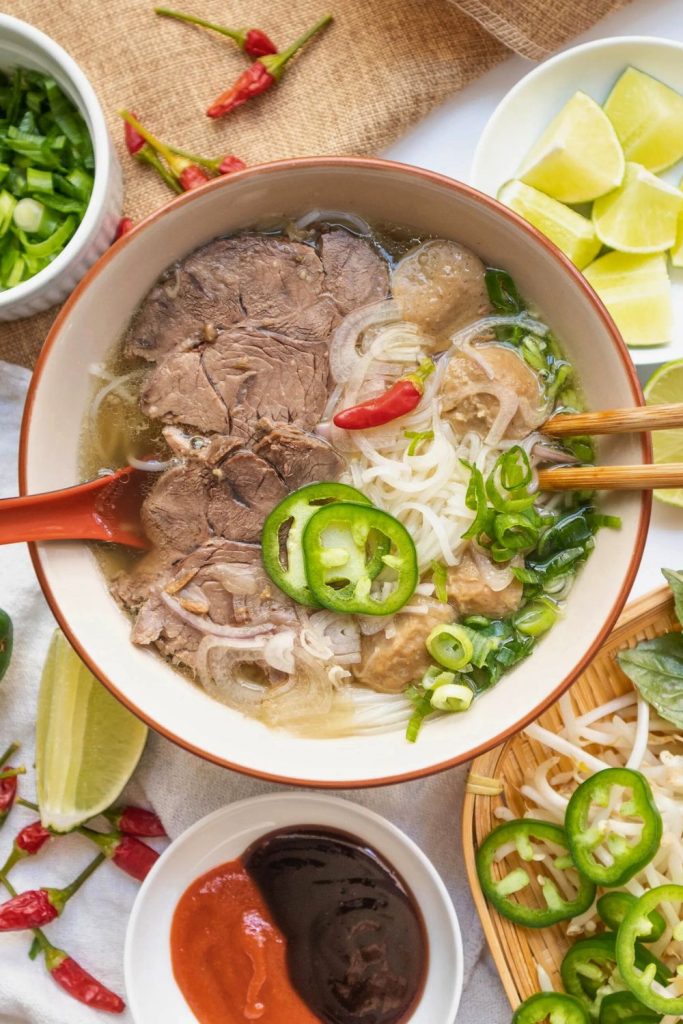
Making pho at home may sound intimidating, but the process becomes much easier when you break it into simple steps. Traditional Vietnamese pho broth can simmer for many hours, but this quicker version builds a rich, aromatic beef broth in about two hours.
The key is to prepare everything before you start assembling the bowls. After the broth, noodles, beef, and garnishes are ready, serving homemade pho is surprisingly simple.
Step 1: Preparing the Vegetables and Garnishes
Begin by preparing your vegetables and toppings. Pho gets much of its character from the fresh ingredients added right before serving, so having everything sliced and ready will make assembly much smoother.
1. Prepare the Onion
You will use the onion in two different ways—one portion flavors the broth, and the other finishes the bowls.
- For the broth: Cut half of the onion into large pieces. These pieces simmer in the broth and add a mild natural sweetness.
- For serving: Slice the remaining onion as thinly as possible. Add a small amount over the noodles before pouring in the hot broth; the heat will soften it slightly while leaving a little bite.
2. Slice the Ginger
Scrub the ginger well, then cut it into thin rounds without peeling it. The exposed surface releases its warm, fragrant, slightly peppery flavor into the broth.
3. Cut the Scallions
Slice the scallions thinly on a diagonal. This gives the bowl a restaurant-style finish and adds a fresh, gently sharp onion flavor.
4. Slice the Chilies
Thinly slice Serrano peppers, red Thai chilies, or another fresh chili you enjoy. Serve them on the side so everyone can control the heat.
5. Cut the Lime
Cut fresh lime into wedges. A squeeze added just before eating provides the acidity that balances the savory beef broth.
6. Prepare the Cilantro and Bean Sprouts
Wash the cilantro and bean sprouts thoroughly, then drain and dry them. Cilantro adds a fresh herbal note, while bean sprouts provide cool crunch.
Pro Tip: Arrange the lime, chilies, scallions, cilantro, bean sprouts, and other toppings on one platter so everyone can customize a bowl easily.
Step 2: Creating the Spice Sachet
Pho’s signature aroma comes from whole spices. Bundling them in cheesecloth makes them easy to remove and prevents loose spices from overwhelming the broth.
You Will Need:
- 2–3 whole star anise for a sweet, licorice-like fragrance.
- 3–4 whole cloves for concentrated warmth.
- 1 cinnamon stick to add mellow spice and depth.
- A square of cheesecloth and a length of butcher’s twine.
Assemble the Sachet:
- Spread the cheesecloth flat on a clean work surface.
- Place the star anise, cloves, and cinnamon in the center.
- Bring the corners together and secure the bundle tightly with twine.
- Leave a short tail of string so the sachet is easy to lift from the hot broth.
Why this helps: These whole spices are powerful. The sachet lets them infuse the liquid while keeping the final broth clean and balanced.
Step 3: Building the Quick Broth
This is where the quick broth develops its character. Beef base replaces the long bone simmer, while fish sauce, aromatics, and whole spices supply depth in much less time.
1. Begin with the Beef Base
- Prepare a flavorful broth with a good-quality beef base or bouillon, following the product directions. This shortcut provides the meaty foundation that normally takes many hours to extract from bones.
2. Balance the Seasonings
- Fish sauce: Use a fresh, amber-colored fish sauce to add essential savory depth. A little goes a long way, so add it gradually.
- Salt: Taste before adding more, then use only enough to sharpen the beef flavor.
- Sugar: A small amount rounds out the salty and savory notes without making the broth taste sweet.
3. Add the Aromatics
- Add the large onion pieces and sliced ginger prepared earlier.
- Bring the broth to a gentle simmer instead of a rapid boil. Moderate heat helps it stay clear and keeps the aromatics from tasting harsh.
4. Simmer and Infuse
- Let the broth, onion, and ginger simmer together for about 40 minutes.
- Add the spice sachet and continue steeping for another 30 to 45 minutes.
Timing Tip: Taste after about 30 minutes of steeping. Remove the sachet once the spices are fragrant but still balanced.
Strain the broth if necessary, then bring it back to a very hot simmer just before serving. The broth must be hot enough to cook the paper-thin beef.
Step 4: Cooking the Noodles
Rice noodles cook quickly and can turn sticky when overdone. Soaking first and boiling only briefly gives them a tender but separate texture.
1. Soak the Noodles
- Place the dried rice noodles in warm water for 15 to 20 minutes, until flexible but not mushy.
2. Finish with a Quick Boil
- Bring a separate pot of water to a full boil.
- Transfer a portion of softened noodles to a noodle basket or fine-mesh strainer.
- Dip them in the boiling water for only 10 to 15 seconds.
- Drain immediately and place the noodles in a deep serving bowl.
Using fresh rice noodles? They need only a very brief dip in boiling water before serving.
Step 5: Assembling the Perfect Bowl
With every component ready, assembling the bowls takes only a minute or two.
1. Add the Noodles: Divide a generous portion of cooked rice noodles among deep bowls.
2. Arrange the Beef: Lay the raw, paper-thin steak over the noodles. The boiling broth will cook it almost immediately.
3. Add Fresh Aromatics: Top with thin onion slices, scallions, and cilantro.
4. Pour in the Broth: Ladle the very hot broth directly over the beef and noodles. The meat should begin changing color at once.
5. Finish at the Table
Set out the optional garnishes so each person can adjust the bowl:
- Bean sprouts for fresh crunch.
- Lime wedges for bright acidity.
- Sliced chilies for adjustable heat.
- Hoisin and sriracha for sweet, savory, and spicy notes.
Encourage everyone to taste and add toppings gradually; personalizing the bowl is an important part of enjoying pho.
Step 6: Eating Pho Like a Pro
There is no single correct way to eat pho, but a few habits help you appreciate the broth and assemble balanced bites.
1. Taste the Broth First
Take a sip before adding sauce. This lets you notice the beef, ginger, onion, and whole-spice flavors you built during the simmer.
2. Adjust One Flavor at a Time
- For more heat, add sliced chilies or a small amount of sriracha.
- For gentle sweetness, stir in a little hoisin.
- For brightness, squeeze in fresh lime juice.
3. Stir or Dip
You may mix hoisin and sriracha into the broth or combine them in a small side dish for dipping the beef. Try both methods and use the one you prefer.
4. Build a Balanced Bite
Use chopsticks to place noodles, beef, and a little garnish on your spoon, then add enough broth to bring everything together.
Serving Idea: Coil a small portion of noodles onto the spoon, add a piece of beef and fresh herbs, then dip or sauce it lightly before eating.
5 Tips for Pho Soup
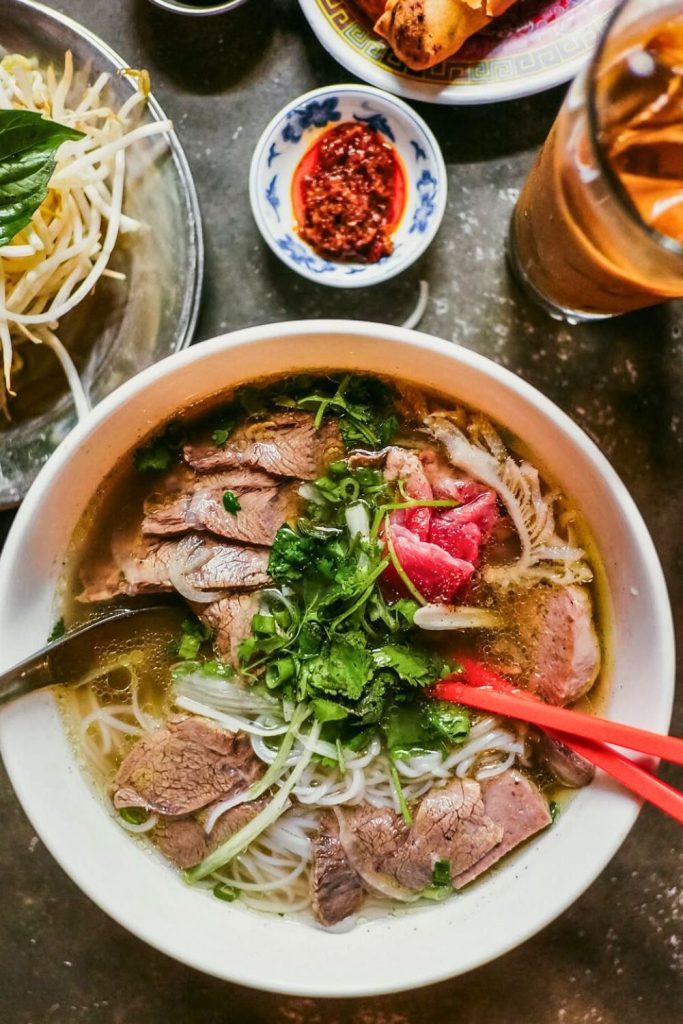
The finished bowl may look simple, but clear broth, tender noodles, thin beef, and fresh toppings depend on a few important techniques.
Use these five practical tips each time you make the recipe:
1. Keep the Broth Clear
Maintain a gentle simmer rather than a hard boil. This keeps the liquid clearer and prevents the onion, ginger, and spices from developing harsh flavors.
2. Use Fresh Fish Sauce
Choose fish sauce that is amber and translucent, and check the aroma and date before using it. Fresh fish sauce contributes clean umami without dominating the broth.
3. Remove the Spices on Time
Star anise, cloves, and cinnamon become strong with prolonged steeping. Taste at the 30-minute point and lift out the sachet when the aroma is noticeable but not overpowering.
4. Slice the Beef Paper-Thin
Chill the steak in the freezer for 30 to 40 minutes before slicing. Firmer meat is easier to cut into thin pieces that cook quickly under the hot broth.
5. Serve Garnishes Family-Style
Arrange sprouts, lime, chilies, scallions, cilantro, and sauces in shared dishes. Diners can then add crunch, heat, herbs, or acidity as they eat.
Variations to Try
Once you are comfortable with the quick beef version, keep the same basic technique and adjust the broth, protein, or garnishes using the ideas below.
| Variation | How to Adapt It | Flavor | Good Choice For |
|---|---|---|---|
| Pho Bò (Beef Pho) | Use paper-thin beef with the beef-base broth. | Rich, savory, and familiar. | A classic comfort-food bowl. |
| Pho Gà (Chicken Pho) | Use chicken stock and finish the bowls with shredded chicken breast. | Lighter, clean, and gently sweet. | Weeknight meals or a less-rich soup. |
| Vegetarian Pho | Use mushroom or vegetable stock, replace fish sauce with soy sauce, and add tofu and mushrooms. | Earthy, delicate, and plant-forward. | Vegetarian or meatless meals. |
| Spicy Pho | Add more fresh chilies, chili oil, or sambal oelek. | Bold, hot, and warming. | Cold nights and heat lovers. |
| Loaded Pho | Keep the beef and add extras such as shrimp, a soft-boiled egg, or fried shallots. | Layered, indulgent, and customizable. | Special dinners or a generous shared meal. |
Adaptable by Design: A well-balanced broth makes a useful base for several versions, from lighter chicken pho to a plant-based bowl.
Why the Pho Soup Shortcut Recipe Works

A classic beef pho broth develops body and complexity during a very long bone simmer. This method cannot duplicate every characteristic of that process, but it creates a deeply flavored home version in roughly two hours.
1. Beef Base Provides the Foundation
A concentrated beef base supplies immediate savory depth, eliminating the need to roast bones and extract their flavor all day.
2. The Spice Sachet Controls the Aromatics
Star anise, cloves, and cinnamon create pho’s recognizable fragrance. Tying them in cheesecloth lets you stop the infusion before the broth becomes bitter or too heavily spiced.
3. Fresh Onion and Ginger Add Dimension
Onion contributes sweetness and ginger brings warmth and brightness, giving prepared beef broth a fresher, more layered taste.
Conclusion
Pho becomes manageable when the broth, noodles, beef, and toppings are handled as separate components and assembled at the end.
This quicker method lets you prepare a hot, aromatic bowl at home without a two-day simmer. Taste carefully, keep the broth very hot for serving, and let each diner finish the bowl with preferred garnishes.
Quick Beef Pho Soup
Warm Bowls You’ll Love Next
Keep the soup theme going with one of these comforting recipes:
- Quick 30-Min White Bean Soup Recipe for Dinners – Creamy beans and vegetables make this a hearty, protein-rich weeknight bowl.
- Healthy Carrot Soup Recipe for Family Dinners – Ginger and carrots blend into a light, smooth, and flavorful soup.
- Best Meatball Soup Recipe for Family Dinners – Tender meatballs, small pasta, and tomato broth create a satisfying family meal.

Dana Brooks is a home-cooking writer at Feastbears, where she shares easy family recipes, cozy dinners, quick desserts, and beginner-friendly kitchen tips. Her goal is to make everyday cooking feel simple, warm, and enjoyable for busy home cooks.