Hot and sour dumpling soup brings chewy handmade wrappers, a savory beef-and-fennel filling, and a fragrant black-vinegar broth together in one substantial bowl.
The recipe is built from three connected preparations: rested dumpling dough, a well-seasoned filling, and vinegar gently infused with warm spices.
Follow each stage in order, from kneading and wrapping to the three-boil cooking method and final bowl assembly.
🥢 Why This Dumpling Soup Recipe Stands Out
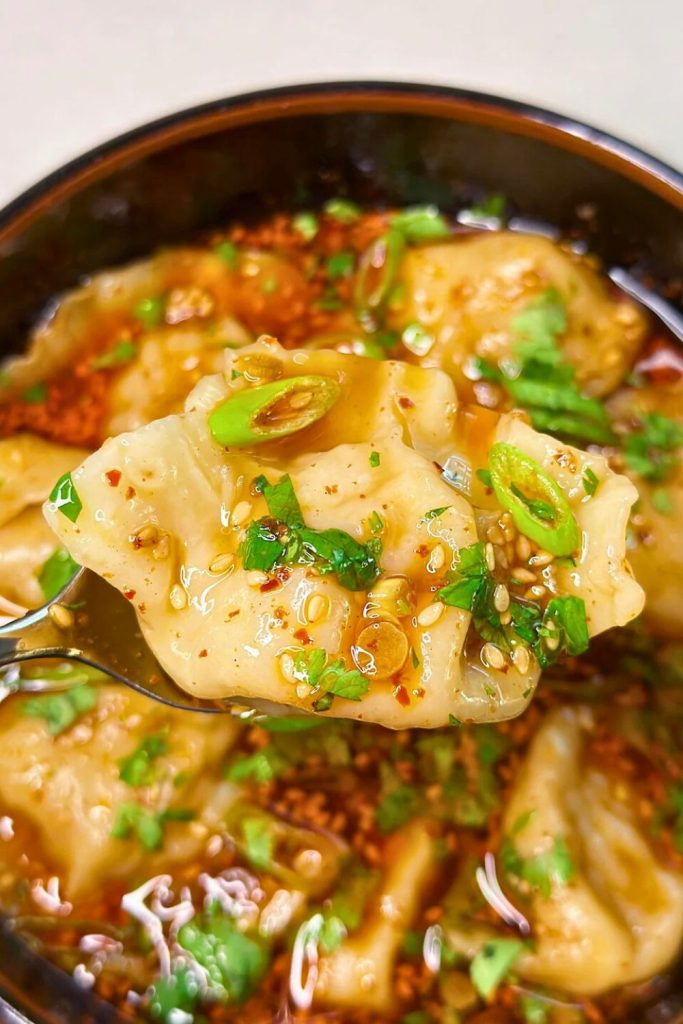
This recipe keeps the full hands-on dumpling process and pairs it with a broth that is sour, savory, spicy, and aromatic without losing balance.
These elements give the soup its distinctive texture and character:
1. Authentic Hot and Sour Flavor
This soup has a deep, tangy backbone thanks to a spiced black vinegar base. Infused with cinnamon, star anise, Sichuan peppercorns, and garlic, it brings an excellent balance of sour, savory, and warm spice. It is like the soul of northern China in a bowl.
2. Homemade Dumpling Wrappers
Homemade wrappers are worth the additional work. This recipe walks you through making your wrappers from high-protein dumpling flour kneaded, rested, and rolled to chewy, glossy perfection.
It is labor-intensive, yes, but the texture pays off big time. They hold their shape, do not turn mushy, and offer that signature bite that only fresh dough can.
3. Juicy Beef and Fennel Filling
This Hui-inspired filling uses beef instead of pork; this filling is inspired by the Hui cuisine of China’s Muslim population, which often features beef or lamb.
A key point is that the fresh fennel fronds lend a mild licorice aroma that cuts through the richness of the meat, while soy sauce, oyster sauce, and five-spice powder add umami and depth.
Mixing in one direction and slapping the mixture against the bowl makes the filling ultra-juicy and flavorful without needing a dipping sauce.
4. Custom Spiced Vinegar Broth
This goes beyond soup; it is a fusion of dipping sauce and soup in one. The spiced vinegar is intensely aromatic and mellowed by a low simmer.
It is diluted slightly for balance, then combined with sesame oil, chili oil, soy sauce, and aromatics like scallion and cilantro for a broth that is rich, fragrant, and full-bodied.
🧂 Ingredients Overview
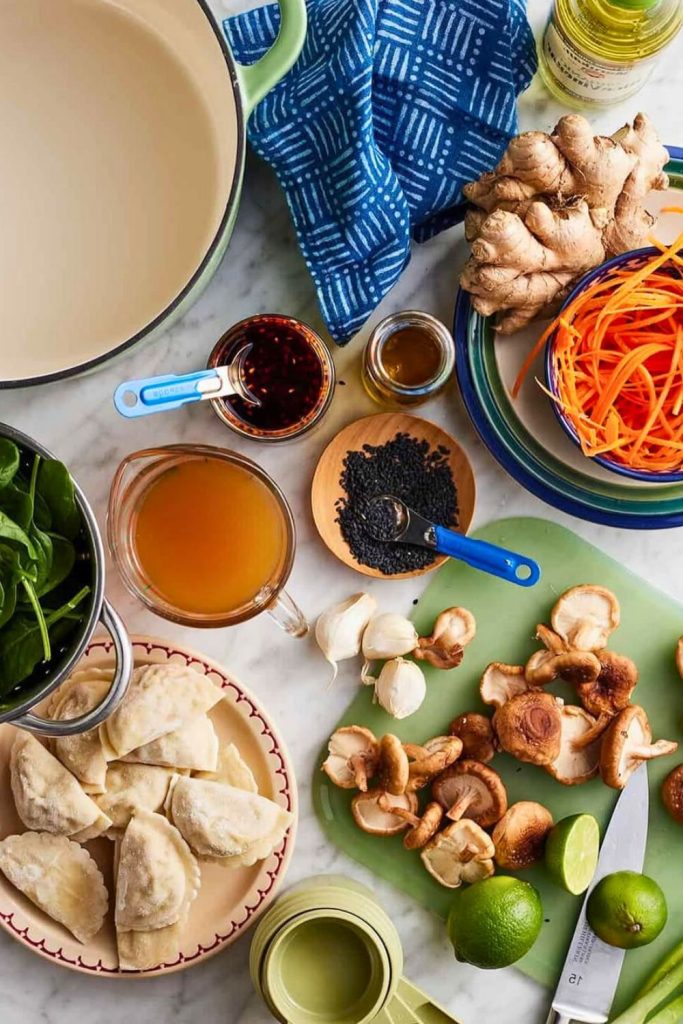
The ingredient table is organized by dumpling dough, beef filling, spiced vinegar, bowl add-ons, and soup liquid so you can prep each component separately.
| Category | Ingredient | Amount / Notes |
|---|---|---|
| Dumpling Dough | Dumpling flour (high-protein) | 400g (or bread flour with ≥12% protein) |
| Room-temperature water | 200g | |
| Salt | ½ tsp | |
| Filling | Ground beef | Approx. 450g (1 lb) |
| Fennel fronds | 2–3 cups (about 80g), finely chopped | |
| Scallions | 2 pieces, finely diced | |
| Cooking oil | 2 tbsp | |
| Five-spice powder | ½ tsp | |
| Soy sauce | 1½ tbsp | |
| Oyster sauce | 1½ tbsp | |
| Water (or beef stock) | ¼ cup | |
| Salt | ½ tsp | |
| Black pepper | To taste | |
| Egg | 1 | |
| Spiced Vinegar Base | Chinese black vinegar (Chinkiang-style) | 1½ cups |
| Water | ½ cup (to dilute sharpness) | |
| Brown sugar | 1½ tbsp | |
| Fennel seeds | ½ tsp | |
| Sichuan peppercorns | 1 tsp | |
| Cloves | 3 pieces | |
| Cinnamon stick | Small piece, crushed | |
| Star anise | 1 piece, broken apart | |
| Bay leaf | 1 piece | |
| Garlic cloves | 2, slightly crushed | |
| Dried red chilies (optional) | 2 pieces | |
| Soup Bowl Add-ons | Dried baby shrimp | 2 tbsp |
| Dried seaweed | A handful | |
| Cilantro and scallions | Lots, freshly chopped | |
| Toasted sesame seeds | 1 tbsp + extra for topping | |
| Soy sauce | 2 tbsp | |
| Spiced vinegar (from above) | 3–4 tbsp (adjust to taste) | |
| Beef or chicken fat (or butter) | 1 tsp | |
| Chili oil | 3 tbsp (or more if you like it spicy) | |
| Toasted sesame oil | Light drizzle | |
| Soup Liquid | Dumpling cooking water or beef stock | About 3 cups per bowl (add extra salt if needed) |
👩🍳 Step-by-Step Dumpling Soup Recipe

Making every component takes time, but dividing the work into clear stages keeps the process manageable.
Prepare the dough, filling, vinegar, wrappers, dumplings, and soup bowl in the same order shown below.
1. Making the Perfect Dumpling Dough
Begin with the foundation of this soup: the dumpling wrappers. Making your dough gives you that chewy, springy texture that store-bought wrappers can’t replicate. Follow these directions to do it right.
Ingredients:
- 400g dumpling flour (or bread flour with 12% protein)
- 200g room-temperature water
- ½ tsp salt
Instructions:
Begin by dissolving ½ teaspoon of salt in your water. This simple brine not only deepens the taste but also strengthens the dough structure.
Add the salted water to the flour gradually rather than all at once. Different flours absorb water at different rates, so mixing in stages gives you better control of the dough.
Use your hands or a spatula to gather everything into a shaggy dough gently. Do not forget to scrape the bottom of the bowl; every bit counts.
This dough will feel pretty tough at first, and that is okay. Dumpling dough typically has less moisture than bread or steamed bun dough. So do not panic if it seems complicated to knead.
Just get it to a semi-cohesive mass, cover it with plastic wrap or a damp towel, and allow it to rest for 20 minutes.
After the first rest, knead the softer dough by pressing, folding, and stretching it until the surface becomes smooth and elastic.
You will want to repeat this process of resting and kneading 2–3 more times. Each cycle strengthens the gluten and gives you that perfect dumpling texture the Chinese call “jing dao”—firm, with just the proper bite.
📝 Practical tip: Do not skip the resting periods. That is when the proteins relax and the dough becomes easy to work with.
2. 🧆 Crafting the Beef and Fennel Filling
While your dough is resting and relaxing, let’s move on to the flavorful filling. This one’s special, it draws from Hui cuisine traditions and uses beef and fennel, a combo that is light, aromatic, and deeply savory.
Ingredients:
- 450g ground beef
- 2–3 cups (80g) fennel fronds, finely chopped
- 2 scallions, diced
- 2 tbsp cooking oil
- ½ tsp five-spice powder
- 1½ tbsp soy sauce
- 1½ tbsp oyster sauce
- ¼ cup water or beef stock
- Salt and pepper to taste
- 1 egg
Instructions:
First, prep your fennel. You will be using the feathery green fronds, not the bulb or the fibrous stalks. Rinse them thoroughly in clean water and spin them dry using a salad spinner.
Finely chop the dried fennel fronds with a sharp knife. Their fresh, lightly licorice-like aroma balances the richer beef filling.
Next, dice your scallions and toss them into a small pot with 2 tablespoons of hot oil. Let them sizzle just until aromatic. Add ½ teaspoon of five-spice powder, stir quickly, and pour the aromatic oil directly into the beef.
To the beef, add:
- Soy sauce
- Oyster sauce
- Salt and pepper
- Water (or beef stock for extra richness)
- The raw egg
- Chopped fennel
Mix everything in one direction. Why? This allows the proteins in the meat bind together and develop that signature chewy texture.
After well mixed, slap the mixture against the bowl several times. This may sound odd, but it allows the filling firm up and hold its shape inside the dumplings.
📝 Practical tip: If fennel isn’t your thing, feel free to substitute with cabbage, scallions, carrots, or cilantro.
3. Creating the Spiced Vinegar Soup Base
This spiced vinegar is the heart and soul of your dumpling soup. It is tangy, warm, aromatic, and perfectly balanced. After you make it, you will want to use it in everything from noodles to dipping sauces.
Ingredients:
- 1½ cups Chinese black vinegar (Chinkiang style)
- ½ cup water
- 1½ tbsp brown sugar
- ½ tsp fennel seeds
- 1 tsp Sichuan peppercorns
- 3 cloves
- 1 small piece of cinnamon stick
- 1 star anise
- 1 bay leaf
- 2 garlic cloves, lightly crushed
- 2 dried red chilies (optional)
Instructions:
Pour the black vinegar and water into a pot. Add all the spices and garlic. Keep the heat low and bring it to a low simmer.
Maintain a low bubble for about 15 minutes so the vinegar loses its harsh edge and absorbs the warm spices.
You are aiming to reduce the liquid by about 30%. No need for measuring cups, eyeball it. After done, strain out the solids. What’s left is a fragrant, gently acidic, complex vinegar that elevates your broth to restaurant levels.
In practice, this batch makes enough for six servings. Store leftovers in a jar in the fridge—it’ll keep for months.
📝 Practical tip: Can’t find Chinese black vinegar? Balsamic vinegar works in a pinch, but it won’t taste quite the same.
4. Rolling and Wrapping the Dumplings
Now that your dough has rested and the filling is ready, it is time to shape your dumplings. This stage may seem intimidating, but it is easier than it looks—and super satisfying.
Rolling Out Wrappers:
- At this stage, flatten the dough slightly and cut it into thick strips.
- Dust each piece with flour to prevent sticking.
- Cut strips into small pieces about 11–12g each. You do not need a scale; use your thumb as a size guide.
- Here, roll each piece into a ball and keep them covered with plastic wrap to prevent drying out.
- Take one piece and flatten it slightly.
- Roll it out using a small rolling pin: roll forward and backward while rotating the dough with your other hand. This creates a round wrapper with a thick center and thin edges, well suited to holding the filling without breaking.
Wrapping the Dumplings:
- During this step, place a spoonful of filling in the center of your wrapper.
- Pinch the sides together to form a half-moon shape.
- Seal the edges tightly so the filling doesn’t leak while the soup cooks.
📝 Practical tip: Do not stress about perfect shapes. As long as they’re sealed, they’ll taste amazing.
This recipe yields 60–65 dumplings. You may freeze extras for later, just lay them on a tray and freeze until firm before storing in a bag.
5. Cooking the Dumplings to Perfection
Boiling dumplings is simple, but controlling the temperature keeps the wrappers intact and helps the filling cook evenly.
Instructions:
- Bring a pot of water to a rolling boil.
- At this point, add a drizzle of oil and gently drop in 10–15 dumplings per batch.
- Stir lightly to prevent sticking.
- After the water comes back to a boil, add ½ cup cold water to cool it slightly.
- At this stage, repeat this cooling process twice more, each time letting the water return to a boil before cooling it again.
- Here, on the third boil, your dumplings are fully cooked and ready to eat.
In practice, this triple-boil method ensures the wrappers cook slowly and evenly, without overcooking the outside.
📝 Practical tip: You may also use this water as the soup base, it is starchy, flavorful, and helps bring everything together.
6. Assembling the Soup Bowl
Finish by assembling the bowl. The final soup bowl is layered with flavor and texture, just like you’d get in a traditional Chinese noodle shop.
In a Large Soup Bowl, Add:
- During this step, 2 tbsp dried baby shrimp (optional but highly recommended)
- A generous handful of dried seaweed
- Lots of chopped scallions and cilantro
- 1 tbsp toasted sesame seeds
- 2 tbsp soy sauce
- 3–4 tbsp of your homemade spiced vinegar
- 1 tsp beef/chicken fat (or unsalted butter)
Then add 3 cups of the hot dumpling water (or beef stock if preferred). This helps melt the fat and combine all the flavors into a rich, savory soup.
Now gently add in the cooked dumplings.
Final Garnishes:
- 2–3 tbsp homemade chili oil (for heat and color)
- A drizzle of toasted sesame oil
- Extra cilantro and scallions
Take a moment to appreciate that bowl. It is hearty, spicy, sour, aromatic, and full of well-balanced flavor. The dumplings are juicy, the broth is zingy, and each spoonful hits the spot.
💡Tips for Dumpling Soup Success
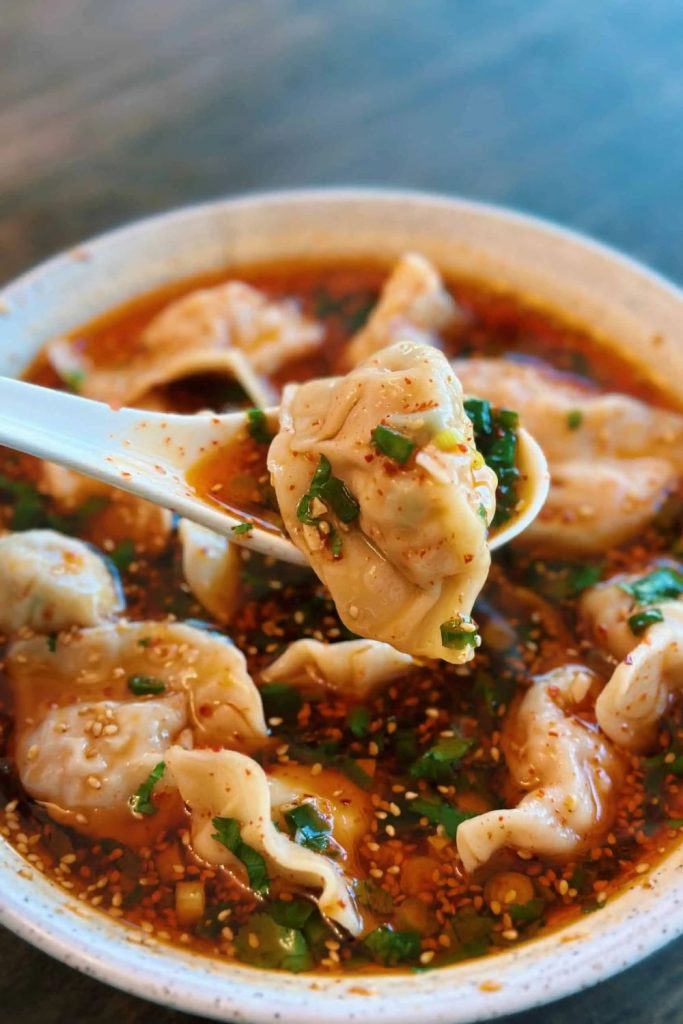
Successful dumpling soup depends on wrapper strength, rested dough, a cohesive filling, controlled boiling, and a well-balanced broth. These tips focus on those details.
1. Use High-Protein Flour for the Dough
Not all flours are created equal. For dumpling wrappers that hold their shape and do not fall apart in boiling water, you need flour with at least 12% protein content. Dumpling-specific flours work best, but if unavailable, bread flour is a great substitute.
2. Rest the Dough Repeatedly
Here’s a secret from traditional dumpling makers: knead, rest, repeat. Instead of kneading the dough endlessly in one go, allow it to rest between short kneading sessions. The cycle looks like this:
- Knead for 3–5 minutes
- Let it rest for 20 minutes
- Repeat 2–3 more times
In practice, this lets the gluten develop gradually without overworking the dough.
3. Slap the Filling for Texture
After you’ve mixed your filling, stir it in one direction (clockwise or counterclockwise). This helps bind the meat and seasoning. Then take the filling and slap it against the side of the bowl several times.
4. Use the “Three-Boil” Technique for Cooking Dumplings
The three-boil method moderates the water temperature so the filling cooks through before the wrappers become overly soft.
- Boil dumplings until they float
- Add ½ cup of cold water
- Wait for the water to boil again
- Repeat this process twice more
After the third boil, your dumplings will be perfectly cooked, soft but intact, with juicy filling and chewy wrappers.
5. Balance the Flavors in Your Soup Bowl
Aim for a broth that is tangy, savory, and aromatic but never overwhelming. The base includes spiced vinegar, soy sauce, sesame oil, and chili oil, all of which bring salt, heat, and umami.
🍲 Dumpling Soup Variants to Try

The same wrapping and cooking technique works with different proteins, vegetables, and broths. Use the table to choose a variation that suits your preferences.
| Variant Name | Main Protein | Vegetables/Fillings | Soup Twist | Great For |
|---|---|---|---|---|
| Classic Pork & Chive | Ground pork | Chinese chives | Plain chicken broth | Traditional lovers |
| Chicken Ginger | Ground chicken | Minced ginger, scallion | Light soy-sesame broth | Cold days, light eaters |
| Shrimp & Cabbage | Minced shrimp | Napa cabbage, garlic | Fish sauce and ginger broth | Seafood fans |
| Mushroom Tofu (Vegan) | Crumbled tofu | Shiitake, wood ear, carrots | Miso-vegetable broth | Plant-based eaters |
| Lamb & Cilantro | Ground lamb | Cilantro, cumin | Lamb stock with chili oil | Middle Eastern flavor lovers |
| Beef & Kimchi | Ground beef | Finely chopped kimchi | Kimchi brine + beef broth | Spicy & tangy fusion seekers |
| Turkey & Fennel | Ground turkey | Fennel fronds | Black vinegar-spiced soup (as above) | Lean meat with bright flavors |
| Prawn Wonton Soup | Chopped prawns | Bamboo shoots | Light broth with dried shrimp | Cantonese-style comfort |
🥣 Final Thoughts
Making dumpling soup from scratch is satisfying because each stage contributes something distinct, from the resilient dough to the final hot-and-sour broth.
The finished bowl combines technique, texture, and deeply aromatic seasoning in a way that shortcuts cannot fully reproduce.
Fennel keeps the beef filling fresh and fragrant, while the reduced black-vinegar mixture supplies warmth, acidity, and spice.
Because every component is prepared in your own kitchen, you can fine-tune the filling, chili, vinegar, and garnishes as you work.
Make a full batch when you want a bold comfort meal; extra dumplings freeze well for a faster bowl later.
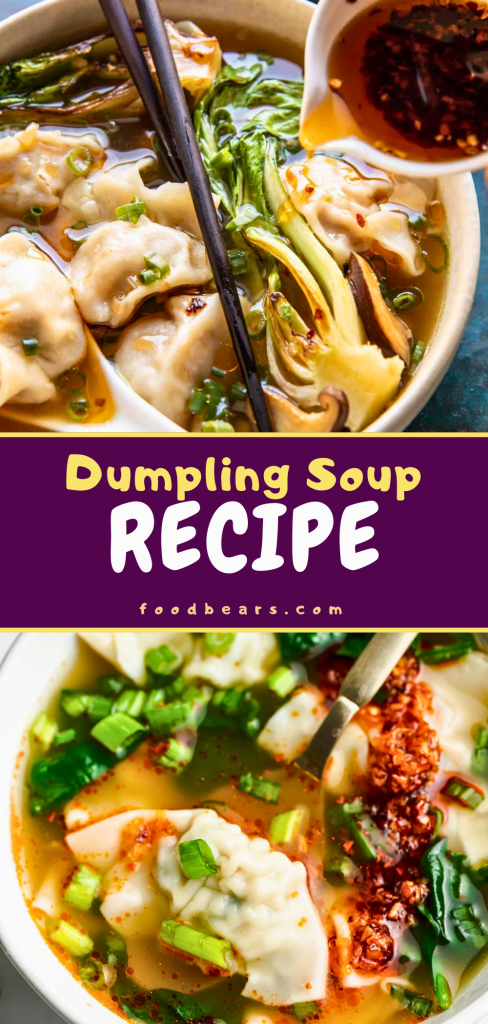
Hot and Sour Beef Dumpling Soup
💬 You Might Also Like
Continue with one of these linked soups for another warming meal:
- 🔸 Best Split Pea Soup Recipe for Fall Nights – Yellow split peas, garlic, and optional ham create a thick, satisfying bowl.
- 🔸 10-Min Prep Broccoli Soup Recipe You’ll Crave – Broccoli and cheddar combine in a fast, creamy weeknight soup.
- 🔸 Quick Roasted Tomato Soup Recipe for Lazy Girls – Roasted tomatoes and fresh basil produce a smooth café-style soup at home.
Save the linked recipes for another soup night, or serve a smaller portion before the dumplings as part of a larger menu.

Dana Brooks is a home-cooking writer at Feastbears, where she shares easy family recipes, cozy dinners, quick desserts, and beginner-friendly kitchen tips. Her goal is to make everyday cooking feel simple, warm, and enjoyable for busy home cooks.