
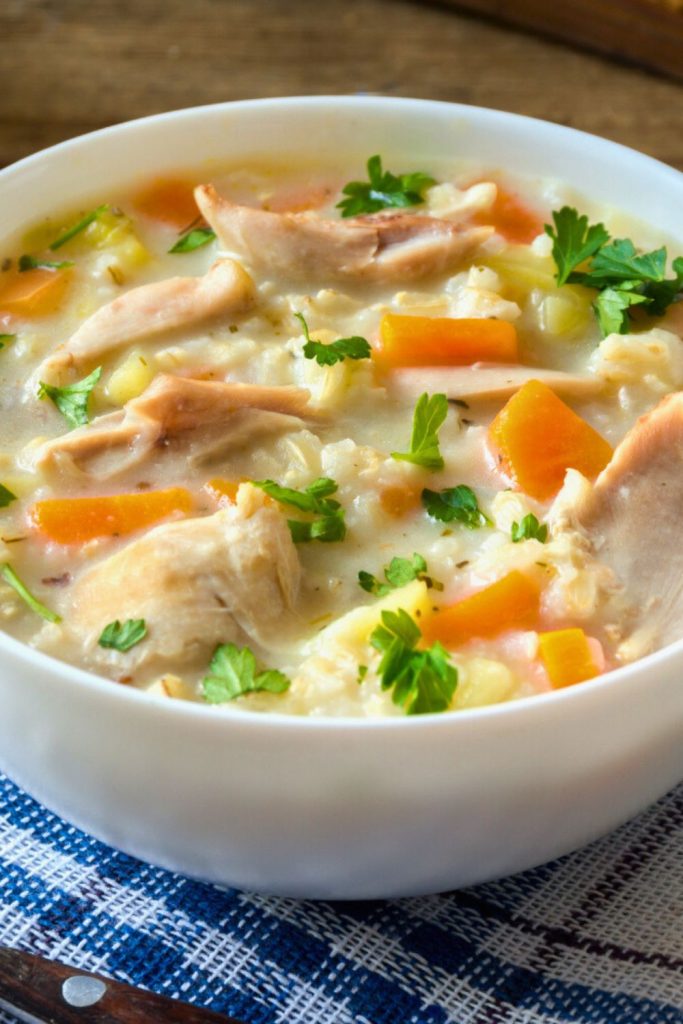
Chicken potato soup combines tender chicken, creamy Yukon Gold potatoes, and aromatic vegetables in a comforting one-pot broth.
Its affordable, familiar ingredients make it practical for weeknight dinners as well as cold-weather family meals.
Sourdough starter gives the broth body and a subtle tang; all-purpose flour works when no starter is available.
Onion, celery, carrot, garlic, and thyme create the savory foundation before chicken, potatoes, milk, and broth simmer together.
Measure and chop everything before the pot goes on the stove.
Why You’ll Love This Chicken Potato Soup

This soup is hearty enough for dinner but still simple enough to cook in one pot.
Slowly sautéed vegetables establish the flavor, while softened potato edges naturally reinforce the creamy broth.
Serve it for an easy supper, portion it for meal prep, or make it whenever the weather calls for something warm.
Several qualities make the recipe especially dependable:
- Velvety broth: Sourdough starter gives the soup natural body and a mild tang; flour can provide a more neutral alternative.
- Substantial portions: Tender chicken and Yukon Gold potatoes make each bowl filling.
- Plenty of vegetables: Onion, carrots, and celery supply color, texture, and savory sweetness.
- Simple ingredients, big flavor: You do not need fancy ingredients, just pantry staples that come together to create a restaurant-worthy meal.
- Under-an-hour comfort: The soup develops a slow-cooked character without requiring an all-day simmer.
- A great way to use sourdough starter: Instead of tossing out leftover starter, this recipe transforms it into a flavorful thickener, with no waste, just flavorfulness.
Tender chicken and potatoes provide substance, while vegetables and herbs keep the bowl balanced.
Ingredients You’ll Need

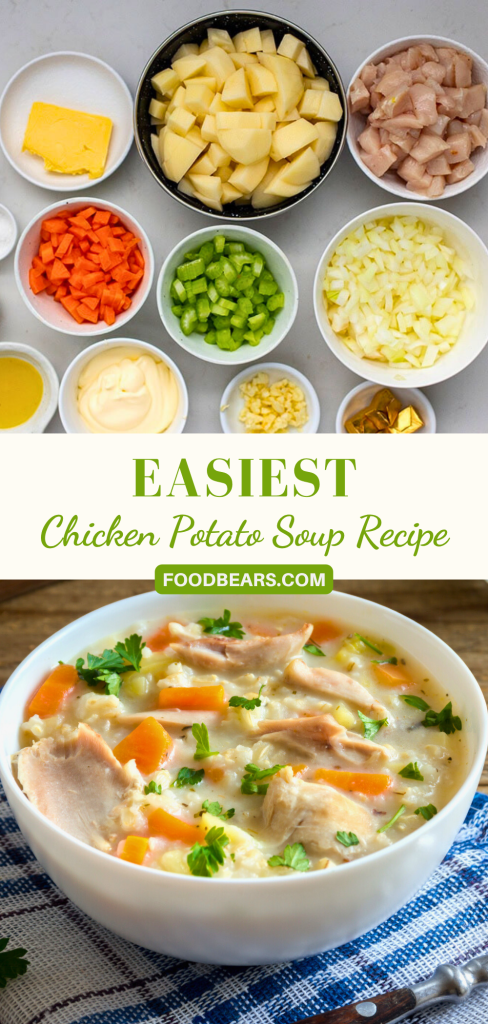
The ingredient table below organizes every component and explains its role in the finished soup.
| Ingredient | Quantity / Type | Purpose / Notes |
|---|---|---|
| Olive oil | 2 tablespoons | Used to sauté the vegetables and begin the flavor base. |
| Onion | 1 medium, diced | Adds savory sweetness. |
| Celery | 2 stalks, diced | Provides mild earthy flavor and texture. |
| Carrots | 2 medium, diced | Add color and natural sweetness. |
| Yukon Gold potatoes | 4–5 medium, cubed | Hold their shape while making the soup creamy. |
| Chicken breast | 2 medium, diced | Cooks quickly and supplies lean protein. |
| Chicken broth | 4 cups | Forms the savory soup base. |
| Milk | 1 cup | Creates creaminess without a heavy finish. |
| Sourdough starter or flour | 1/3 cup | Thickens the broth. |
| Garlic powder | 1 teaspoon | Adds warm garlic flavor. |
| Salt | 1 teaspoon, then adjust | Enhances the chicken, vegetables, and broth. |
| Black pepper | 1/2 teaspoon | Adds gentle heat. |
| Thyme | 1 teaspoon | Provides a comforting herbal note. |
| Chives | Optional garnish | Adds freshness and color. |
| Sourdough bread | Optional, for serving | Useful for dipping into the creamy broth. |
These ingredients create a creamy, savory bowl without relying on an all-day simmer.
Step-by-Step: How to Make Chicken Potato Soup

The original cooking process builds flavor in layers, beginning with the vegetables and ending with a final seasoning check.
Prepare the ingredients first so each cooking stage can follow without interruption.
Wash and dice the carrot, celery, and onion into small, similar-size pieces so they soften evenly.
Step 1: Prep All Your Ingredients
Peel and cube the Yukon Gold potatoes into bite-size pieces; their waxy texture helps them hold their shape.
Cut the chicken breast into roughly ½-inch pieces for quick, even cooking.
Keeping every prepared ingredient near the stove makes the one-pot method calm and efficient.
Warm olive oil in a soup pot or Dutch oven over medium heat until the surface begins to shimmer.
Add the onion, celery, and carrots and stir so every piece receives a light coating of oil.
Step 2: Heat the Olive Oil and Sauté the Veggies
Cook for about 5 to 6 minutes, stirring occasionally, until the onion is translucent and the vegetables begin to soften.
Do not rush this sauté: the onion adds sweetness, celery brings earthiness, and carrots contribute color and a gentle natural sugar.
Stir them gently every few minutes, letting them cook for approximately 5–6 minutes, or until the onions become translucent and fragrant.
Sprinkle the softened vegetables with garlic powder, salt, and black pepper, then stir for even coverage.
Heating the seasoning briefly in the oil wakes up its aroma and spreads it through the soup base.
Step 3: Add the Seasonings
After the veggies are soft and fragrant, sprinkle in the garlic powder, salt, and black pepper. Stir them into the mixture so every piece of vegetable gets coated.
Sourdough starter or flour thickens this soup without requiring a separate heavy cream sauce.
Stir in about ⅓ cup starter or flour and cook for one minute, moving it continuously across the bottom of the pot.
The mixture should begin clinging to the vegetables as the raw flour flavor cooks away.
Step 4: Create the Thickener (Sourdough Starter or Flour)
If using flour, keep stirring so it does not collect in dry pockets or scorch.
Stir about 1/3 cup active starter or discard into the sautéed vegetables and cook it for approximately 1 minute.
Add the chicken broth gradually, beginning with about one cup and stirring until the thick base loosens smoothly.
Pour in the remaining broth in stages, whisking or stirring after each addition.
This gradual method prevents lumps and creates an even, silky liquid.
Step 5: Add the Chicken Broth Gradually
With your roux ready, it is time to add the chicken broth, but do not pour it all in at once. Start with about one cup and stir vigorously. This helps loosen up the thickened mixture and ensures there are no lumps.
Add the diced chicken, potato cubes, and milk, then stir to distribute them throughout the pot.
Bring the soup only to a gentle simmer so the chicken cooks tenderly and the milk stays smooth.
Stir from the bottom every few minutes because a thickened broth can catch more easily than a clear soup.
Step 6: Add Chicken, Potatoes, and Milk
After 15 to 20 minutes, the chicken should be cooked through and the potatoes nearly tender.
Add 1 teaspoon thyme, using dried leaves or several fresh sprigs.
Partially cover the pot and maintain a quiet simmer instead of a vigorous boil.
Continue for 10 to 15 minutes so the herb infuses the broth and the potatoes finish softening.
Step 7: Add Thyme and Let It Simmer
No good soup is complete without a touch of herbs, and here, thyme is the star. Sprinkle in about 1 teaspoon of dried thyme or several sprigs of fresh thyme if you have them on hand.
Stir thyme into the simmering broth, partially cover the pot, and allow the herb to infuse without boiling the milk aggressively.
Taste when the potatoes are fork-tender and the broth coats the spoon.
Adjust salt, pepper, or thyme. A small knob of butter is optional for a rounder finish.
Thin an overly thick soup with milk or broth; simmer uncovered for a few minutes if it needs more body.
Step 8: Taste and Adjust Seasoning
The ideal broth is creamy and spoon-coating without feeling pasty or heavy.
Ladle the soup into deep bowls and finish with chopped chives or parsley.
Serve with crusty sourdough bread for dipping into the creamy broth.
Each bowl should include chicken, tender potato, vegetables, and enough broth to bring the ingredients together.
Step 9: Serve with Garnish and Bread
After everything tastes well-balanced, it is time to serve your masterpiece. Ladle the chicken potato soup into deep bowls and sprinkle with fresh chives or parsley for a burst of color and freshness.
Bread, salad, toast, or biscuits give the creamy soup a useful contrast in texture.
Choose a crisp or lightly acidic side when you want to make the meal feel less rich.
This soup is not just dinner, it is a feeling. A feeling of warmth, simplicity, and satisfaction that lingers long after the last spoonful.
Serving Suggestions

Complete the bowl with bread, salad, toast, or another side that contrasts with the creamy broth.
The mild soup works with crusty bread, a fresh salad, or another light side.
Here are several serving ideas that make your meal feel complete:
1. Serve With Fresh Sourdough Bread
There is nothing quite like tearing into a slice of warm sourdough bread alongside a bowl of creamy soup.
The tangy flavor of the bread complements the rich broth, and its chewy texture makes it well-balanced for soaking up every last drop.
If starter remains after making the soup, use it in a loaf or quick bread to serve alongside.
2. Add a Crisp Garden Salad
Balance the richness of your soup with something light and refreshing. A mixed green salad with vinaigrette, cherry tomatoes, and cucumber contributes crunch and brightness, making the whole meal feel fresh and balanced.
A reliable chicken potato soup depends on gentle heat, properly cooked potatoes, and a final texture adjustment.
The base recipe also accepts vegetables, cheese, bacon, spice, or dairy-free substitutions.
Tips for the Best Chicken Potato Soup
Choose additions that support the texture you want rather than crowding the pot.
- Use Yukon Gold potatoes: They are naturally creamy, slightly buttery, and hold their shape without disintegrating, unlike russets.
- Don’t rush the sauté: Take time to cook your onions, celery, and carrots until they are soft and fragrant. This builds the foundation of flavor for the soup.
- Maintain a soft simmer: Gentle heat protects the milk from curdling and prevents the chicken from becoming tough.
- Incorporate herbs at the right time: Thyme (or rosemary) should be added during the simmer stage, allowing its flavor to infuse deeply without becoming overpowering.
- Adjust the thickness: If your soup feels too thin, mash several potato cubes directly in the pot. For a thicker result, simmer uncovered for 5 minutes; for a thinner soup, add a splash of milk or broth.
The recipe works because every stage adds flavor without turning the method into an all-day project.
Optional Add-Ins and Variations
Sautéed vegetables, tender chicken, creamy potatoes, thyme, and mild sourdough tang form a well-rounded bowl.
It is easy enough for a weeknight and substantial enough to serve guests with bread and salad.
| Add-In or Variation | How to Use It | Benefit |
|---|---|---|
| Crispy bacon | Stir in cooked crumbled bacon before serving. | Adds smoky saltiness and crunch. |
| Sweet corn | Add 1/2 cup during the simmer. | Provides sweetness and color. |
| Peas or spinach | Stir in during the final 5 minutes. | Adds freshness and extra vegetables. |
| Cheddar or Parmesan | Stir in or sprinkle over each bowl. | Creates a richer, cheesier finish. |
| Chili flakes or hot sauce | Add to individual servings. | Introduces adjustable heat. |
| Lemon juice | Stir in 1 teaspoon before serving. | Brightens the creamy broth. |
| Fresh herb mix | Add during simmering or at serving. | Builds a more complex herbal aroma. |
| Coconut milk | Use instead of dairy milk. | Makes the soup dairy-free with a rich texture. |
| Mushrooms | Sauté with the onion and celery. | Adds earthy flavor and a meatier bite. |
| Rotisserie chicken | Add near the end instead of raw chicken. | Shortens the cooking time. |
Final Touch: Why This Recipe Works
This soup succeeds because every stage builds flavor without making the method complicated.
Sautéed vegetables, tender chicken, creamy potatoes, thyme, and the slight tang of sourdough create a balanced bowl.
It is practical for a weeknight yet substantial enough to serve guests with bread and a simple salad.
Chicken Potato Soup
Warm Kitchen Favorites You’ll Love Next
Continue the comfort-food menu with these linked FeastBears recipes:
- 🥖 Sweet Potato Cornbread: Moist, buttery cornbread that is ideal for dipping into soup.
- 🥞 Sweet Potato Pancakes: A fluffy, warmly spiced option for breakfast or brunch.
- 🥔 Crispy Potato Balls: Golden bite-sized snacks with a soft, savory center.
These recipes use approachable ingredients and fit comfortably into an autumn or winter meal plan.

Dana Brooks is a home-cooking writer at Feastbears, where she shares easy family recipes, cozy dinners, quick desserts, and beginner-friendly kitchen tips. Her goal is to make everyday cooking feel simple, warm, and enjoyable for busy home cooks.