When dinner needs to be straightforward, balsamic chicken is a useful recipe to have ready. A short list of pantry ingredients makes the marinade, and the oven takes care of the cooking once the chicken has had time to chill in it.
Prepare it for a family meal, a relaxed dinner with friends, or portions to use over the next few days. Most of the preparation happens before the baking dish goes into the oven.
The combination of tangy balsamic vinegar, dried herbs, and chicken gives the dish plenty of flavor without a complicated sauce or specialty equipment.
The steps below explain how to mix the marinade, arrange the chicken, and check that it is safely cooked. You will also find serving ideas and ways to store the leftovers.
⭐ Why This Balsamic Chicken Recipe Works

Chicken breasts benefit from a well-seasoned coating and careful cooking. This balsamic chicken recipe uses both, giving a familiar ingredient a more distinctive dinner-table flavor.
The recipe works through a few simple choices.
Here is what each part contributes:
1. A Bold, Straightforward Marinade
Olive oil, balsamic vinegar, Dijon mustard, and dried herbs make a tangy, savory marinade that coats the chicken.
The chicken takes on flavor at its surface during the refrigerated marinating time. The balsamic mixture also seasons the juices that collect in the baking dish.
2. Tanginess Balanced with Herbs
Balsamic vinegar supplies acidity and a touch of sweetness, while Dijon adds a gentle bite. Rosemary and thyme bring aromatic, earthy notes that complement the chicken.
3. A Manageable Ingredient List
The marinade relies on common cupboard ingredients. A bowl, whisk, food-safe bag, and baking dish are enough for the main preparation.
4. Simple Prep and Contained Cleanup
Whisk the marinade in one bowl, then use a resealable food-safe bag to coat the chicken. Set the sealed bag in a rimmed dish in the refrigerator to contain any leaks.
5. Temperature-Guided Cooking
Bake at 400°F and use a thermometer to check the thickest part of each breast. The chicken should reach 165°F (74°C) before leaving the oven; do not rely on an assumed rise during resting.
🧾 Ingredients You’ll Need
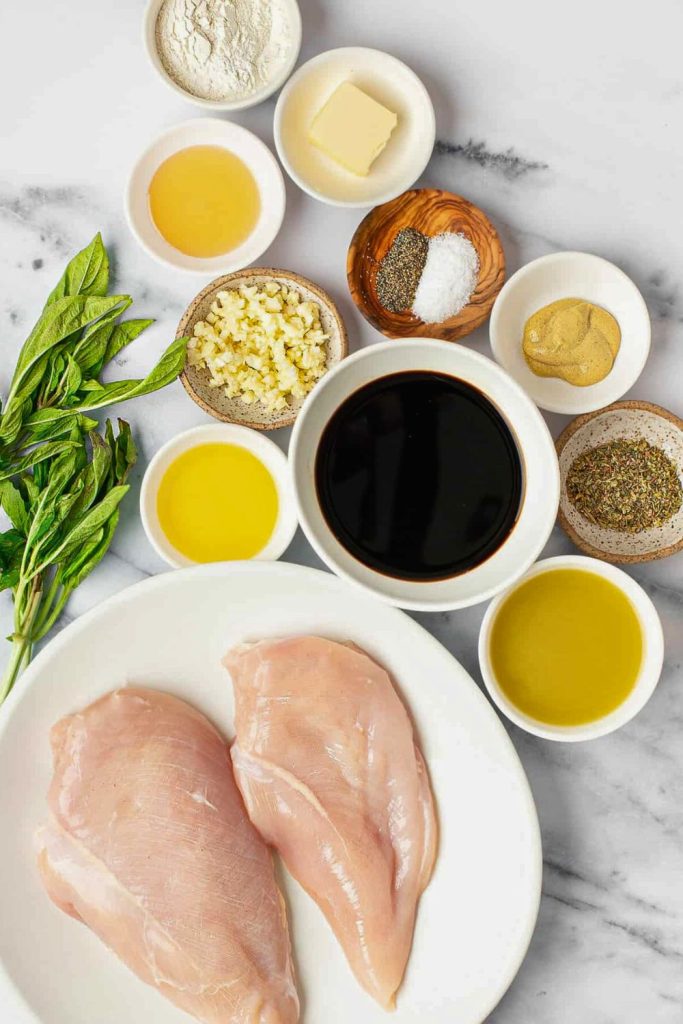
Use this table to measure the marinade and prepare the chicken before starting.
| Ingredient | Amount | Notes |
|---|---|---|
| Olive oil | 1/4 cup | Forms the oil portion of the marinade and helps coat the chicken. |
| Balsamic vinegar | 1/3 cup | Adds tanginess and a little sweetness. |
| Dijon mustard | 1 tablespoon | Helps blend the oil and vinegar while contributing a gentle bite. |
| Dried thyme | 1 teaspoon | Provides an earthy herb note. |
| Dried rosemary | 1 teaspoon | Adds a fragrant, woodsy flavor. |
| Salt | 1 teaspoon | Seasons the marinade; adjust future batches to your preference. |
| Ground black pepper | 3/4 teaspoon | Adds peppery warmth; adjust to taste. |
| Boneless skinless chicken breasts | 4 medium pieces | Choose similar-sized pieces for more even cooking. |
| Olive oil spray or regular oil | As needed | Use a light coating on the baking dish. |
| Fresh parsley (optional) | For garnish | Add just before serving for a fresh herbal finish. |
🛒 Prep-ahead tip: You can mix the marinade up to two days ahead and refrigerate it in a covered container before adding the chicken. Keep it separate from raw poultry until you are ready to marinate.
🍴 Step-by-Step: How to Make Balsamic Chicken

This step-by-step balsamic chicken guide follows the original method from whisking the marinade to spooning the cooked juices over the finished chicken.
The preparation is uncomplicated, but allow for the marinating time and check doneness with a thermometer rather than the clock alone.
Work through the stages in order for an organized cooking process.
🔥 Step 1: Whisk Up the Flavor Bomb Marinade
Start with the balsamic marinade, mixing it completely before handling raw chicken.
A smooth mixture helps distribute the mustard, herbs, and seasonings across the chicken instead of leaving them in separate pockets.
Ingredients for the Marinade:
- ¼ cup olive oil to form the oil component.
- ⅓ cup balsamic vinegar for tangy flavor.
- 1 tablespoon Dijon mustard to help bring the mixture together.
- 1 teaspoon dried thyme for an herbal note.
- 1 teaspoon dried rosemary for an aromatic finish.
- 1 teaspoon salt for seasoning.
- ¾ teaspoon ground black pepper, adjusted to your preference if needed.
Place all the marinade ingredients in a medium bowl and whisk until they are thoroughly combined.
Scrape around the bowl as you whisk so the mustard and dried herbs mix into the oil and vinegar evenly.
🥄 Mixing tip: Dijon helps the oil and vinegar form a more uniform mixture. Whisk again if the marinade separates before you add it to the chicken.
Use a Dijon mustard you enjoy. Grey Poupon is one option, but the method does not depend on a particular brand.
Set the mixed marinade nearby and prepare a clean work area for the chicken.
🍗 Step 2: Prep and Marinate the Chicken
Choose four medium boneless, skinless chicken breasts of similar thickness where possible. Comparable pieces are easier to cook evenly.
A large resealable food-safe bag is convenient for this step because:
- It keeps the chicken and marinade contained when properly sealed.
- Its flexible sides help keep the liquid against the chicken.
- It can fit inside a shallow dish on a refrigerator shelf.
Here’s how to do it:
- Fold the top edge of the bag outward before filling to help keep the sealing area clean. Work over a tray and wash any surfaces that come into contact with raw poultry.
- Pour the prepared marinade into the bag.
- Place the chicken breasts in the marinade one at a time.
- Unfold the edge, press out excess air, and seal the bag securely.
- Turn and gently massage the sealed bag to coat all sides of the chicken. Check that the seal stays closed.
💡 Bag or bowl? Either can work. A covered, nonreactive container is an alternative; turn the chicken during marinating if the liquid does not cover it evenly.
Place the bag in a rimmed dish and refrigerate for at least one hour, or up to 24 hours. Keep it at 40°F (4°C) or below; longer marinating is not automatically better for the texture.
🕒 Minimum marinating time: 1 hour.
⏳ Make-ahead option: Overnight, within the 24-hour limit.
🔄 Step 3: Preheat and Prep the Baking Dish
When the marinating time is nearly finished, prepare the oven and baking dish. Leave the chicken refrigerated while the oven heats.
Preheat the oven to 400°F (about 205°C).
Preheating belongs here, after the long marinating stage, rather than before you start mixing the marinade. The oven should be ready when you arrange the chicken for baking.
Lightly Grease the Baking Dish
Use a shallow baking dish or a large oven-safe skillet. Coat the base lightly with olive oil spray or a small amount of regular oil.
💡 Leave space between pieces: Arrange the breasts in one layer without overlapping so they can cook more evenly.
Once the oven is hot and the dish is ready, take the chicken out of the refrigerator.
🧑🍳 Step 4: Add Chicken and Drizzle Extra Marinade
Lift each breast from the bag and place it in the prepared dish, leaving a little space around the pieces.
A small amount of marinade can go over the raw chicken before baking, but handle it as raw-poultry liquid.
Do this:
- Spoon a little of the used marinade over the chicken now, before it goes into the oven. Discard any remaining marinade unless you will bring it to a full boil before using it as a sauce.
Never drizzle unboiled used marinade onto cooked chicken. Wash the spoon and any equipment that touched raw poultry before serving the finished dish.
⏱️ Step 5: Bake and Check the Temp
The chicken is now ready to bake.
Place the dish on the center rack and bake for about 20–25 minutes. Breast size and thickness affect the time, so continue cooking when needed.
Check Doneness with a Thermometer
Each breast needs to reach an internal temperature of 165°F (74°C) before you remove it from the oven. A brief rest afterward is useful, but it is not a substitute for reaching that temperature.
Use a food thermometer to check the thickest part of the chicken instead of judging by color or juices.
Taking an Accurate Reading:
- Insert the probe into the center of the thickest part of the breast.
- Keep the tip away from the baking dish and avoid measuring only near the surface.
- Wait for the reading to stabilize, then check the other pieces as well.
🧠 How to Read the Result:
- Below 165°F: Continue cooking, then check again.
- At least 165°F: The chicken has reached the minimum safe temperature.
- Well above the target: Extra cooking can dry out lean breast meat; avoid leaving done pieces in the oven unnecessarily.
There is no need to aim for a higher range such as 170–173°F for every breast. Use 165°F (74°C) as the minimum and remove the pieces once they are cooked through.
Aroma Is a Flavor Cue, Not a Safety Test
The vinegar and herbs will smell fragrant as the chicken bakes. Enjoy that aroma, but use the thermometer—not smell—to decide whether the chicken is ready.
🍽 Final Touch Before Serving
Finish with the cooked juices and fresh parsley after checking doneness.
- Spoon fully cooked pan juices over each breast. If there is any doubt about the sauce’s temperature, transfer it to a saucepan and bring it to a full boil before serving.
- Add chopped fresh parsley, if using, for a fresh herbal finish.
Let the safely cooked chicken rest for three to five minutes before slicing and serving.
🎉 And That’s It—Perfect Balsamic Chicken Every Time
The key parts of the method are simple: mix the marinade, chill the chicken, bake it in a single layer, and verify the internal temperature.
Use the finished chicken with rice, potatoes, vegetables, or salad, or portion leftovers for wraps and lunches.
🍽️ How to Serve Balsamic Chicken
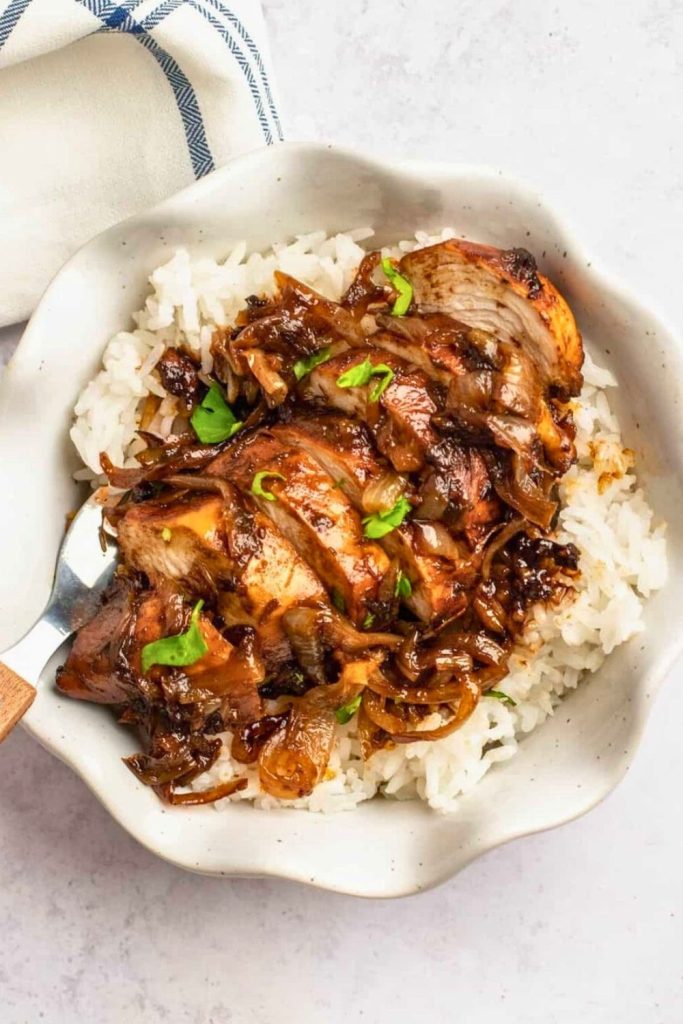
Once the balsamic chicken is cooked and resting, choose a side that works with its tangy, herb-seasoned juices.
It can be paired with a comforting starch or a crisp vegetable side, depending on the meal you want to serve.
🥔 Familiar Dinner Pairings
- Garlic mashed potatoes — a creamy base for a spoonful of the cooked pan sauce.
- Roasted vegetables — carrots, Brussels sprouts, or zucchini offer a contrasting texture.
- Steamed rice or herbed quinoa — a simple accompaniment that lets the balsamic flavor stand out.
🥗 Crisp and Fresh Sides
- A green salad — dress mixed greens lightly with olive oil and lemon juice.
- Cauliflower rice — an alternative to a grain-based side.
- Grilled asparagus or green beans — a straightforward vegetable pairing.
🥪 Other Ways to Use the Chicken
Slice safely stored cooked chicken and add it to another meal. Some useful options include:
- Wraps or pitas with your preferred vegetables.
- Meal-prep bowls with a grain and cooked vegetables.
- Sandwiches with arugula and goat cheese for a tangy, peppery combination.
- Pasta salads kept chilled until serving or lunchtime.
💡 Serving tip: Keep some fully cooked pan sauce with the chicken and spoon it over rice or vegetables just before serving.
🧊 Leftovers? Meal Prep Gold!
This balsamic chicken is easy to portion for later meals. Prompt cooling and sensible storage make the leftovers more useful.
🥡 Store Cooked Chicken Safely
- Refrigerator: Put leftovers in shallow, covered containers within two hours, or one hour above 90°F (32°C). Keep chilled at 40°F (4°C) or below and use within three to four days.
- Freezer: Freeze whole or sliced portions in suitable containers. For the best quality, plan to use them within about three months.
✨ Reheating tip: Add a little broth, cover, and reheat in the microwave or a skillet until the chicken reaches 165°F (74°C). Turn or rearrange pieces to avoid cold spots.
📅 Plan Portions for the Week
If cooking on Sunday, refrigerate only the portions you will eat within three to four days. Freeze later-week portions promptly and thaw them in the refrigerator before use.
🍱 Meal-Prep Pairing Ideas:
| Day | Meal Idea |
|---|---|
| Monday | Serve chicken with quinoa and roasted broccoli. |
| Tuesday | Tuck sliced chicken into a wrap with spinach and hummus. |
| Wednesday | Pair chicken with greens, feta, and a little balsamic glaze. |
| Thursday | Serve with sweet potato mash and green beans; use a safely stored portion. |
| Friday | Make an arugula-and-aioli chicken sandwich using a portion frozen earlier and thawed safely. |
These combinations keep the same cooked chicken useful in several different meals; they are not a reason to keep one refrigerated batch beyond its storage window.
😎 Portioning tip: Label containers with the cooking date and freeze individual portions so you can thaw only what you need.
🧠 Secret Tips for Balsamic Chicken

A few small habits make the preparation easier and help the finished chicken stay well seasoned.
🥄 1. Coat the Chicken Evenly
After sealing the bag, turn it gently and work the marinade around the breasts. Look for an even coating rather than leaving one side sitting above the liquid.
🧊 2. Allow Refrigerated Marinating Time
One hour gives the coating time to flavor the surface. Overnight marinating is convenient when planning ahead, but keep the total within the recipe’s 24-hour limit.
🗓️ Prepare the bag the evening before if that makes dinner easier, and keep it in a rimmed dish in the refrigerator.
🥄 3. Use the Cooked Pan Juices
After the chicken is safely cooked, spoon the fully cooked juices over it with a clean utensil. Do not confuse the finished pan juices with uncooked marinade left in the bag.
🌿 4. Add Garnishes at the End
Scatter fresh parsley over the chicken just before serving. A little lemon juice or a small drizzle of separately prepared balsamic glaze is another optional finish.
🌡️ 5. Check Every Piece
Measure the thickest part of each breast with a food thermometer. All pieces must reach 165°F (74°C) before removal from the oven; do not assume resting will raise an undercooked piece enough.
📏 Timing is only a guide: Similar-sized pieces and temperature checks are more dependable than a fixed baking time alone.
🥰 Final Thoughts: Balsamic Chicken Is a Total Dinner Win
This balsamic chicken recipe uses an uncomplicated marinade to give baked chicken a tangy, herb-forward flavor.
It fits a planned weeknight dinner just as easily as a meal with guests. Prepare the marinade ahead when helpful, then allow enough time for chilling and baking.
The mustard, vinegar, and herbs season the chicken, while the cooked pan juices provide a simple finish without a separate elaborate sauce.
Keep the recipe with your regular chicken dinners and make a note of the cooking time for the size of breasts you usually buy. Continue to check temperature each time.
Baked Balsamic Chicken

📌 More Cozy, Easy Recipes to Try Next
For more comforting meals, explore these recipes next:
🧡 Easy Butternut Squash Soup for Fall Vibes
A creamy squash soup is another warming choice for a cool evening or a relaxed weekend meal.
🍷 40-Min Easy Chicken Marsala Recipe for Dinner
Chicken Marsala offers a different savory sauce when you want another chicken dinner to try.
🌿 Easy 30-Min Pesto Chicken Recipe for Busy Girls
Pesto chicken brings a fresh herbal flavor to your dinner rotation.

Dana Brooks is a home-cooking writer at Feastbears, where she shares easy family recipes, cozy dinners, quick desserts, and beginner-friendly kitchen tips. Her goal is to make everyday cooking feel simple, warm, and enjoyable for busy home cooks.