As spring produce returns to the market, asparagus is one of the first vegetables to bring fresh green color to the season. Blending it into a warm soup lets you keep that brightness while still serving something cozy.
This creamy asparagus soup strikes that balance. It feels light but satisfying, looks elegant in the bowl, and is both vegan and dairy-free.
Instead of cream or cheese, cannellini beans give the soup its smooth body and velvety finish without overwhelming the asparagus.
The short cooking time makes it useful for meal prep, an easy weeknight dinner, or a first course for a spring menu.
The detailed method below covers preparation, simmering, blending, seasoning, and serving.
Why You’ll Love This Asparagus Soup
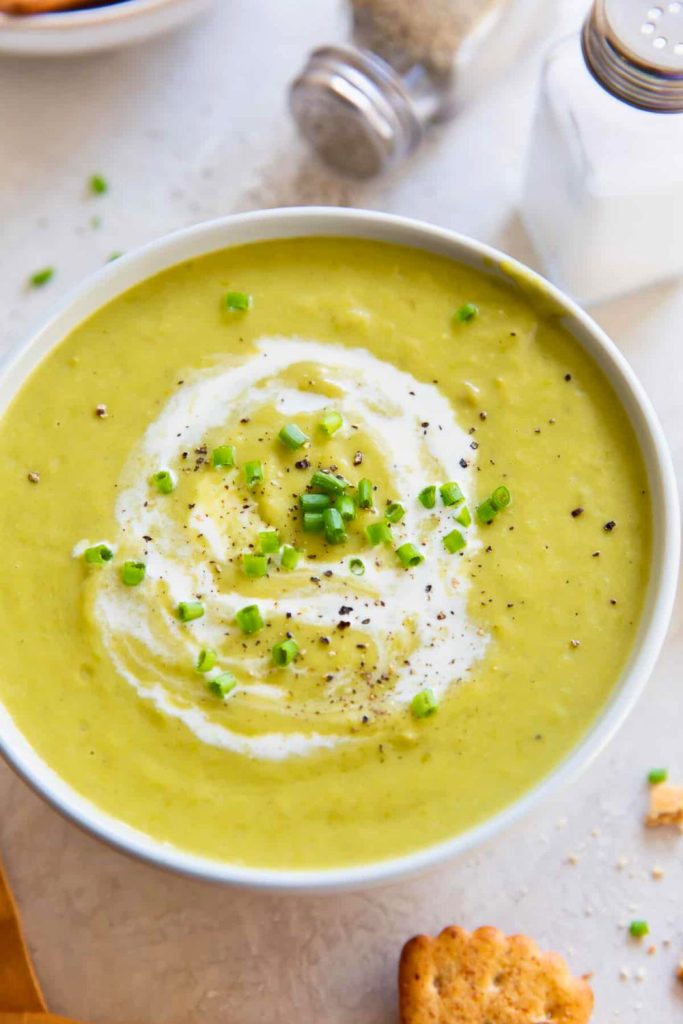
This is more than a basic blended vegetable soup: it combines fresh flavor, practical ingredients, and a comforting texture.
Here are the main reasons to include it in your regular meal plan:
- Creamy Without Dairy: Cannellini beans blend into a silky base, so milk, cream, and cheese are unnecessary. Use vegan broth to keep the entire recipe plant-based.
- Light but Satisfying: Asparagus, beans, onion, and garlic create a flavorful bowl with enough body to work as lunch or a simple dinner.
- Fresh Spring Character: Asparagus remains the central flavor, making the soup suitable for the transition from cold evenings to brighter spring meals.
- Ready Quickly: A short ingredient list and 10–12 minute simmer keep the total time close to 30 minutes.
- Flexible Foundation: After you understand the bean, aromatics, and broth base, you can add spinach, peas, herbs, or other compatible vegetables.
Ingredients You’ll Need
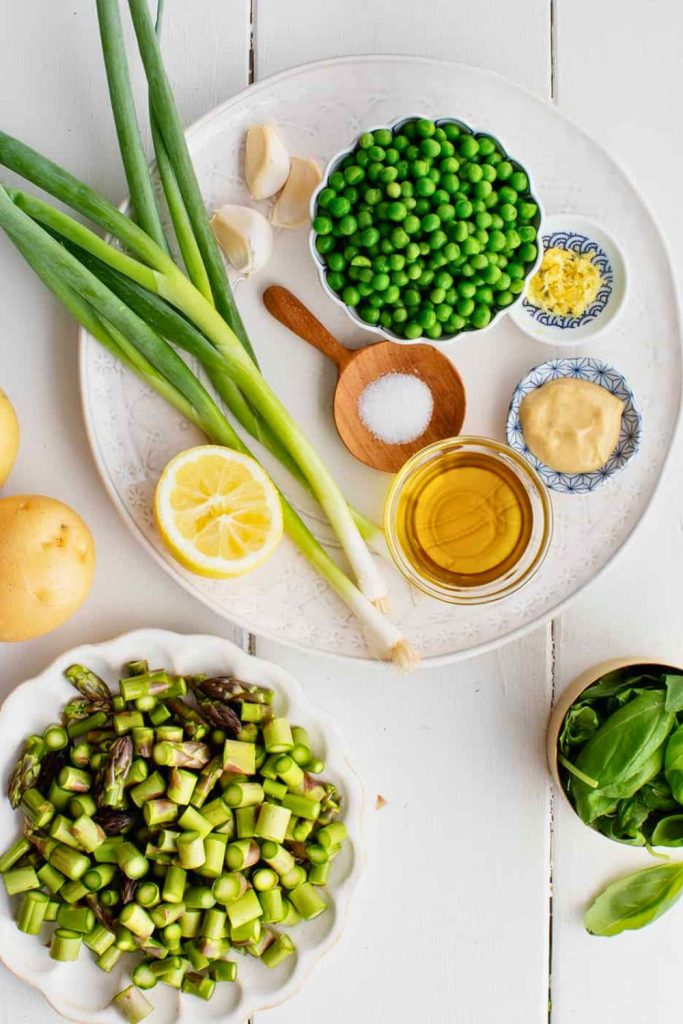
The ingredient list is intentionally short. Each item contributes either fresh flavor, creaminess, or seasoning.
| Ingredient | Quantity | Purpose / Notes |
|---|---|---|
| Fresh Asparagus | 2 pounds (about 2 bunches) | Choose firm stalks, remove the woody ends, and cut the tender portion into 1-inch pieces. |
| Onion | 1 medium, chopped | Creates the aromatic base after it softens gently in olive oil. |
| Garlic | 2 cloves, roughly chopped | Adds warmth and savory depth without dominating the asparagus. |
| Cannellini Beans (White Kidney Beans) | 1 can (15 oz), rinsed and drained | Blends into the soup to supply body and a creamy texture without dairy. |
| Olive Oil | 1 tablespoon | Softens the onion and garlic and adds a little richness. |
| Vegetable Broth | 4 cups (low-sodium preferred) | Builds savory depth; water works when you want a lighter, more asparagus-forward result. |
| Salt | To taste | Brings the ingredients into focus; add gradually and adjust after blending. |
| Black Pepper | To taste | Provides a mild peppery contrast to the smooth soup. |
Optional Garnishes:
- A thin coconut-milk drizzle adds richness and a contrasting white swirl.
- Reserved steamed asparagus tips provide texture and identify the soup at a glance.
- Fresh parsley or chives add color and a clean herbal note.
- A final grind of black pepper gives the surface a sharper finish.
How to Make Asparagus Soup (Step-by-Step Guide)

Creamy asparagus soup is straightforward to make with fresh vegetables, one can of beans, and a few careful cooking steps.
Use this walkthrough to choose and trim the asparagus, build the aromatic base, simmer until fully tender, and blend safely.
Step 1: Choosing and Prepping the Asparagus
Because asparagus is the main flavor, begin with a fresh bunch. Stalk thickness varies, so use these signs when shopping:
- Medium stalks are convenient: very thin spears soften quickly, while very thick stalks may have a more fibrous base. Medium pieces usually cook evenly in the listed time.
- Check the tips and color: choose bright green stalks with compact tips, and skip bunches with limp stems or wet, mushy ends.
- Rinse thoroughly: wash the stalks under cool running water to remove grit around the tips.
The lower portion is usually woody. Line up the stalks and look for the point where the green begins to fade toward a pale, dry base.
Trim about 1–2 inches from the bottom, adjusting as needed for the specific bunch.
Cut the usable stalks and tips into pieces of about 1 inch so they soften at a similar rate.
For a simple garnish, reserve several attractive tips and steam them separately until just tender.
Step 2: Preparing the Base Vegetables
Onion and garlic provide the flavor foundation for the asparagus and beans.
- Onion: Use one medium yellow onion and chop it with this sequence:
- Trim away the stem end.
- Cut the onion in half through the root.
- Remove the papery outer skin.
- Make a few horizontal and vertical cuts, then slice across to produce an even chop.
Pieces of a similar size soften at the same pace and are less likely to brown unevenly.
- Garlic: Peel and roughly chop two cloves. Fine mincing is unnecessary because the soup will be blended.
These aromatics add depth while remaining mild enough for the asparagus to stay recognizable.
Step 3: Beans – The Secret to Dairy-Free Creaminess
The dairy-free texture comes from cannellini beans, also sold as white kidney beans, rather than cream or butter.
They help in three useful ways:
- Smooth texture: Cooked white beans puree into a thick, silky base.
- More substance: Their protein and fiber make the soup more filling than asparagus and broth alone.
- Mild flavor: Cannellini beans blend into the background instead of competing with the vegetable.
Drain and rinse the canned beans under cool water. This removes the packing liquid and gives you more control over the salt level.
Without the beans, the result would be a thinner vegetable puree; with them, the soup has enough body to feel creamy.
Step 4: Sautéing for Flavor
Warm 1 tablespoon olive oil in a medium pot over medium heat. Add the chopped onion with a small pinch of salt.
Salt begins drawing moisture from the onion, helping it soften without needing high heat.
Cook until translucent rather than deeply browned. The goal is a clean aromatic base, not the caramelized sweetness used in darker soups.
Add the chopped garlic after the onion is tender. Stir for 30–60 seconds, just until fragrant, because garlic can turn bitter if it scorches.
This gentle sauté creates the savory background for every later ingredient.
Step 5: Adding the Asparagus, Beans, and Broth
Add the prepared ingredients that form the body of the soup:
- Asparagus pieces
- Cannellini beans (rinsed and drained)
- 4 cups of low-sodium vegetable broth (or water for a lighter soup)
Season lightly with salt and black pepper. Broth gives a fuller savory flavor, while water keeps the finished taste especially clean and vegetable-forward.
Bring the pot to a boil, then reduce it to a simmer and cover partially. Cook for 10–12 minutes, until a fork enters the asparagus easily.
During the simmer, the asparagus softens, the beans warm through, and the onion-garlic base seasons the broth.
Step 6: Blending to Perfection
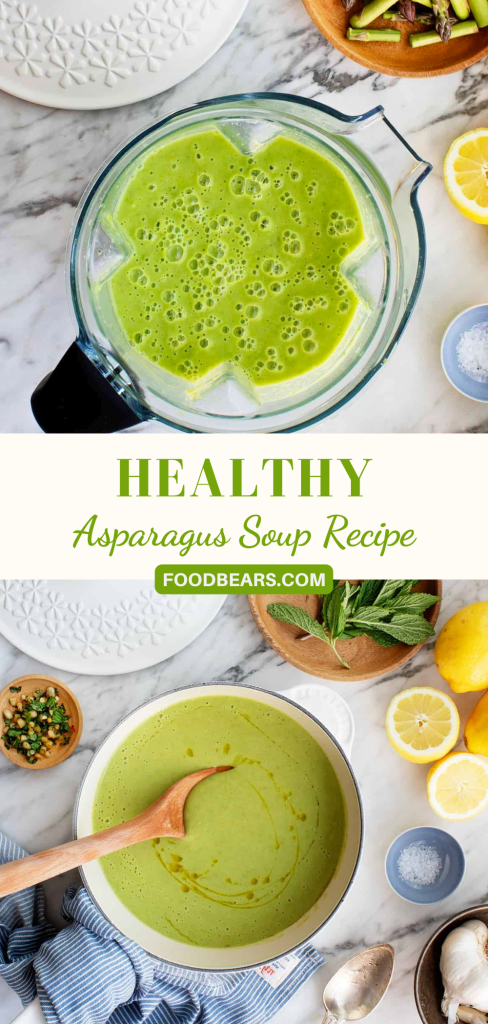
At this point the pot is chunky; blending combines the vegetables, beans, and liquid into a cohesive soup.
Choose one of these methods:
- Immersion blender: Remove the pot from direct heat, keep the blade submerged, and blend slowly until the mixture is smooth.
- Countertop blender: Cool the soup briefly and work in small batches, filling the jar less than halfway. Vent the lid, cover the opening loosely with a folded towel, and begin on low speed.
Continue blending until the soup is evenly green and smooth. The pureed cannellini beans should thicken it without any dairy.
💡 Tip: For a more rustic result, blend only half of the soup and stir it back into the unblended portion.
Step 7: Taste and Adjust
If you used a countertop blender, pour the soup back into the pot. Taste it while warm and adjust one element at a time.
- Salt: Add a small pinch if the asparagus and broth taste muted.
- Pepper: Freshly ground black pepper provides a clean, mild bite.
- Consistency: Thin an overly thick soup with broth or water; simmer a thin soup uncovered for a few extra minutes.
Small adjustments at the end are more effective than over-seasoning before the soup has been blended.
Step 8: Serving and Garnishing
The soup can be ladled into bowls immediately, showing off its smooth texture and green color.
A restrained garnish makes the presentation more polished without covering the fresh asparagus flavor.
Consider one or two of these toppings:
- Reserved steamed asparagus tips for a recognizable garnish and tender bite.
- A narrow swirl of coconut milk for contrast and extra richness.
- Chopped parsley or chives for fresh herbal flavor and color.
- Freshly cracked black pepper for a sharper finish.
Serve warm with crusty bread, crisp croutons, or a lightly dressed salad to complete the meal.
Serving Suggestions

Asparagus soup can be a light lunch, a weeknight main, or a small starter. Its smooth texture and fresh flavor work with many straightforward accompaniments.
Use one of these pairings based on the occasion:
- Crusty bread or baguette: Sourdough or multigrain bread is sturdy enough for dipping into the thick puree.
- Grilled cheese: A crisp, melting sandwich offers classic comfort; use dairy-free bread and cheese when keeping the meal vegan.
- Garden salad: Mixed greens, cucumber, and a light vinaigrette add cool crunch and acidity.
- Garlic or herb croutons: Scatter them over each bowl just before serving so they remain crisp.
- Roasted vegetables: Carrots, zucchini, or bell peppers round out a plant-based meal with color and caramelized flavor.
- Small starter portions: For guests, serve the soup in cups or small bowls with asparagus tips and a light coconut-milk swirl.
💡 Presentation Tip: Choose one consistent garnish for every bowl, or vary the toppings so guests can compare herbs, coconut milk, and asparagus tips.
Variations of Asparagus Soup
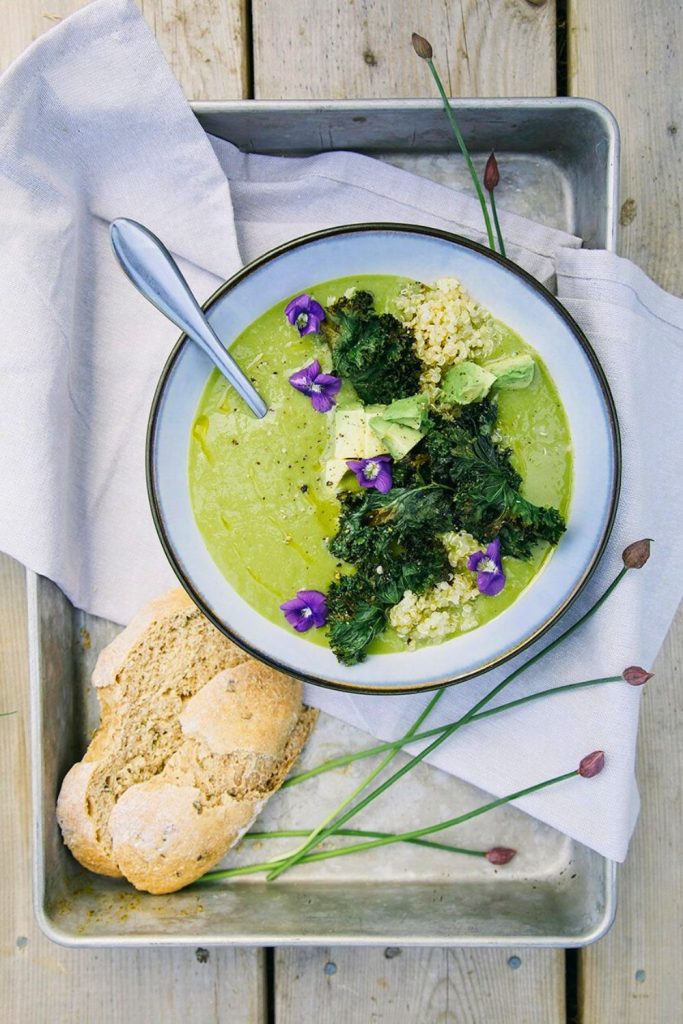
The combination of asparagus, onion, garlic, beans, and broth is easy to adapt to seasonal produce or the ingredients already in your kitchen.
| Variation | Ingredients Added/Swapped | Flavor Profile |
|---|---|---|
| Spinach & Asparagus Soup | Add 2 cups fresh spinach during the last minute of simmering, then blend. | Deeper green color with a mild leafy flavor |
| Pea & Asparagus Soup | Add 2 cups fresh or frozen peas with the asparagus. | Gently sweet and strongly spring-inspired |
| Watercress Twist | Replace up to half the asparagus with 2 cups watercress, adding it near the end. | Peppery flavor that contrasts with the creamy base |
| Asparagus Potato Soup | Simmer 2 peeled, diced potatoes with the asparagus until completely tender. | Thicker and more substantial for cold-weather meals |
| Spicy Asparagus Soup | Cook ½ teaspoon red pepper flakes briefly with the garlic. | A mild, warming heat |
| Herbed Asparagus Soup | Blend in fresh basil or dill after the soup comes off the heat. | Fresh and aromatic with a summery finish |
After the original method is familiar, these changes let you match the soup to the season without losing its basic creamy structure.
Nutritional Benefits of Asparagus Soup

This soup combines vegetables, beans, broth, and a small amount of olive oil. Rather than treating it as a cure or “superfood,” consider the ordinary nutritional contribution of each ingredient.
Asparagus
- Provides vitamins including K and folate.
- Contributes folate, which the body uses in normal cell processes.
- Contains naturally occurring plant compounds as part of a varied diet.
- Adds fiber and volume to the soup while remaining relatively light.
Cannellini Beans
- Supply plant-based protein that makes each serving more substantial.
- Contribute dietary fiber to the overall meal.
- Provide minerals such as iron and magnesium in ordinary food amounts.
Onion and Garlic
- Add aromatic flavor and small amounts of naturally occurring nutrients; they should not be presented as medical treatment.
- Build depth without requiring cream, cheese, or a heavy sauce.
Olive Oil
- Supplies monounsaturated fat and helps the onion cook evenly.
- Adds richness to the soup while keeping the recipe dairy-free.
Overall Recipe Notes
- The base recipe is vegan and can be gluten-free when the vegetable broth is certified accordingly.
- Beans provide protein and carbohydrate, while asparagus and onion add vegetables and olive oil contributes fat.
- Its fiber and protein can make it more satisfying, but individual nutritional needs and portions differ.
- The soup stores well, making it a practical option for planned lunches or dinners.
A bowl offers vegetables, beans, and broth in one comforting dish—without needing exaggerated health claims.
Final Thoughts
This creamy asparagus soup demonstrates how a short list of ingredients can produce a polished, flavorful result.
Fresh asparagus, onion, garlic, and cannellini beans blend into a smooth dairy-free soup that remains satisfying without heavy cream.
It suits spring especially well, but the warm bowl is welcome on cooler nights too. Prepare it for lunch, a dinner starter, or an easy meal with bread.
If you want an approachable vegetable soup with an elegant texture, this approach is worth keeping for asparagus season.
Healthy & Hearty Recipes to Bookmark
Continue with one of these cozy, family-friendly soups when you want another make-ahead meal:
- Meatball Soup for Family Dinners: Tender meatballs and tomato broth make a substantial option for cold evenings.
- Lazy Sunday Pho Soup: A streamlined beef pho with fragrant broth and customizable toppings for a relaxed weekend.
- Chicken Vegetable Soup: Tender chicken and a generous mix of vegetables create a familiar, comforting bowl.
Creamy Vegan Asparagus Soup


Dana Brooks is a home-cooking writer at Feastbears, where she shares easy family recipes, cozy dinners, quick desserts, and beginner-friendly kitchen tips. Her goal is to make everyday cooking feel simple, warm, and enjoyable for busy home cooks.