When you want the familiar flavors of lasagna without assembling and baking a layered dish, a pot of soup is an appealing alternative.
This version keeps the beef, tomatoes, pasta, and creamy cheese toppings, but puts them together in a much simpler sequence.
Lasagna soup cooks in one pot, with broken noodles simmered directly in the tomato broth. Allow time for browning, a 20-minute simmer, and about 10 minutes for the pasta.
Mozzarella, ricotta, and Parmesan give each bowl the cheesy finish that makes the dish feel like lasagna, even without the layers.
🦸♀️ Why Lasagna Soup Is Your New Weeknight Hero
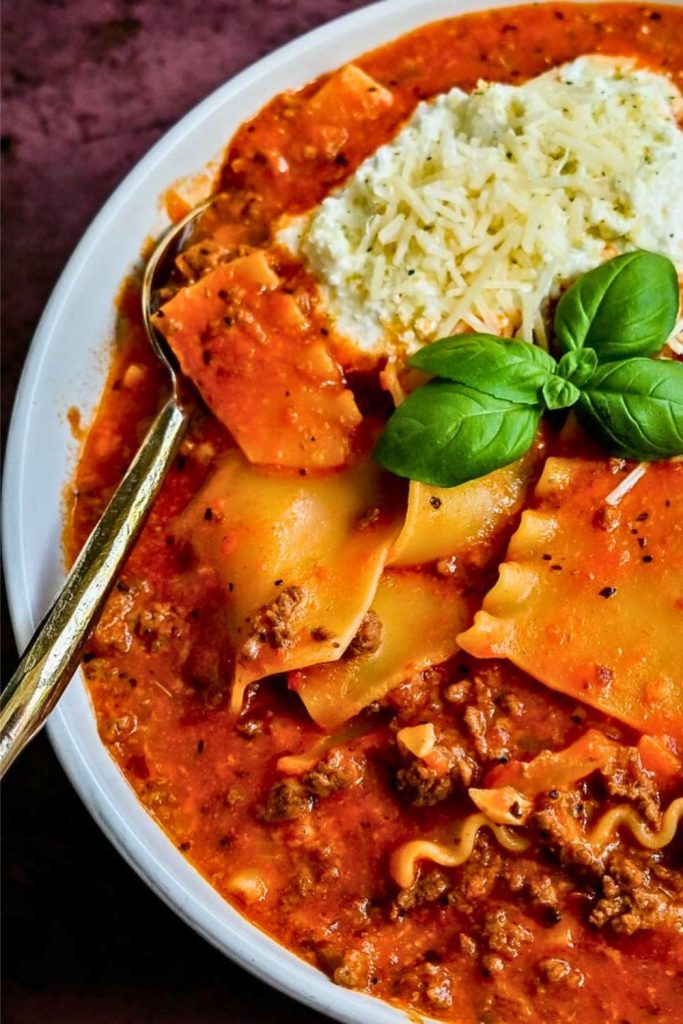
A one-pot dinner can make a busy evening easier. Instead of separately preparing fillings, boiling noodles, and assembling a pan, this lasagna soup brings the main components together on the stove.
The soup has the familiar combination of beefy tomato sauce, tender noodles, and creamy cheese. It skips assembly and baking, but still needs enough simmering time for the broth and pasta.
There is no separate pasta pot or large baking dish to manage with the main method.
Here are the features that make it useful for a comfortable weeknight dinner:
✅ A Single Pot for the Soup
Brown the beef and onion, build the tomato broth, then cook the noodles in the same large pot. Keep only a small bowl or two for the cheese toppings.
✅ Familiar Flavor without Layering
This is a practical option when you want lasagna-style flavors but do not want to prepare a full tray. The soup method removes the layering and oven-baking stages.
✅ Easy to Adapt
Use ground beef as written, or follow the poultry or vegetable variations below. Broth controls the thickness, and individual cheese toppings let everyone finish their bowl differently.
✅ A Shareable Family Meal
Set out the mozzarella, ricotta, and Parmesan so each person can choose the amount they enjoy. The tomato-and-pasta base works well with simple bread or salad alongside.
📝 Ingredients You’ll Need (For 4–6 Servings)

Use this ingredient table to prepare the soup and cheese toppings. The recipe makes approximately 4–6 servings, depending on portion size.
| Ingredient | Amount | Notes |
|---|---|---|
| Lean ground beef | 1 lb (about 450g) | Brown with the onion; drain excess fat if needed. |
| Onion | 1 medium, chopped | Chop before heating the pot. |
| Garlic | 3 cloves, grated or minced | Add after the beef and onion, cooking briefly. |
| Diced tomatoes | 1 can (15 oz) | Use the tomatoes and their juices; a basil-and-garlic variety is optional. |
| Tomato sauce | 1 can (15 oz) | Provides a smooth tomato base. |
| Beef broth | 4 cups | Have extra broth available if you prefer a looser consistency. |
| Lasagna noodles | 6–8 sheets, broken into pieces | Break into bite-sized pieces and cook in the broth until tender. |
| Italian seasoning | 1 tablespoon | Stir into the tomato broth before simmering. |
| Olive oil | 1 tablespoon | Use at the start of cooking. |
| Salt | To taste | Add sparingly and taste after the broth and cheeses contribute seasoning. |
| Black pepper | To taste | Adjust to taste near the end. |
| Parmesan cheese | ½ cup, freshly grated | Stir in off the heat; extra for serving is optional. |
| Mozzarella cheese | ½ to 1 cup, shredded | Divide among the hot bowls as a topping. |
| Ricotta cheese | ¼ to ½ cup, as needed | Add to individual bowls if desired. |
| Fresh basil leaves | A few, torn or chopped | Add after cooking, with extra leaves for garnish if desired. |
🥄 Step-by-Step: How to Make Lasagna Soup

Begin with the beef and onion, then give the tomato broth its simmering time before adding the noodles. This sequence builds flavor while keeping the pasta from overcooking.
The steps below explain what to add and what to look for at each stage.
🔥 Step 1: Get Your Pot Hot
Choose a large, heavy-bottomed pot or Dutch oven with enough room for the broth and expanding noodles.
Set the pot over medium-high heat to warm before adding the oil and beef.
A well-heated pot encourages browning, while adequate space helps moisture escape instead of collecting around the meat.
Warm the pot briefly without overheating it, particularly if it has a coating that should not be heated empty for long.
🍳 Step 2: Sauté the Beef and Onions
Add 1 tablespoon olive oil, then the 1 pound lean ground beef and chopped onion.
Cooking them together is useful because it:
- Simplifies preparation: The onion softens while the beef browns.
- Builds the base: Onion juices and browned beef flavor the same pot of soup.
With extra-lean beef, there may be little fat to remove. If using a fattier mince, brown it first, drain excess fat safely, then add and soften the onion.
Break the beef into small, fairly even crumbles with a spoon. Let it sit briefly between stirs so parts of the meat have time to brown.
Cook for roughly 6–8 minutes, until browned and the onion has softened. Ground beef should reach 160°F (71°C); do not use color alone as a safety check.
👩🍳 Seasoning Tip: Add a small pinch of salt while cooking, remembering that the broth, tomatoes, and cheeses will add more seasoning later.
🧄 Step 3: Add Garlic for Flavor Boost
When the beef and onion are ready, add the garlic.
Stir in 3 grated or finely minced garlic cloves and cook for about 30 seconds.
Keep stirring just until the garlic becomes fragrant. It needs only a short time before liquid is added, and should not be allowed to scorch.
💡 Garlic Tip: Grating produces fine pieces that spread easily through the soup. Finely mincing with a knife is also suitable.
The browned beef, onion, and garlic now form the savory base for the tomato broth.
🍅 Step 4: Tomato Time!
Next, add the tomato ingredients that give the soup its lasagna-style flavor.
Stir in the following:
- One 15-ounce can diced tomatoes, including the juices. A basil-and-garlic variety is optional.
- One 15-ounce can tomato sauce.
- 4 cups beef broth.
Stir well, scraping the bottom to loosen any browned residue into the liquid.
Add 1 tablespoon Italian seasoning. A store-bought blend or your usual combination of dried Italian-style herbs works here.
Taste once the meat is fully cooked, then add salt and black pepper sparingly. The cheese added later will also affect the saltiness.
To cook the tomato base:
- Bring the soup just to a boil, uncovered.
- Lower the heat to medium-low and simmer for 20 minutes.
🕒 This simmer lets the tomato broth and seasonings come together before the pasta goes in. Stir occasionally and adjust the heat if it bubbles too vigorously.
For a meat-free version, use mushrooms and zucchini instead of beef, plus vegetable broth. See the variation notes below for choosing suitable cheese.
🍝 Step 5: Add the Broken Noodles
The noodles turn the tomato-and-beef base into lasagna soup.
Break 6–8 lasagna sheets into rough, bite-sized pieces and stir them into the simmering broth.
There is no need to boil these noodles separately for the main recipe. They soften in the broth and absorb some of its flavor.
Simmer for about 10 minutes, or until the pasta is tender. Stir regularly to separate the pieces and keep them from sticking to the pot.
Check the consistency as the noodles cook:
- For a more brothy soup, add 1–2 extra cups broth as needed.
- For a thick, spoonable consistency, keep the original amount if there is still enough liquid to cook the pasta.
The noodles continue absorbing liquid after cooking. Adjust the broth to suit how soon you are serving and how thick you prefer the finished bowl.
🧀 Step 6: Cheese It Up!
The cheese and fresh basil go in after the main simmer is finished.
Switch off the heat, then stir in:
- A few torn or chopped fresh basil leaves.
- ½ cup freshly grated Parmesan.
Stir gently until the Parmesan is incorporated into the hot soup.
Choose how you want to serve the remaining cheeses:
For an evenly creamy broth, stir some ricotta into the pot off the heat. For distinct cheese toppings, keep the ricotta and mozzarella separate and finish each bowl individually.
- Spoon the hot soup into serving bowls.
- Scatter shredded mozzarella over each portion.
- Add a spoonful of ricotta, if using.
- Finish with additional Parmesan or basil, if desired.
Let the mozzarella soften in the hot broth before serving. The ricotta provides a creamy contrast to the tomato base.
🍽️ Step 7: Build Your Bowl of Lasagna Soup
Bring the soup and toppings to the table while everything is hot.
Spoon a mixture of beef, pasta, and broth into each bowl rather than serving mostly liquid or noodles.
For the layered topping style:
- Ladle the hot soup into a bowl.
- Add a portion of the shredded mozzarella.
- Stir lightly so the mozzarella begins to melt.
- Place a spoonful of ricotta in the center, if desired.
- Add a little grated Parmesan and fresh basil as a final garnish.
Serve promptly so the noodles retain some texture and the cheese remains soft.
🍴 Bonus Tip: Cheese on Demand
If saving part of the pot for later, keep the mozzarella and ricotta separate and top only the portions you are serving.
- Keeps the soup base and toppings easy to store separately.
- Reduces the amount of cheese that must go through another reheating cycle.
- Lets each person choose their preferred amount of topping.
This approach is useful when a single batch covers more than one meal.
🌀 Make It Your Own: Variations & Substitutions

The tomato broth and pasta make lasagna soup a flexible starting point for several variations.
Adjust the protein, vegetables, or pasta to suit your preferences, checking cooking times and ingredient labels when making dietary substitutions.
Here are several ways to adapt the recipe:
🌱 1. Vegetarian Lasagna Soup
A vegetable-based version can still be substantial and full of tomato flavor.
For a Vegetarian Variation:
- Replace the beef with chopped mushrooms, zucchini, or eggplant, cooking the vegetables until softened before adding liquid.
- Add cooked lentils or drained canned white beans if you want a more substantial texture.
- Use vegetable broth and cheeses made with vegetarian rennet if that is important for your diet.
Keep the tomato base and pasta method, then finish with your chosen cheeses. The vegetables may need a different initial cooking time than beef.
🐔 2. Lighten It Up with Ground Turkey or Chicken
Ground turkey or chicken can replace the beef. Choose the fat level you prefer and cook ground poultry to 165°F (74°C).
- Check the package rather than assuming all ground poultry is leaner than beef; fat content varies.
- Taste the finished broth and adjust herbs, garlic, salt, and pepper to suit the milder meat.
🔥 3. Add a Little Kick
For a spicier version, try one of these additions:
- Add ½ teaspoon red pepper flakes with the garlic.
- Replace some or all of the beef with hot Italian sausage, cooking it fully and draining excess fat as needed.
- Stir in a little Calabrian chili paste or hot sauce at the finish.
🔥 Heat Tip: Start with a small amount, especially if the sausage or tomatoes are already seasoned, and increase only after tasting.
🌾 4. Gluten-Free Friendly
A gluten-free version is possible with suitable packaged ingredients.
- Choose gluten-free lasagna sheets or a gluten-free short pasta.
- Break sheets into pieces and follow their package guidance, checking tenderness during cooking.
Check the broth, seasonings, and other packaged ingredients for gluten as well. Avoid cross-contact if preparing the meal for someone who must strictly avoid it.
🧄 5. Add More Veggies
To add more vegetables, try one or two of the following:
- Spinach or finely chopped kale, added near the end and cooked until tender.
- Shredded carrots or chopped bell peppers, softened with the onion.
- Small broccoli florets or peas, added early enough to cook through.
Extra vegetables change the soup’s volume and consistency, so add broth if the pot becomes too thick.
🧠 Tips for the Best Lasagna Soup

These practical cooking tips focus on the details that affect the soup’s flavor and texture.
Keep them in mind while browning the meat, cooking the pasta, and adding the cheese.
⏱️ 1. Manage the Fat from the Beef
Extra-lean ground beef generally leaves less fat in the pot. If you choose a fattier product, drain excess grease after browning.
- Why it helps: Too much rendered fat can leave an oily layer on the soup.
- What to do: Brown higher-fat meat first, drain it carefully, then continue with the onion.
This keeps the broth substantial without an unnecessarily greasy finish.
🧄 2. Use Finely Prepared Garlic
Grate the garlic or mince it finely so its flavor disperses evenly through the tomato broth.
- Fine pieces are quick to prepare with a suitable grater.
- They blend through the liquid without leaving large garlic chunks.
- A short cooking time releases their aroma before the broth goes in.
Use a fine grater or a sharp knife, keeping your fingertips safely away from the cutting surface.
🥣 3. Add Cheese after Simmering
Prolonged boiling can change the texture of cheese. Adding it too early may cause it to:
- Develop a grainy texture.
- Separate and release more visible oil.
- Lose the smooth finish you want in the bowl.
Turn the burner off before stirring in Parmesan or ricotta. Add mozzarella to individual bowls so it melts in the hot soup.
🧀 4. Finish Each Bowl in Layers
For distinct creamy and melted cheese toppings, use this order:
- Start with a serving of hot soup.
- Scatter on shredded mozzarella.
- Add a spoonful of ricotta.
- Finish with a little grated Parmesan.
- Add fresh basil, if desired.
Keeping the toppings separate gives each spoonful a slightly different mix of tomato broth, pasta, and cheese.
🔁 5. Store Extra Toppings Separately
When saving leftovers, top only the bowls being served. This helps because:
- The soup base is easier to stir evenly while reheating.
- Mozzarella and ricotta do not need to be reheated repeatedly.
- You can add a fresh portion of cheese to each reheated bowl.
Refrigerate the soup promptly in shallow containers and use within 3–4 days. Reheat to 165°F, loosening with broth as needed, then add the reserved toppings.
🥄 Conclusion: Cozy Up with a Bowl of Lasagna Magic
This lasagna soup recipe offers a comforting way to enjoy beef, tomatoes, pasta, and cheese without assembling a full baked dish.
A single pot handles the browning and simmering, while mozzarella and ricotta give the individual servings their familiar lasagna-style finish.
Make it as written or use the variation notes to adjust the protein, vegetables, and pasta. Allow enough cooking time for whichever ingredients you choose.
Keep it in your comfort-food dinner rotation for evenings when a substantial bowl of soup sounds especially appealing.
One-Pot Lasagna Soup

🍴 You’ll Also Love These Cozy Comfort Food Recipes:
🧅 Rich & Cheesy French Onion Soup Recipe
Slowly caramelized onions, savory broth, and a bread-and-cheese topping make this another warming soup to explore.
🍖 5-Ingredient Mississippi Pot Roast Recipe
A beef roast cooks with a short list of buttery, tangy seasonings for a substantial, low-hands-on-time meal.
🍅 Velvety Tomato Bisque Soup Moms Love
Roasted tomatoes and herbs form the base of this smooth bisque, finished with cream and crisp Parmesan crostini.


Dana Brooks is a home-cooking writer at Feastbears, where she shares easy family recipes, cozy dinners, quick desserts, and beginner-friendly kitchen tips. Her goal is to make everyday cooking feel simple, warm, and enjoyable for busy home cooks.