A dependable roast chicken needs only a few ingredients and a method that protects both the crisp skin and juicy meat.
Drying the bird encourages browning, butter adds richness, and fresh herbs perfume the meat as it roasts.
A whole chicken, onion, garlic, lemon, herbs, butter, and olive oil are enough to create a flavorful pan dinner without specialized equipment.
Use it for a weeknight meal, Sunday dinner, or a holiday table, then turn any leftovers into another dish.
Roast Chicken Ingredients at a Glance
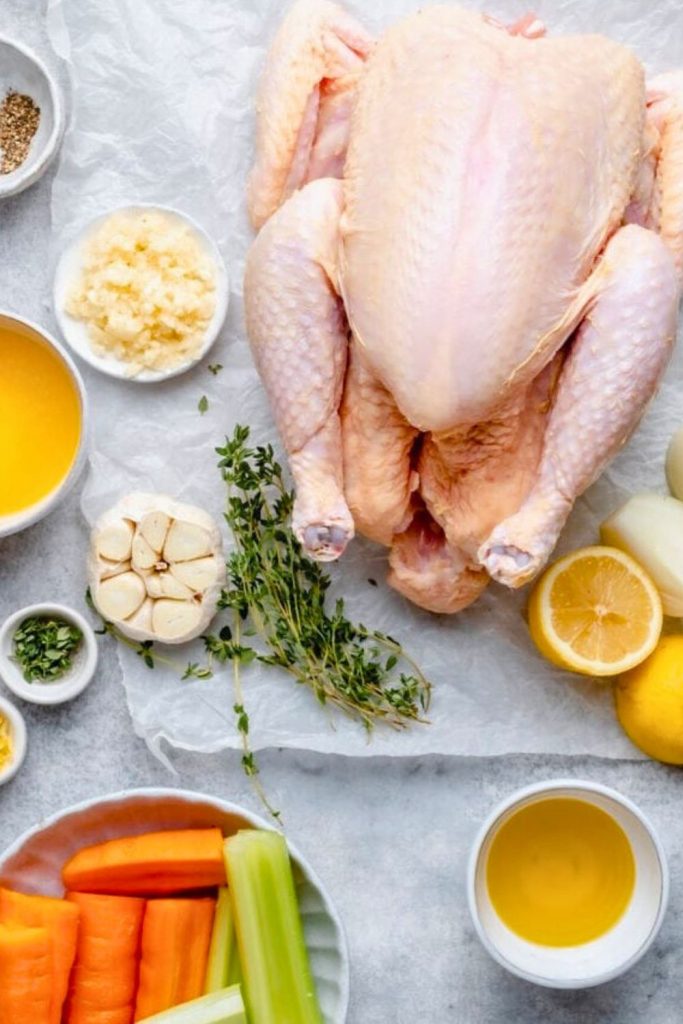
Use the ingredient table to organize the chicken, herb butter, aromatics, and optional roasting vegetables.
| Ingredient | Quantity | Purpose and Notes |
|---|---|---|
| Whole roasting chicken | 3–4 pounds | Remove the giblets, take off the chill briefly, and pat the skin completely dry. |
| Unsalted butter | 2 tablespoons | Forms the rich base of the herb mixture. |
| Olive oil | 1 tablespoon | Helps the outside brown evenly. |
| Fresh tarragon, thyme, or rosemary | About 3–4 sprigs total | Use chopped leaves under the skin and whole sprigs in the cavity. |
| Onion | 1 large or 1–2 medium | Cut into ½-inch rounds to form the roasting bed. |
| Garlic | 1 head, halved crosswise | Place in the cavity for aromatic flavor. |
| Lemon | 1, halved | Squeeze over the bird, then place the halves in the cavity. |
| Salt | 1½ teaspoons | Seasons the herb butter and chicken. |
| Cracked black pepper | ½ teaspoon | Adds mild heat and aroma. |
| Optional vegetables | Baby potatoes, carrots, or other sturdy vegetables | Roast around the chicken for a one-pan meal. |
| Kitchen twine | As needed | Ties the legs into a compact shape. |
| Chicken liver, optional | From the giblets | May be roasted thoroughly with the vegetables if desired. |
Let’s Talk About the Chicken
The size and preparation of the chicken affect how evenly it cooks.
Choose a bird that fits the pan comfortably and prepare its surface and cavity before adding seasonings.
A 3- to 4-pound whole chicken is a practical size because the breast and legs finish within a predictable roasting window.
Before seasoning:
- Take off the chill: Let the chicken stand briefly at room temperature so it roasts more evenly; do not leave raw poultry out for an extended period.
- Check the cavity: Remove the giblets and reserve them only if you plan to use them safely.
- Dry the surface: Pat the skin thoroughly with paper towels so the oven heat can brown it instead of steaming it.
- Confirm the weight: A 3- to 4-pound bird matches the time range given in this recipe.
These small preparation steps improve browning, texture, and predictable doneness.
Step-by-Step: How to Make Chicken Roast
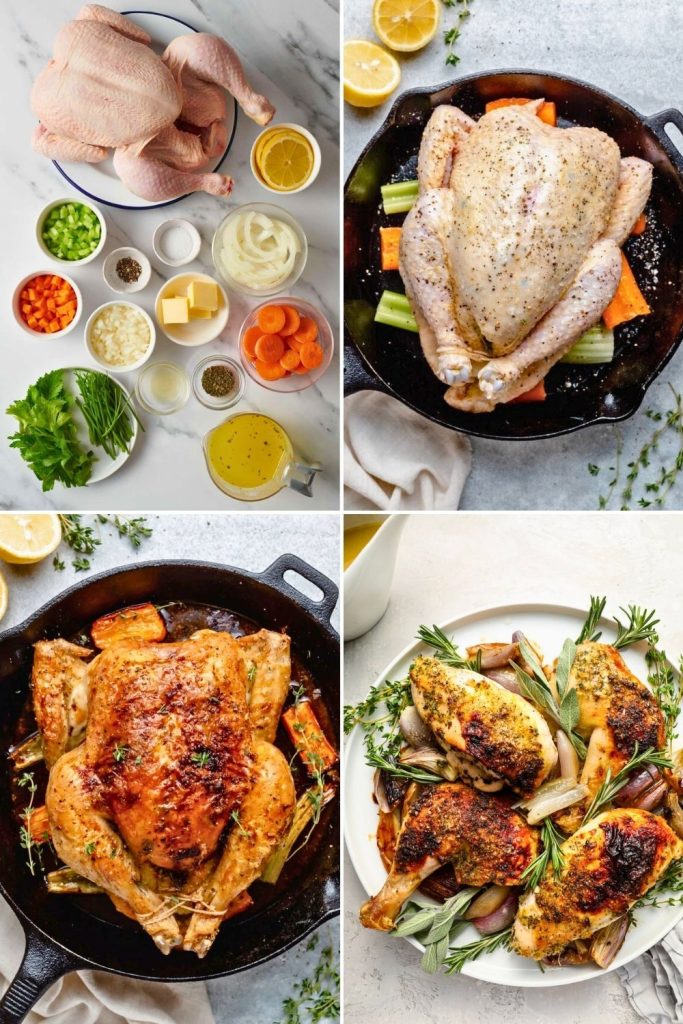
Roasting a whole chicken becomes straightforward when the seasoning, aromatics, oven temperature, and resting time are handled in order.
The ten steps below follow the original method from loosening the skin to carving and serving.
Each step contributes moisture, aroma, or browning.
Begin with a dry chicken and clean hands.
1. Separate the Skin (But Keep It Intact)
Seasoning beneath the skin places the butter and herbs directly against the breast and thigh meat.
This provides more flavor than coating only the outside.
- Start with the chicken completely dry.
- Gently loosen the breast skin and continue carefully toward the thighs.
- Slide clean fingers or the back of a spoon underneath without tearing the skin.
Keeping the skin mostly intact holds the herb butter against the meat and limits moisture loss.
A small accidental tear is not disastrous; simply spread the butter around it.
2. Melt the Flavor Bomb: Butter + Olive Oil + Herbs
Prepare the herb butter while the chicken is ready on the work surface.
In a small bowl, combine:
- 2 tablespoons unsalted butter.
- 1 tablespoon olive oil.
Melt gently, using reduced microwave power or a small saucepan so the butter does not scorch.
Choose fresh herbs such as:
- Tarragon for a lightly sweet note.
- Rosemary for a stronger woodsy aroma.
- Thyme for a gentle earthy-citrus flavor.
Remove tough stems and finely chop enough leaves to make about 1 tablespoon.
Stir the herbs into the melted butter and oil with:
- 1½ teaspoons salt.
- ½ teaspoon cracked black pepper.
The mixture should be fragrant and fluid enough to spoon under the skin.
3. Rub-A-Dub-Dub: Butter Under the Skin
Distributing the butter both under and over the skin seasons the meat and supports browning.
Working carefully:
- Spoon part of the herb butter beneath the loosened breast and thigh skin.
- Spread it evenly with your fingers or the back of a spoon.
- Rub the remaining mixture over the entire outside surface.
Coat the sides and underside as far as practical for consistent seasoning.
The butter beneath the skin protects the meat, while the surface butter and oil help the exterior turn golden.
4. Layer the Flavor Base: Onions, Garlic, and Lemon
Create a flavorful roasting bed before placing the chicken in the pan.
Cut 1 large onion, or 1 to 2 medium onions, into rounds about ½ inch thick and spread them in a roasting pan.
The onions soften and caramelize in the chicken drippings, becoming a ready-made side.
Prepare:
- 1 head garlic, halved crosswise.
- 1 lemon, halved.
Place the garlic, lemon halves, and a few herb sprigs inside the cavity.
Squeeze some lemon juice over the chicken to balance the butter’s richness.
Put the squeezed lemon halves into the cavity so they continue releasing aroma during roasting.
5. Tie and Tuck for the Perfect Roast
Positioning the wings and legs compactly encourages even roasting.
- Tuck the wing tips beneath the bird so they do not burn.
- Tie the legs together loosely with kitchen twine.
A compact shape also makes the finished roast easier to present and carve.
Place any extra herb sprigs among the onions.
6. Bonus: Add Veggies and Sides to the Pan
The roasting pan can hold sturdy vegetables at the same time, turning the chicken into a one-pan meal.
Good options include:
- Baby potatoes.
- Carrots.
- Sweet potatoes.
- Brussels sprouts.
- Firm persimmons during autumn.
Toss the vegetables with a little olive oil, salt, and pepper, then arrange them around the bird without crowding.
As they roast, the vegetables absorb the butter, lemon, herbs, and chicken drippings.
If you saved the liver and choose to use it, cook it thoroughly in the pan according to safe poultry-handling practices.
7. Pop It in the Oven (But Read This First!)
Preheat the oven fully before the chicken goes in.
Use this temperature sequence:
- Preheat to 450°F.
- Place the pan in the oven, then immediately reduce the temperature to 425°F.
- Roast for 1 hour 15 minutes to 1 hour 30 minutes, adjusting for the exact weight and your oven.
Check for both visual and temperature cues:
- The skin should be deeply golden.
- The thickest part of the thigh should register 165°F without the thermometer touching bone.
A reliable instant-read thermometer is the safest way to avoid both undercooking and unnecessary drying.
8. Baste Every 30 Minutes
About every 30 minutes, spoon some hot pan juices over the surface of the chicken.
Basting helps:
- Coat the skin with flavorful drippings.
- Reinforce the herb and lemon flavor.
- Encourage even golden color.
The surrounding onions and vegetables also benefit from being turned or coated in the juices.
9. Let It Rest (Don’t Skip This)
After roasting, resist carving immediately.
Rest the chicken for about 20 minutes.
This pause is important because:
- The juices redistribute through the meat.
- Cutting too soon releases more moisture onto the board instead of keeping it in each slice.
The internal temperature may continue rising slightly while the bird rests.
Use the resting time to finish the sides and collect the pan juices.
10. Time to Serve and Celebrate
Once rested, remove the twine and carve the chicken.
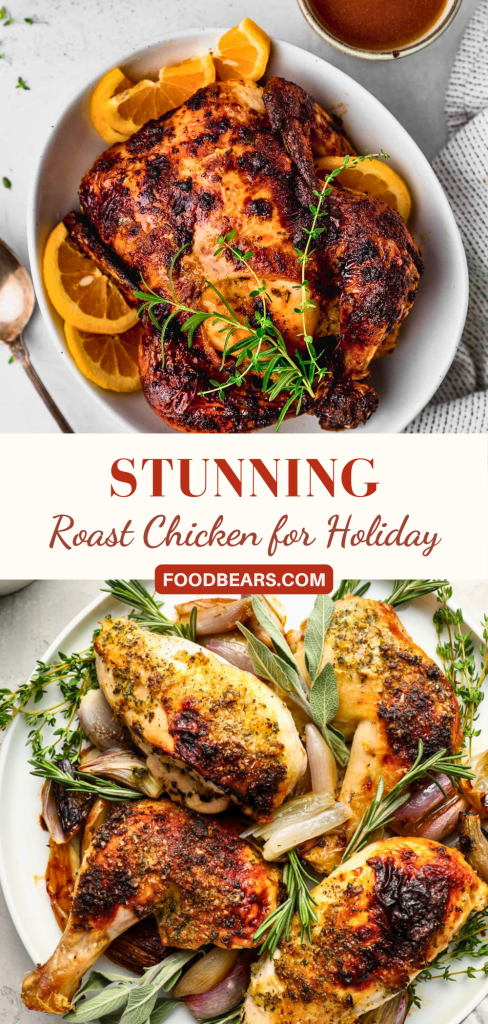
The finished meal should show:
- Crisp, golden skin.
- Moist meat flavored with garlic, lemon, and herbs.
- Soft, caramelized onions.
- Tender vegetables browned in the pan drippings.
The lemon should be noticeable as brightness rather than sharp acidity.
Serve with the pan vegetables, mashed potatoes, salad, crusty bread, or another simple side.
Why Roast Chicken Is a Kitchen Hero

Roast chicken is a foundational home-cooking recipe because it is affordable, adaptable, and useful beyond the first meal.
It works for Sunday dinner, weekday meal prep, and holiday gatherings.
Once you understand drying, seasoning, temperature, and resting, the method becomes easy to repeat.
Several qualities make it especially useful:
- Limited Hands-On Work: The oven handles most of the cooking.
- One-Pan Option: Sturdy vegetables can roast beside the chicken.
- Broad Appeal: Mild seasoning and crisp skin work for many diners.
- Adaptable Flavor: Change the herbs and spices without altering the roasting technique.
- Useful Leftovers: Extra meat becomes sandwiches, salads, soup, pasta, or grain bowls.
Learning one solid whole-chicken method gives you both a centerpiece meal and ingredients for later cooking.
Flavor Variations You’ll Love
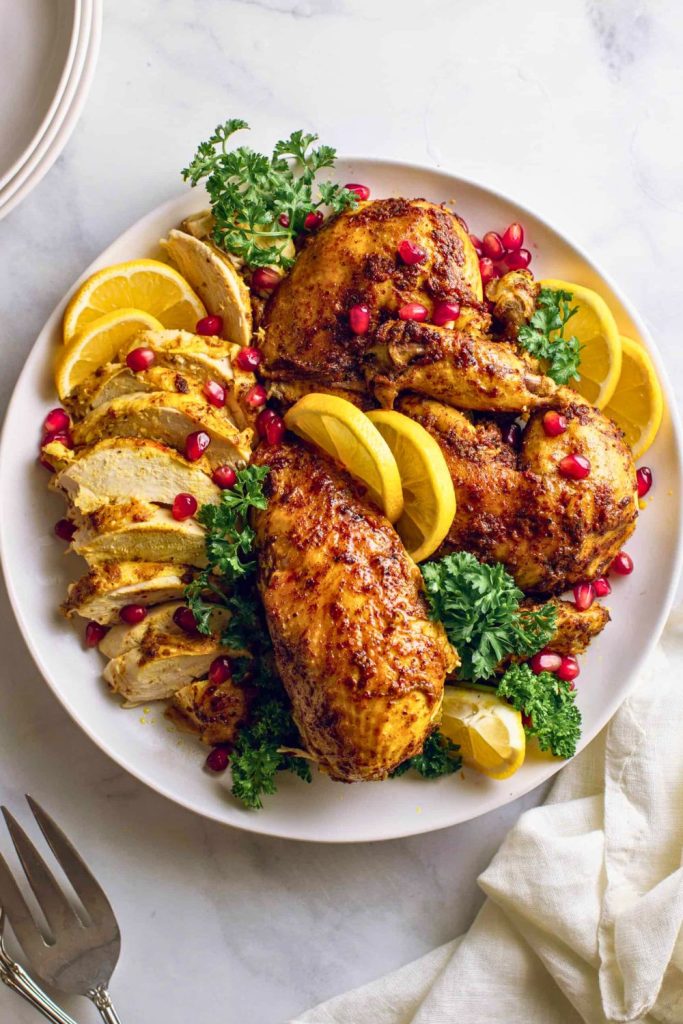
| Variation | Herbs and Spices | Extra Ingredients | Serve With |
|---|---|---|---|
| Lemon-Herb | Thyme, rosemary, and parsley | Lemon zest, garlic, and butter | Roasted potatoes and green beans |
| Garlic Butter | Garlic, parsley, and black pepper | Extra crushed garlic in the butter | Mashed potatoes and sautéed spinach |
| Spicy Paprika | Smoked paprika, chili flakes, and cayenne | Olive oil and lemon slices | Roasted carrots and couscous |
| Tuscan Style | Basil, oregano, and thyme | Sun-dried tomatoes and capers | Focaccia and Parmesan potatoes |
| Autumn Harvest | Sage, rosemary, and nutmeg | Apple and butternut squash | Wild rice and cranberry sauce |
| Moroccan-Inspired | Cumin, coriander, and cinnamon | Preserved lemon and olives | Couscous and mint yogurt sauce |
| Thanksgiving-Inspired | Poultry seasoning, sage, and thyme | Celery, onion, and chopped apple | Stuffing, gravy, and green beans |
Serving Ideas
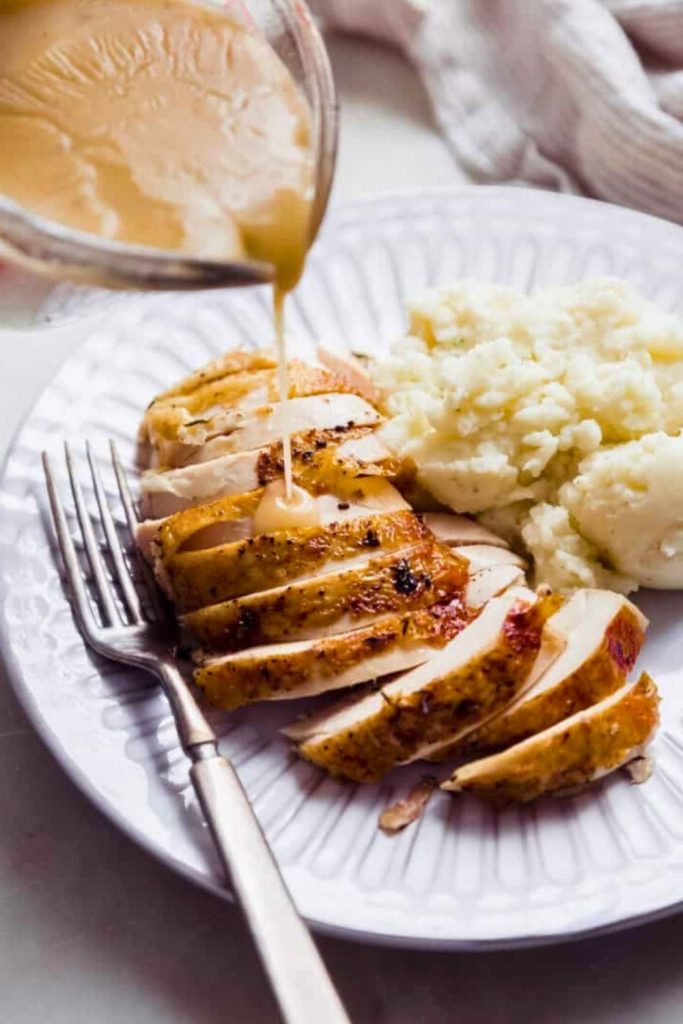
Simple sides are enough to complete the table:
- Caramelized Onion and Garlic: Spoon the aromatics from the roasting pan directly beside the meat.
- Roasted Vegetables: Carrots, potatoes, Brussels sprouts, and sweet potatoes all pair well with the drippings.
- Crusty Bread or Rolls: Use them to soak up the herb-scented pan juices.
- Green Salad: A crisp, acidic salad balances the buttery roast.
- Homemade Gravy: Reduce the drippings or thicken them with a little flour and broth.
Finish with a lemon wedge or chopped fresh herbs for extra brightness.
Leftover Magic: What to Do the Next Day

A whole roast chicken often provides enough meat for at least one more meal.
Use the leftovers rather than letting the seasoned meat go to waste:
- Chicken Salad: Mix chopped meat with mayonnaise, celery, grapes, and Dijon.
- Quesadillas or Grilled Cheese: Add chicken and cheese, then toast until crisp.
- Soup or Stew: Reserve the bones for stock and add the meat to rice or noodle soup.
- Chicken Fried Rice: Stir chopped chicken into a quick vegetable fried rice.
- Pasta: Toss with garlic, olive oil, spinach, and cooked pasta.
- Grain Bowls: Combine with grains, roasted vegetables, greens, and yogurt sauce or vinaigrette.
Pro Tip: Shred and freeze leftover meat in meal-size portions for a later weeknight dinner.
Final Thoughts: Your New Favorite Roast Chicken
This roast chicken combines a practical technique with the comforting flavor of butter, garlic, lemon, and fresh herbs.
After one or two attempts, loosening the skin, seasoning the bird, and checking doneness become familiar tasks.
Use the recipe whenever you want a warm main course that can serve a family and provide useful leftovers.
It may quickly become part of your regular Sunday or holiday cooking.
Garlic Herb Roast Chicken

Quick Links to Other Great Recipes
- For a faster pasta dinner, try the Quick 25-Minute Chicken Alfredo Recipe for Dinner.
- For a special-occasion centerpiece, make the Easy Beef Wellington Recipe for Busy Nights.
- For another impressive roast, see the Perfect Prime Rib Roast Recipe for Busy Families.
These recipes cover quick weeknight comfort and larger meals for guests or celebrations.

Dana Brooks is a home-cooking writer at Feastbears, where she shares easy family recipes, cozy dinners, quick desserts, and beginner-friendly kitchen tips. Her goal is to make everyday cooking feel simple, warm, and enjoyable for busy home cooks.