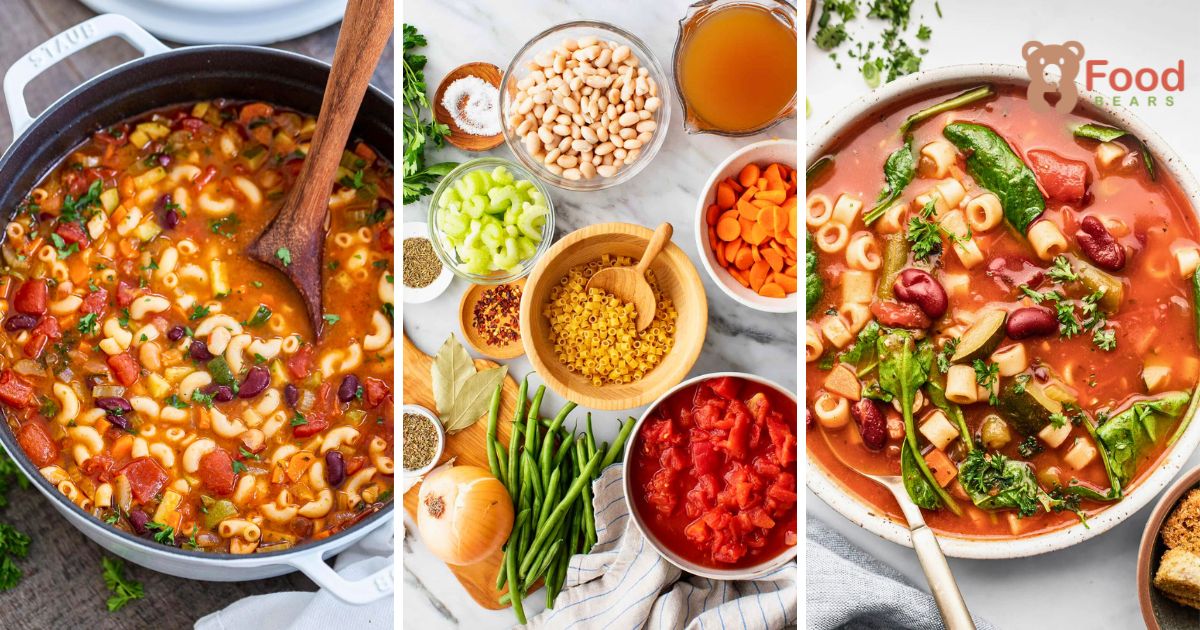
Minestrone simmering on the stove fills the kitchen with the aroma of vegetables, rosemary, and Parmesan.
This Italian classic is a complete meal built around produce, beans, lentils, pasta, and savory broth.
The recipe begins with a soffritto, then adds the vegetables and pantry ingredients in stages so each component cooks properly.
It is economical, freezer-friendly, and easy to adapt for weeknight dinner, meal prep, or a larger group.
Use the listed produce or substitute vegetables that are already in your refrigerator.
Choose a large pot and follow the cooking order for a balanced, substantial minestrone.
Why You’ll Love This Minestrone Soup

Minestrone is more than plain vegetable soup because beans, pasta, herbs, and Parmesan give it the body of a full meal.
These qualities make it a dependable recipe:
- At this stage, flexible. Use the vegetables listed here, or swap them for what’s in your fridge. Zucchini, cauliflower, cabbage, anything goes! Minestrone is all about adapting to the season and your pantry.
- Budget-Friendly Comfort Food. This recipe uses simple, affordable ingredients, many of which you probably already have in your pantry or freezer. It is proof that you may eat well without spending much.
- Big Batch Cooking Made Easy. This recipe makes a generous pot of soup, well suited to freezing in portions. Just reheat, add a splash of water, and you’ve got a quick, wholesome meal ready to go.
- Here, nutritious Without Trying Too Hard. Between the beans, lentils, vegetables, and pasta, you get fiber, plant-based protein, and loads of vitamins in every bowl.
- During this step, packed with Flavor. The secret weapons? A rich soffritto base, fresh rosemary, and a parmesan rind that slowly infuses the broth with savory depth.
Ingredients You’ll Need

Remember that here’s what I recommend for a balanced, flavor-packed minestrone. Feel free to swap according to your taste or what you have available.
| Ingredient | Amount | Notes / Tips |
|---|---|---|
| Carrots | 2 medium | Peeled and diced evenly for even cooking. |
| Celery | 1 stalk | Adds aromatic flavor to the soffritto base. |
| Red onion | 1 large | Can substitute yellow or white onion. |
| Pumpkin | ½ medium | Be liberal with a rich, silky texture. |
| Potatoes | 2 medium | Starchy variety preferred; cut into small cubes. |
| Broccoli | 1 head | Cut into small florets so they blend easily. |
| Diced tomatoes (canned) | 2 small cans (800 g total) | Fresh tomatoes can be used if available. |
| Mixed beans (canned) | 1 small can (400 g) | Drain and rinse before adding. |
| Lentils (canned) | 1 small can | Adds protein and texture; rinse before use. |
| Fresh parsley | Handful, chopped | Used for garnish and freshness. |
| Fresh rosemary | 1–2 sprigs | One for the soffritto, one optional for later. |
| Extra virgin olive oil | Generous amount | Be liberal for a rich, silky texture. |
| Salt | To taste | Season in layers for best flavor. |
| Black pepper | To taste | Freshly ground for a peppery kick. |
| Parmesan rind | 1 piece | Infuses umami depth into the broth. |
| Small pasta (ditalini) | About 150–200 g | Cook separately at the end or directly in the soup. |
Step-by-Step: How to Make Minestrone Soup

Minestrone is all about building flavor, step by step. Each stage builds savory depth, creating a rich, hearty soup that tastes like it has been simmering for hours in an Italian kitchen.
One useful detail: follow these steps closely for a perfectly balanced soup every time.
1. Chop Your Veggies Evenly
As you work, note that minestrone is a chunky soup, but consistency in your cuts matters. If some pieces are too big while others are tiny, they’ll cook unevenly, leaving you with mushy bits and undercooked chunks.
Here’s what to do:
- At this point, carrots, celery, and onion : Dice them into small, even cubes about ½ inch. This is your soffritto base and should blend seamlessly into the soup.
- At this stage, potatoes : Cut to match the carrot size. Too large, and they’ll take too long to soften.
- Here, pumpkin : Slightly larger than potatoes is fine, but still bite-sized. Pumpkin will soften and almost melt into the broth, adding sweetness.
- During this step, broccoli : Break into small florets that fit easily on a spoon.
- Keep your chopping organized, put each type of vegetable in its bowl or section so that you may add them in the correct order.
Helpful tip: Uniform chopping is more than for looks. It ensures even cooking and a better mouthfeel when you get a bit of everything in each bite.
2. Start with the Sofrito
If minestrone had a heartbeat, it would be the soffritto, a slow-cooked aromatic base that sets the tone for the whole dish. Skipping or rushing this stage would be like making bread without letting it rise.
Here’s how to do it properly:
- Generous olive oil. Heat a good glug of extra virgin olive oil in a large pot over medium heat. Do not be shy; this oil is what gives the soup its silky body and deep flavor.
- At this point, add your onion, carrot, and celery (the holy trinity of Italian soup bases).
- The rosemary trick. Drop in a fresh rosemary sprig right now and allow it to fry gently in the oil. This infuses the base with an earthy, herbal note that carries through the entire soup.
- At this stage, after a few minutes, add a small splash of water. This helps steam the vegetables so they soften without browning too much, while preventing any burning.
- Here, cover with a lid and let the soffritto cook gently for about 10 minutes. You want the vegetables to soften, release their natural sweetness, and mingle with the rosemary-infused oil.
3. Add Hearty Vegetables
After your soffritto is soft and fragrant, it is time to bring in the heavy hitters, the vegetables that give minestrone its satisfying substance.
- During this step, add pumpkin and potatoes directly into the softened soffritto. Stir well so they’re coated in that gorgeous flavored oil.
- Drizzle in a little more olive oil if the pot looks dry. Remember, olive oil in Italian cooking is more than fat, it is flavor.
- Add enough water to cover the potatoes and pumpkin. This is the start of your soup’s broth.
- At this point, keep the heat at medium-high and let everything cook uncovered for 10–15 minutes. The goal here isn’t to thoroughly cook the vegetables yet, but to let them begin to soften so they’ll break down beautifully later.
Helpful tip: At this stage, you are creating your vegetable stock right in the pot; no need for store-bought broth.
4. Bring in the Tomatoes
It also helps to remember: tomatoes give minestrone its characteristic rich red-orange color and tangy-sweet depth.
Here’s the sequence:
- At this stage, add your diced tomatoes to the pot. Canned is perfectly fine here, look for quality brands with minimal added salt or sugar. Fresh, ripe garden tomatoes are even better if you have them.
- Here, stir them into the vegetable mix so their natural juices begin to mingle with the base.
- During this step, add more water until all the ingredients are well submerged.
- At this point, drop in your Parmesan rind. This will slowly release umami into the soup as it simmers.
- At this stage, add the broccoli florets and another sprig of rosemary (optional).
- Here, season generously with salt and freshly ground black pepper.
Remember that let the pot come back to a gentle boil, then reduce to medium heat and cover.
Helpful tip: The parmesan rind is a secret weapon. It melts down just enough to add a savory creaminess but doesn’t disappear completely, so you may remove it later if you prefer.
5. Simmer for Richness
Patience matters during the simmer because gentle heat deepens the flavor without making the vegetables mushy.
- During this step, keep the heat at a steady medium-high, covered with the lid slightly ajar.
- At this point, stir occasionally, bringing ingredients from the bottom to the top so everything cooks evenly.
- Simmer for about 10 minutes after adding the tomatoes.
Why covered? Because you want to trap the steam and keep the liquid from evaporating too quickly. The water at this point is more than liquid, it is becoming a full-bodied soup as it absorbs the flavors of the vegetables, herbs, and parmesan.
Helpful tip: Each time you stir, check the liquid level. If the top of the vegetables is exposed, add a splash of hot water to keep everything submerged.
6. Add the Beans & Lentils
Beans and lentils turn this from a vegetable soup into a hearty meal. They add protein, fiber, and a smooth consistency that balances the bite of the pasta you will add later.
Here’s the process:
- At this stage, drain and rinse your mixed beans and lentils to remove excess salt or canning liquid.
- Stir them gently into the simmering soup.
- Season with a small amount chopped parsley now for a pop of color and freshness.
- Here, if the soup looks too thick, top up with more water so everything has room to move.
After this stage, let the soup simmer another 10 minutes so the beans heat through and absorb the surrounding flavors.
Helpful tip: If you add parsley now, it will infuse the broth with a subtle herbal freshness. Save some for garnish at the end for a vibrant green contrast.
7. Pasta Time
For reliable results, now for the part that turns this into an authentic minestrone, the pasta.
- During this step, check that your potatoes and pumpkin are tender. A fork should glide through effortlessly.
- Bring the soup to a gentle boil.
- At this point, add your small pasta (like ditalini) directly to the pot.
- At this stage, cook the pasta 2 minutes less than the package instructions (it will finish cooking in the hot soup).
- Here, stir frequently during these last minutes, as vegetables are heavier than pasta and can push it to the bottom, where it sticks and clumps. Scrape the bottom of the pot gently with a wooden spoon to keep everything moving.
Helpful tip: If you are planning to freeze portions, consider cooking the pasta separately and adding it when reheating so it stays firm.
8. Final Touches
With the pasta just shy of al dente, it is time to bring your minestrone across the finish line.
- During this step, taste the broth and adjust the seasoning. Add more salt if needed. Remember, potatoes absorb a lot.
- Drizzle in cold extra virgin olive oil right just before serving for a luxurious finish.
- Remove the Parmesan rind and rosemary sprig.
- At this point, let the soup sit for 5 minutes off the heat. The pasta will absorb a little more broth, and the flavors will meld even further.
When ready to serve:
- At this stage, ladle into deep bowls, making sure each portion has a bit of everything: broth, pasta, vegetables, and beans.
- Here, garnish with chopped parsley and freshly grated Parmesan.
- Serve hot with crusty bread for dipping.
Tips for the Best Minestrone Soup

A good minestrone is more than just vegetables and broth. It is about technique, balance, and a few clever tricks that elevate it from simple to unforgettable. Based on the cooking process, here are the key tips to guarantee success every time:
1. Don’t Skip the Sofrito
A key point is that the trio of onion, carrot, and celery (soffritto) is the soul of Italian soups. Simmering it in generous olive oil with rosemary creates a deep, aromatic base that transforms the whole dish. Skipping it would be like baking bread without letting the dough rise; you lose the foundation of flavor.
2. Be Generous with Olive Oil
Use enough olive oil to coat the vegetables; it prevents sticking, carries flavor, and gives the broth a smooth finish. Add a little more at various stages if the pot looks dry.
3. Use the Parmesan Rind Trick
Dropping a parmesan rind while simmering is one of the oldest Italian kitchen secrets. As it cooks, it releases a salty, nutty depth you may’t get from cheese sprinkled on top alone. If you do not have one, ask your cheese counter; they often sell rinds separately.
4. Season in Layers, Not All at Once
Add salt early (after the vegetables and water go in), then taste again after adding beans and just before serving. This ensures the flavor builds gradually without overpowering the delicate sweetness of the vegetable.
5. Stir Often, Especially After Adding Pasta
Pasta is lighter than vegetables, but heavier than broth; it tends to sink and stick. Mix gently but frequently so it cooks evenly and doesn’t clump at the bottom.
Variations to Try

One of the beauties of minestrone soup is how adaptable it is. Whether you are adjusting for dietary needs, seasonal vegetables, or personal taste, there’s a version for everyone.
Here are some delicious variations inspired by the recipe details and Italian tradition:
| Variation | How to Make It | Flavor Profile |
|---|---|---|
| Gluten-Free Minestrone | Swap regular pasta for gluten-free pasta, rice, or quinoa. Cook grains separately and mix in just before serving. | Light, grainy, and tender with a slightly nutty bite. |
| Low-Carb Minestrone | Works well for: omit pasta entirely and double up on low-carb vegetables like zucchini, spinach, or cabbage. | Broth-forward and filled with veggie goodness. |
| Protein-Packed Minestrone | Choose this when: add diced chicken breast, turkey sausage, or even small meatballs during the hearty vegetable stage. | Hearty, meaty, and extra filling. |
| Spicy Minestrone | A good fit for: add a pinch of chili flakes to the soffritto for a gentle heat that runs through the broth. | Warming with a pleasant kick. |
| Summer Minestrone | Works well for: swap pumpkin and broccoli for zucchini, green beans, bell peppers, and corn. Use fresh basil in place of rosemary. | Fresh, sweet, and herbaceous. |
| Winter Minestrone | Choose this when: stick to root vegetables like parsnips, turnips, leeks, and potatoes, plus kale or chard. | Deep, earthy, and comforting. |
| Vegan Minestrone | A good fit for: skip the parmesan rind and finish with a swirl of good olive oil and nutritional yeast for cheesy flavor. | Creamy without dairy, rich in plant-based protein. |
| Creamy Minestrone | Mix in a splash of cream or coconut milk just just before serving for a silky consistency. | Rich, smooth, and indulgent. |
Final Thoughts
Minestrone shows how soffritto, seasonal vegetables, beans, lentils, and pasta can turn familiar ingredients into a substantial meal.
Follow the recipe as written or adjust the produce according to the season and what you have available.
Prepare a large batch for dinner, freeze individual portions, and loosen the reheated soup with a splash of water before adding parsley and Parmesan.
Classic Italian Minestrone Soup

Continue with one of these linked soups for another practical weeknight meal:
- 🥦 Easy 5-Step Vegetable Soup Recipe for Busy Families – Fresh vegetables cook into a quick soup in less than 30 minutes.
- 🧀 25-Min Best Cheeseburger Soup Recipe for Busy Family – Ground beef, potatoes, and cheese make a creamy, filling bowl.
- 🍲 Best 30-Minute Hamburger Soup Recipe for Fall – Beef and vegetables simmer in a tomato broth suited to chilly days.
Each recipe offers its own style of warm, satisfying comfort.

Dana Brooks is a home-cooking writer at Feastbears, where she shares easy family recipes, cozy dinners, quick desserts, and beginner-friendly kitchen tips. Her goal is to make everyday cooking feel simple, warm, and enjoyable for busy home cooks.