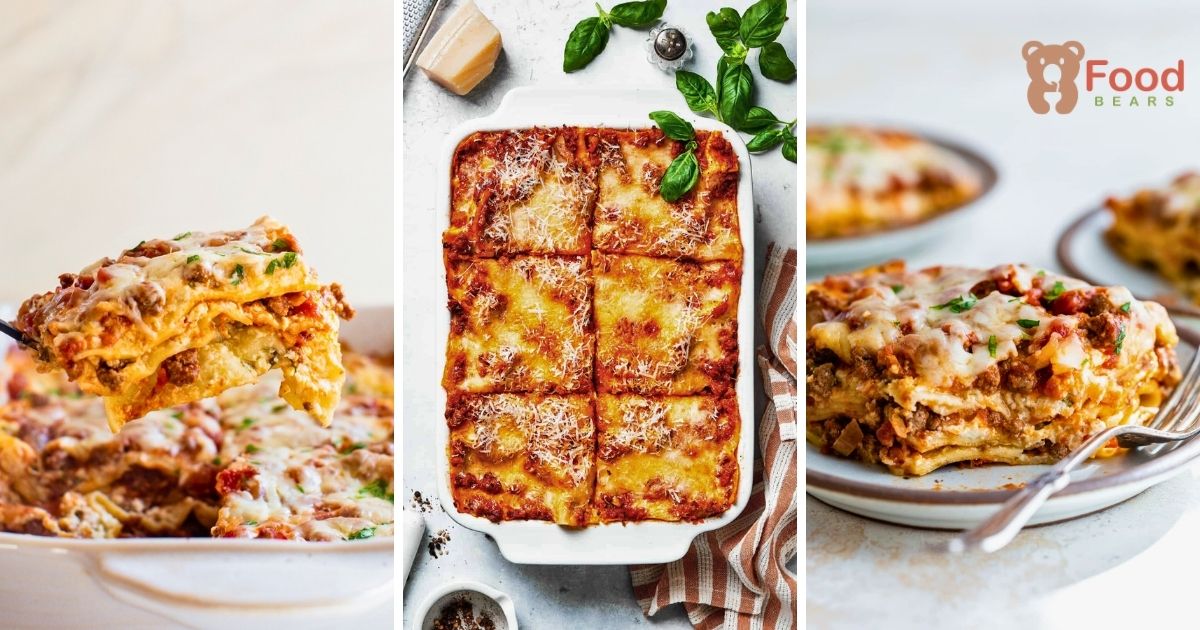
The aroma of browning meat, onions, and garlic is the first sign that a good lasagna is underway.
Lasagna brings warmth and familiarity to the table, turning a simple dinner into something worth lingering over.
This version layers Italian sausage and ground beef with a robust tomato sauce, seasoned ricotta, mozzarella, Parmesan, and tender pasta.
Once the top is bubbling and browned, the casserole needs a short rest. Those extra minutes allow the sauce and cheese to settle into distinct, sliceable layers.
Follow the stages below to build it from the sauce upward.
What Ingredients Do You Need for Lasagna
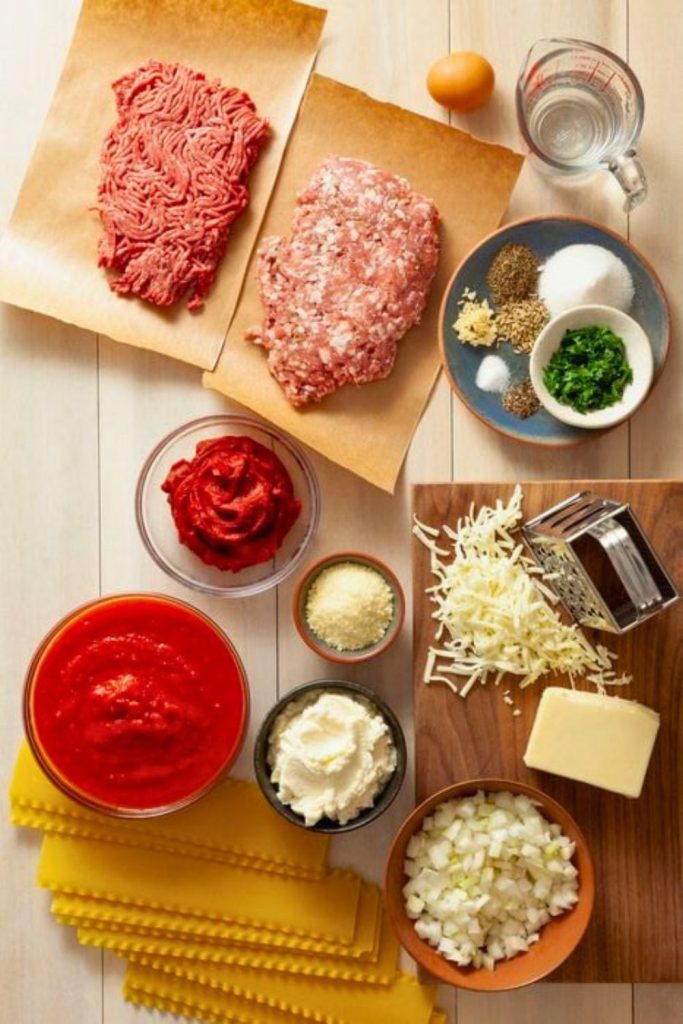
Use this organized ingredient list to measure the meat, sauce, cheese filling, noodles, and topping before cooking.
| Category | Ingredient | Amount / Notes |
|---|---|---|
| Meat Base | Italian sausage, mild or spicy | ¾ pound, casings removed |
| Ground beef | ¾ pound | |
| Aromatics | Garlic | 6–7 cloves, minced |
| Yellow onion | 1 large, diced | |
| Tomato Sauce | Tomato paste | 6 ounces |
| Crushed tomatoes | 28 ounces | |
| Tomato sauce | 15 ounces | |
| Granulated sugar | 1 tablespoon, to balance acidity | |
| Seasonings | Italian seasoning | 1 tablespoon |
| Dried basil | 1 teaspoon | |
| Salt | 1½ teaspoons, plus pasta water | |
| Black pepper | ¾ teaspoon | |
| Red-pepper flakes | ½ teaspoon, optional | |
| Ricotta Filling | Ricotta, egg, parsley, salt, pepper | 15 ounces ricotta, 1 egg, 1 tablespoon parsley, ½ teaspoon salt, ¼ teaspoon pepper |
| Layers | Lasagna noodles | 12 sheets, cooked al dente |
| Fresh mozzarella | 16 ounces, sliced | |
| Parmesan | ¼ cup, grated | |
| Optional | Lemon zest and olive oil | For brightness and greasing the dish |
The combination relies on classic Italian-American flavors and accessible pantry ingredients for a rich, satisfying result.
Step-by-Step Guide: How to Make the Best Homemade Lasagna

A homemade lasagna is a multi-part recipe, but each job—sauce, noodles, filling, assembly, and baking—is straightforward on its own.
Every layer contributes something different: hearty meat sauce, creamy ricotta, tender pasta, and melted cheese.
Work through the recipe in order for a well-structured casserole.
Step 1: Prepping Your Kitchen
Heat the oven to 375°F (190°C) before assembly so it is ready when the baking dish is filled.
Place a large Dutch oven or another heavy-bottomed pot over medium-high heat; this will hold the full meat sauce.
Set out the necessary equipment:
- A 9×13-inch baking dish
- A large bowl for the ricotta filling
- A stockpot for the lasagna noodles
- A wooden spoon, sharp knife, and spatula
- All ingredients measured and prepared
An orderly work area makes the separate components easier to coordinate.
Step 2: Building the Flavor Base – The Meat Sauce
Add ¾ pound casing-free Italian sausage and ¾ pound ground beef to the heated Dutch oven.
Break the meat into small pieces with a wooden spoon and cook for 6–8 minutes, stirring occasionally, until no pink remains and the surfaces have browned.
Using both meats creates a fuller sauce: sausage contributes herbs, spice, and fat, while beef supplies a deep savory base.
For a leaner casserole, replace some or all of the beef with turkey or chicken. Keep some seasoned sausage if you want to retain its characteristic flavor.
Step 3: Building Aromatics – Garlic and Onion Magic
Prepare the garlic and onion while the meat cooks.
Roughly mince 6–7 garlic cloves and dice 1 large yellow onion into small, even pieces.
Stir the onion and garlic into the browned meat. Cook for about 5 minutes, stirring regularly, until the onion is translucent and the garlic smells fragrant without darkening.
These aromatics soften the meat’s richness and create the savory foundation for the tomato ingredients.
Step 4: Crafting the Perfect Tomato Sauce
Add 6 ounces of tomato paste and stir it through the meat for 1–2 minutes. Briefly cooking the paste removes its raw taste and develops a more concentrated tomato flavor.
Add the remaining sauce ingredients:
- 28 ounces crushed tomatoes
- 15 ounces tomato sauce
- 1 tablespoon granulated sugar to balance sharp acidity
- 1 tablespoon Italian seasoning
- 1 teaspoon dried basil
- 1½ teaspoons salt
- ¾ teaspoon freshly cracked black pepper
Combine thoroughly, reduce the heat to medium-low, and simmer for about 25 minutes. Stir now and then, scraping the bottom so the thick sauce does not catch.
For optional brightness, grate a little lemon zest into the sauce near the end of simmering.
The finished sauce should be thick enough to sit between the pasta layers rather than run to the bottom of the dish.
Step 5: Preparing the Pasta Sheets
While the sauce simmers, boil a large pot of water and season it generously with salt.
Cook 12 lasagna noodles—plus one or two spares if desired—until al dente. Keep them slightly firm because they will continue softening in the oven.
Drain and rinse the noodles briefly under cold water to stop the cooking. Lay them flat or separate them carefully so they do not stick together.
A very light coating of olive oil can help keep the cooked sheets separate during assembly.
Step 6: Making the Creamy Cheese Filling
Mix the ricotta filling while the sauce finishes and the pasta cools.
In a large bowl, combine:
- 15 ounces ricotta
- 1 large egg
- 1 tablespoon finely chopped fresh parsley
- ½ teaspoon salt
- ¼ teaspoon black pepper
Stir until evenly blended and creamy. The egg firms the ricotta slightly as it bakes, helping the cheese layer hold together.
Optional additions include a little lemon zest, oregano, or extra fresh parsley.
This mild, creamy filling contrasts with the robust meat sauce and creates a softer center in each serving.
Step 7: Time to Assemble the Lasagna
Assembly brings all of the prepared components together.
Lightly grease a 9×13-inch baking dish with oil or cooking spray if desired.
Build the layers in this order:
- Bottom Sauce Layer: spread about 2 cups of meat sauce evenly across the dish.
- First Pasta Layer: arrange noodles in one layer, trimming or slightly overlapping them to fit.
- First Ricotta Layer: use a spatula to spread half of the filling over the noodles.
- Second Sauce Layer: spoon roughly 2 more cups of meat sauce over the ricotta and reach the edges.
- Repeat: add noodles, the remaining ricotta filling, and another portion of sauce.
- Top Pasta Layer: cover with the final noodles and spread over the rest of the meat sauce.
- Cheese Topping: distribute 16 ounces of fresh mozzarella slices and finish with ¼ cup grated Parmesan.
Check that the pasta is covered with sauce at the edges so it stays tender during baking.
To freeze the lasagna, stop after assembly, wrap the dish securely, and freeze it before baking.
Step 8: Baking to Perfection
Cover the filled baking dish with foil. The cover traps moisture and prevents the cheese from browning before the center is hot.
Bake at 375°F for 30 minutes, remove the foil, and continue baking for 15 minutes until the sauce bubbles and the cheese is melted with golden patches.
For a darker top, broil for 2–3 minutes at the end, watching continuously so the cheese does not burn.
The bubbling edges and browned top show that the casserole is heated through.
Step 9: Rest Before Serving
Do not skip the setting time after baking.
Rest the lasagna for at least 15 minutes. The sauce thickens and the cheese layers firm enough to stay in place when cut.
Serving it immediately may cause the hot layers to slide apart, so let the dish stand even though it smells ready.
Cut generous squares with a sharp knife and serve with salad, roasted vegetables, or warm bread.
Pro Tips for the Best Lasagna Ever

Excellent lasagna depends on careful details more than expensive specialty ingredients.
These five practices improve the flavor, texture, and presentation.
1. Combine Two Types of Meat
Italian sausage brings seasoning and richness that ground beef alone lacks, while beef adds body. Together they produce a more rounded sauce.
2. Stop the Noodles at Al Dente
Slightly firm pasta absorbs sauce and finishes cooking in the oven. Fully soft noodles can become mushy and weaken the layers.
3. Give the Sauce Time to Reduce
A 25-minute simmer blends the tomato paste, aromatics, herbs, and meat while removing excess liquid that could make the casserole loose.
4. Rest Before Portioning
Wait about 15 minutes after baking. The pause turns a bubbling casserole into clean slices with visible, stable layers.
5. Add a Bright Note
Lemon zest, fresh basil, or parsley can cut through the richness and make the sauce and cheese taste more balanced.
Variations to Try

| Variation | Description | Main Change |
|---|---|---|
| Classic Meat Lasagna | The hearty Italian-American version used in this recipe. | Beef, Italian sausage, tomato sauce, ricotta, mozzarella, and Parmesan |
| Vegetarian Lasagna | A vegetable-forward casserole that remains substantial. | Replace meat with browned mushrooms, spinach, zucchini, or roasted vegetables |
| White Lasagna | A creamy version without the tomato meat sauce. | Use béchamel or Alfredo sauce with ricotta, spinach, chicken, or mushrooms |
| Spicy Lasagna | A hotter version with a pronounced savory kick. | Choose hot Italian sausage and add red-pepper flakes or chili oil |
| Four-Cheese Lasagna | An extra-creamy option for cheese lovers. | Layer ricotta, mozzarella, provolone or fontina, and Parmesan |
| Pesto Lasagna | A fragrant green variation. | Layer basil pesto, white sauce, roasted vegetables, and mozzarella |
| Gluten-Free Lasagna | A wheat-free option that keeps the familiar flavors. | Use gluten-free pasta sheets or thin zucchini slices |
These alternatives let you adjust the casserole for different preferences while keeping its layered, comforting character.
Pairing Ideas

Since lasagna is rich and filling, choose sides and drinks that provide freshness or acidity.
A green salad with vinaigrette is a reliable partner, and garlic bread or warm focaccia is ideal for collecting the extra sauce.
Medium-bodied reds such as Chianti, Merlot, or Cabernet Sauvignon complement tomato and cheese. For white wine, consider a crisp Pinot Grigio or a lightly oaked Chardonnay.
For an alcohol-free option, offer sparkling water with lemon or chilled Italian soda.
Finish with a lighter dessert such as lemon sorbet, tiramisu, or a modest portion of chocolate mousse.
Ready to Try This Lasagna Recipe?
Now that every stage is clear, this lasagna can become a regular choice for Sunday dinner, celebrations, or a relaxed night at home.
Gather the ingredients, prepare each component, and enjoy the combination of savory sauce, creamy cheese, and tender pasta.
Classic Homemade Lasagna
Hungry for More Cozy Crowd-Pleasers?
If this lasagna suits your table, save these warm, shareable recipes for another gathering:
🥖 Warm & Melty Baked Brie Recipe for Family Parties: A soft, golden appetizer that is easy to share at holidays and casual get-togethers.
🧄 5-Ingredient Spinach Artichoke Dip Recipe Magic: This creamy, cheesy dip comes together quickly for a party snack everyone can scoop.
🍽️ Cozy Swedish Meatballs Recipe You’ll Love: Tender meatballs in savory cream gravy make a comforting match for mashed potatoes.

Dana Brooks is a home-cooking writer at Feastbears, where she shares easy family recipes, cozy dinners, quick desserts, and beginner-friendly kitchen tips. Her goal is to make everyday cooking feel simple, warm, and enjoyable for busy home cooks.