Cilantro lime rice starts with fluffy jasmine rice and finishes with fresh lime, cilantro, and olive oil. This version follows the original stove-top method, including the bay leaf and the divided oil, so the herbs stay bright rather than cooking away.
It is a useful side for tacos, bowls, grilled food, or beans. Allow roughly 10 minutes to prepare and 15 minutes of gentle simmering, plus a short moment to fluff and season the rice.
Why You’ll Love This Cilantro Lime Rice

Fresh lime and chopped cilantro turn a pot of jasmine rice into a bright, versatile side. The original recipe uses one bay leaf during cooking and folds in the citrus and herbs only at the end, so their flavor stays fresh.
- Bright, Fresh Flavor: The combination of zesty lime and fragrant cilantro transforms simple rice into a flavor explosion. Every bite feels like sunshine on your tongue — vibrant, fresh, and a little tangy.
- Perfectly Fluffy Texture: Thanks to rinsing the rice and using just the correct water ratio, you’ll get individual, tender grains instead of a sticky clump. Light and airy, just the way good rice should be.
- Super Versatile: Need a side for your tacos, burrito bowls, grilled chicken, seafood, or veggie platters? This rice fits right in. It’s like the “little black dress” of side dishes; it goes with everything.
- Easy and Foolproof: No fancy techniques here! If you can boil water, you can make this dish. Plus, the ingredients are simple pantry staples, so no last-minute trips to the grocery store are needed.
- Restaurant-Style at Home: Love the cilantro lime rice from Chipotle or your favorite Mexican restaurant? This homemade version tastes even better, fresher, more flavorful, and 100% customizable to your taste buds.
- Healthy and Fresh: This dish is naturally vegan, gluten-free, and packed with wholesome ingredients. It’s the kind of side you can feel good about eating and serving to your loved ones.
Ingredients You’ll Need

The amounts in the table below follow the original recipe: two cups of jasmine rice to three cups of water, with salt, divided olive oil, lime, cilantro, and a bay leaf. Measure before starting, because the rice cooks best when the lid stays closed.
| Ingredient | Amount | Purpose |
|---|---|---|
| Jasmine Rice | 2 cups | Soft, fragrant rice that cooks fluffy and light |
| Water | 3 cups | To perfectly cook the rice |
| Salt | 2 teaspoons | Enhances the natural flavor of the rice |
| Olive Oil | 6 teaspoons (divided) | Adds richness and helps keep the rice fluffy |
| Lime Juice | Juice of 1 fresh lime | Adds a bright, tangy flavor |
| Cilantro | 6 tablespoons, finely chopped | Brings a fresh, herby kick |
| Bay Leaf | 1 piece | Infuses the rice with subtle, aromatic depth |
- Jasmine Rice: If you can, stick with jasmine rice. It’s naturally floral and tender. Basmati can also work, but avoid short-grain varieties unless you prefer a stickier texture.
- Lime Juice: Freshly squeezed lime juice is essential! Bottled lime juice tastes flat and artificial; you’ll notice the difference immediately.
- Cilantro: Use fresh cilantro, not dried. Dried cilantro loses its brightness and won’t give you that fresh pop.
- Olive Oil: Extra virgin olive oil works great here, but you can also use avocado oil or vegetable oil if you prefer a lighter flavor.
- Bay Leaf: It’s subtle but essential. The bay leaf adds a whisper of earthy, herby flavor that brings everything together. Just remember to remove it after cooking!
Easy Cilantro Lime Rice
Step-by-Step: How to Make the Perfect Cilantro Lime Rice
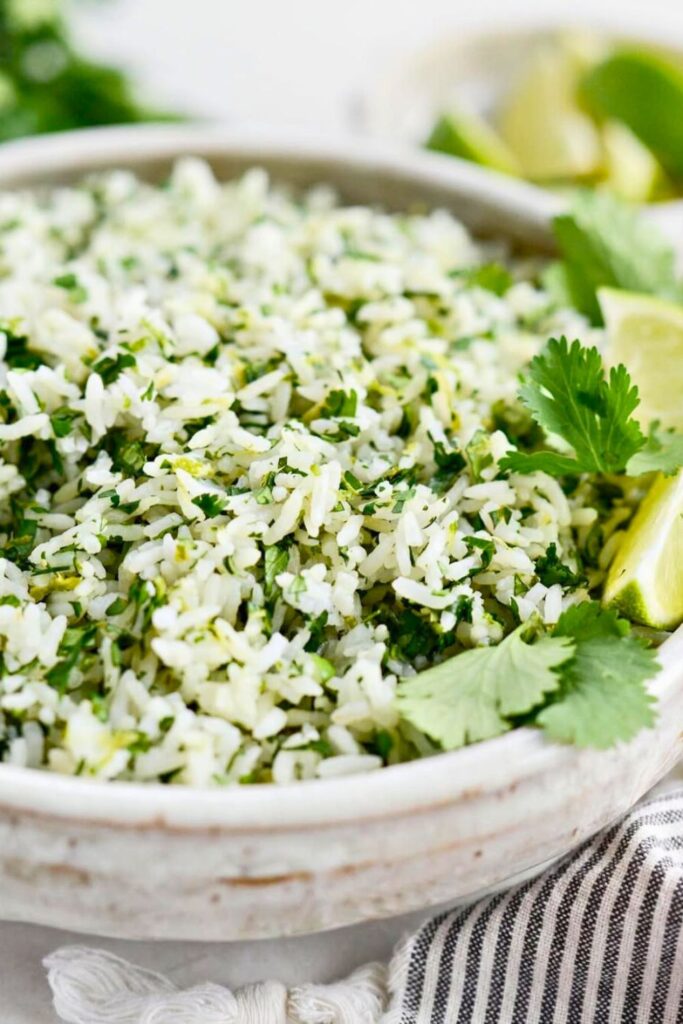
The method is simple: rinse, simmer, fluff, then season. Keep the fresh cilantro and lime out of the pot until the rice is cooked so they retain their color and aroma.
Step 1: Rinse the Rice
Rinse the jasmine rice in a fine-mesh sieve or bowl, changing the water until it looks much clearer. Removing excess surface starch helps the cooked grains remain separate. Drain well before adding the rice to the pot.
- Place the rice in a fine-mesh strainer or a large bowl.
- Run cool water over the rice or swirl it around in the bowl, draining and refilling until the water runs clear.
- This usually takes about 2 to 3 rinses.
Step 2: Add the Water, Rice, Salt, and Olive Oil
Put the rinsed rice, three cups of water, two teaspoons of salt, and two teaspoons of olive oil in a medium saucepan. Stir once to distribute the seasoning, then leave the grains undisturbed as they cook. The remaining oil is for the finish.
- 3 cups of water
- The rinsed rice
- 2 teaspoons of salt
- 2 teaspoons of olive oil (save the rest for later)
Step 3: Add the Bay Leaf
Add one bay leaf to the pot before heating. It gives the rice a subtle savory aroma. Remember to remove the leaf after cooking; it is not meant to be eaten.
Step 4: Bring to a Boil
Set the pan over high heat and wait until the water reaches a steady boil. Stay nearby so it does not boil over. Once boiling, turn the heat down promptly for the covered simmer.
Step 5: Simmer Gently
Cover the saucepan and reduce the heat to low. Simmer gently for about 15 minutes without lifting the lid or stirring. Check that the liquid has been absorbed before fluffing; if your stove runs differently, follow the rice package for any needed adjustment.
- Don’t lift the lid!
- Don’t stir the rice!
- Don’t mess with it at all!
Step 6: Prep the Cilantro and Lime
While the rice cooks, juice the fresh lime and finely chop the cilantro. A small strainer catches lime seeds. Prepare these now so the rice can be seasoned while warm, without leaving it sitting uncovered.
- Roll the lime firmly on the counter using your palm.
- This loosens up the juices inside.
- Slice it in half and squeeze the juice into a small cup.
(If you’re worried about seeds, squeeze it through a small strainer.)
- Grab a bunch of fresh cilantro.
- An easy trick: lay your knife flat and gently “shave” the leaves off the stems.
- Finely chop the leaves into small pieces.
Step 7: Fluff the Rice
Turn off the heat after the rice has cooked and remove the bay leaf. Fluff gently with a fork to separate the grains, then transfer to a roomy bowl if you want more space to fold in the seasonings.
Step 8: Add the Final Flavors
Drizzle the remaining four teaspoons of olive oil over the warm rice, then add the lime juice and six tablespoons of chopped cilantro. Fold slowly rather than stirring hard, so the rice stays light and the herbs spread evenly.
- Drizzle the remaining olive oil over the rice.
- Pour in the fresh lime juice.
- Sprinkle the chopped cilantro evenly across the top.
Step 9: Taste and Adjust
Taste before serving. Add a small squeeze of lime, a little extra cilantro, or a pinch of salt only if needed. This final adjustment matters because the strength of a lime and the saltiness of a meal can vary.
- Need more limey brightness? Add an extra squeeze.
- Want a little more saltiness? Sprinkle a pinch more salt.
- Prefer even more cilantro? Toss in a little extra.
Step 10: Serve and Enjoy
Serve warm with a few fresh cilantro leaves on top. The lime-herb flavor suits tacos, grilled seafood, beans, and vegetable bowls. Refrigerate leftovers promptly and reheat thoroughly when serving them later.
Serving Suggestions: What Goes Best with Cilantro Lime Rice?

This rice is a flexible side rather than a complete meal. Its bright flavor works especially well beside dishes with smoky spices, grilled edges, or a creamy topping.
1. Tacos, Burritos, and Bowls
Spoon the rice into tacos, burritos, or grain bowls with beans, vegetables, and your preferred protein. Add salsa or avocado after plating so the rice does not become wet in the serving bowl.
- Taco Tuesday? Say hello to your new best sidekick.
- Layer it into burritos, stuff it into burrito bowls, or serve it alongside soft tacos loaded with spicy chicken, carnitas, or grilled veggies.
- Want to get fancy? Build a DIY burrito bowl with rice, black beans, avocado, pico de gallo, corn, and your choice of protein.
2. Grilled Meats and Seafood
Grilled chicken, fish, or shrimp pair naturally with lime and cilantro. Let the main dish carry its own seasoning; the rice provides a light, fragrant base.
- Grilled chicken or shrimp practically beg for a bright, herby side like this.
- Try it with steak fajitas, charred shrimp skewers, or even grilled salmon.
- The fresh lime and cilantro flavors are perfect to cut through rich, smoky, grilled dishes.
3. Vegetarian and Vegan Meals
Black beans, roasted vegetables, tofu, or grilled corn make satisfying plant-based partners. Check any prepared sauces if serving a strictly vegan meal.
- Pile cilantro lime rice into a bowl and top it with roasted sweet potatoes, black beans, avocado slices, and cherry tomatoes.
- Or, toss it into a salad to create a hearty, refreshing grain base.
How Do You Keep Cilantro Lime Rice From Getting Mushy?
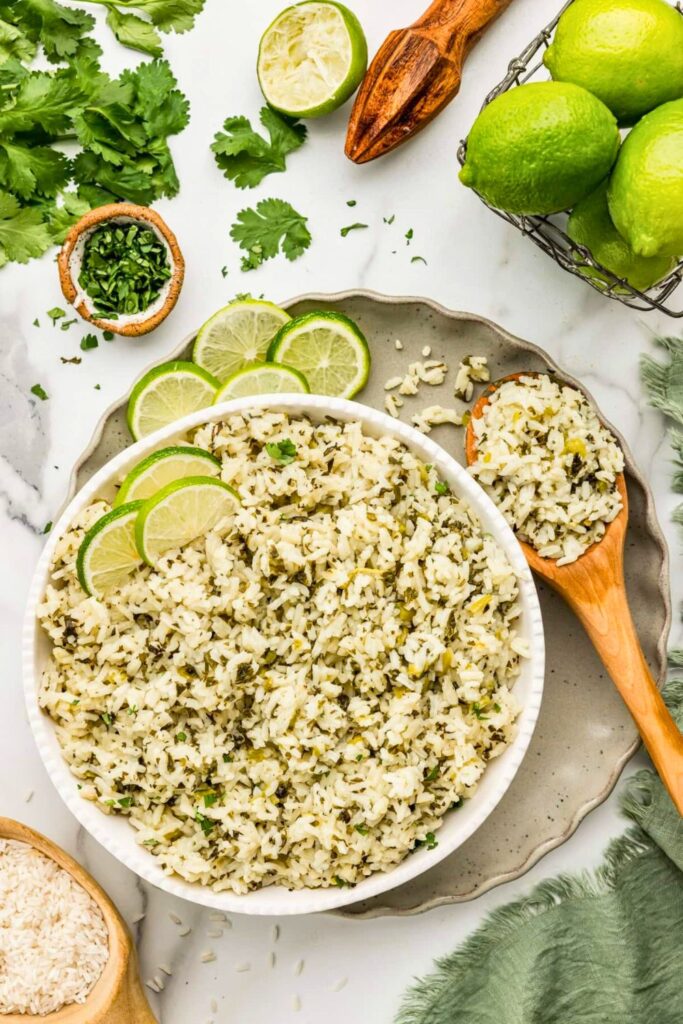
Mushy rice usually comes from too much water, excessive stirring, or cooking it longer than needed. The following five checks preserve the original method while helping the grains cook evenly.
1. Rinse the Rice Thoroughly
Rinse away the loose starch until the water is mostly clear. Drain the rice well afterward, since water clinging to the grains changes the amount in the pot.
- If you skip rinsing, the starch will thicken as it cooks, binding the grains together into a sticky blob.
- Rinse the rice under cool water until the water runs clear.
This removes surface starch and sets you up for fluffy success.
2. Use the Right Water-to-Rice Ratio
This recipe uses three cups of water for two cups of jasmine rice. Measure both rather than estimating. Different brands and pans can vary, so note what works with your rice for next time.
- For jasmine rice, a 1:1.5 ratio (1 part rice to 1.5 parts water) works best.
- In this recipe, it’s 2 cups of rice to 3 cups of water, perfect for fluffy rice.
3. Boil First, Then Simmer Gently
Once the water boils, cover the pan and lower the heat. A vigorous boil after covering can cook off liquid unevenly or make the bottom sticky.
- Immediately lower the heat to a low, gentle simmer.
- Cover the pot tightly.
4. Hands Off While Cooking
Avoid lifting the lid repeatedly or stirring while the rice simmers. The trapped steam helps the grains cook consistently and keeps them from breaking.
- Don’t stir the rice once it starts cooking!
- Don’t lift the lid while it’s steaming!
5. Fluff, Don’t Stir
Use a fork to lift and separate the cooked grains. Folding in the oil, lime, and cilantro gently is enough; vigorous mixing can make the rice clump.
- Use a fork, not a spoon, to gently fluff it.
- Stirring too aggressively can smash the delicate grains and make the rice gummy.
Is Cilantro Lime Rice Healthy to Eat?

Rice supplies carbohydrates for energy, while lime, cilantro, and olive oil add flavor. Whether this is a healthy choice for someone depends on portion size, the rest of the meal, and individual nutrition needs; it is not a substitute for medical advice.
1. Whole, Natural Ingredients
The recipe uses familiar ingredients rather than a packaged seasoning mix. Their simple flavors also make it easier to adjust the salt and lime to your preference.
- Jasmine Rice — a naturally gluten-free grain that’s easy to digest and provides quick energy.
- Olive Oil — a heart-healthy fat rich in antioxidants.
- Fresh Lime Juice — loaded with vitamin C and boosts your immune system.
- Cilantro is packed with vitamins A, C, and K, and has natural detoxifying properties.
- Salt and Bay Leaf — used in moderation for flavor.
2. Naturally Vegan and Gluten-Free
Plain rice is naturally gluten-free and the listed ingredients are plant-based. For guests with celiac disease or allergies, still check packaged ingredients and preparation surfaces for cross-contact.
- No dairy.
- No gluten.
- No animal products.
3. Light Yet Satisfying
The lime and herbs give the rice a bright taste, but rice remains an energy-dense grain. Serve an amount that fits the meal, with vegetables and protein as desired.
4. Versatile for Balanced Meals
Use it under beans, vegetables, grilled meats, or seafood. The rice brings flavor and starch; the accompaniments determine the balance of the whole plate.
- Lean proteins (like grilled chicken, shrimp, tofu)
- Fiber-rich beans or lentils
- Fresh veggies or salads
5. Customizable to Your Needs
Adjust lime, cilantro, and salt after tasting. You can also choose another cooking oil if preferred, while keeping the original water-to-rice ratio.
- Use brown jasmine rice for more fiber and longer-lasting energy.
- Reduce the olive oil slightly if you’re watching your fat intake.
- Toss in extra veggies, like diced bell peppers or spinach, to sneak in even more nutrients.
Final Thoughts: Cilantro Lime Rice Is the Side Dish You Didn’t Know You Needed
The original recipe relies on a good rice texture first, then the fresh finish of lime and cilantro. It is easy to repeat once you know how your saucepan and rice brand behave.
Recommended Recipes You’ll Love
For a bigger warm-weather menu, the related dishes below add a refreshing salad, more side-dish ideas, and a crunchy noodle option.
Try the strawberry spinach salad for a cool contrast, or browse 30 summer side dishes for more ideas.
For another make-ahead option, this Asian noodle salad brings plenty of crunch.

Dana Brooks is a home-cooking writer at Feastbears, where she shares easy family recipes, cozy dinners, quick desserts, and beginner-friendly kitchen tips. Her goal is to make everyday cooking feel simple, warm, and enjoyable for busy home cooks.