A bowl of beef stew is a satisfying answer to a cold evening: tender meat, substantial vegetables, and a savory broth that brings everything together.
This guide explains how to make beef stew step by step, from preparing the vegetables and browning the beef to checking tenderness and adjusting the final seasoning.
The recipe builds flavor in stages with garlic, tomato paste, beef broth, and fresh herbs. A little flour gives the liquid body without turning it into a heavy sauce.
Choose a heavy Dutch oven or a similar covered pot for the stovetop method below. The recipe also includes a covered-oven option.
Why This Beef Stew Recipe Works

A few deliberate cooking choices give this stew its depth of flavor and help the beef and vegetables finish with the right texture.
1. Searing the Meat Builds Flavor
The method begins by browning the beef over medium-high heat. The browned surface contributes a deeper roasted flavor than simply adding raw meat to liquid.
Browning also leaves a flavorful residue, or fond, in the pot. Scraping it into the broth later carries that flavor through the stew.
2. Smart Veggie Timing Keeps Texture Perfect
The vegetables are added in stages: onion and carrot form the base, while celery and potatoes go in later.
Adding celery during the final portion of cooking helps it retain more texture than if it simmered for the entire time.
Potatoes also go in toward the end. Give them enough time to become fork-tender, checking the pieces rather than relying only on the clock.
3. A Flavorful Stew Base Built from Scratch
Garlic paste, tomato paste, and beef bouillon contribute concentrated savory flavor before the broth is added.
Cooking the flour briefly with the vegetables helps it disperse into the liquid and avoids leaving dry, floury patches.
Rosemary, thyme, bay leaves, and Worcestershire sauce add herbal and savory notes to the broth.
4. Simmering Low and Slow Makes the Beef Fork-Tender
The beef starts with about 90 minutes of gentle simmering, then cooks further with the potatoes and celery. Tougher pieces may need extra time before they are tender.
Keep the heat gentle on the stovetop, or use the covered-oven method described below. Tenderness, rather than an exact finishing time, is the main guide.
5. Final Seasoning and Optional Add-Ins Let You Customize
Once the meat and vegetables are cooked, taste and adjust salt, pepper, garlic powder, onion powder, and optional cayenne.
Optional peas go in near the end for a different texture and a little sweetness. These finishing steps let you balance the stew after the broth has reduced.
Ingredients You’ll Need
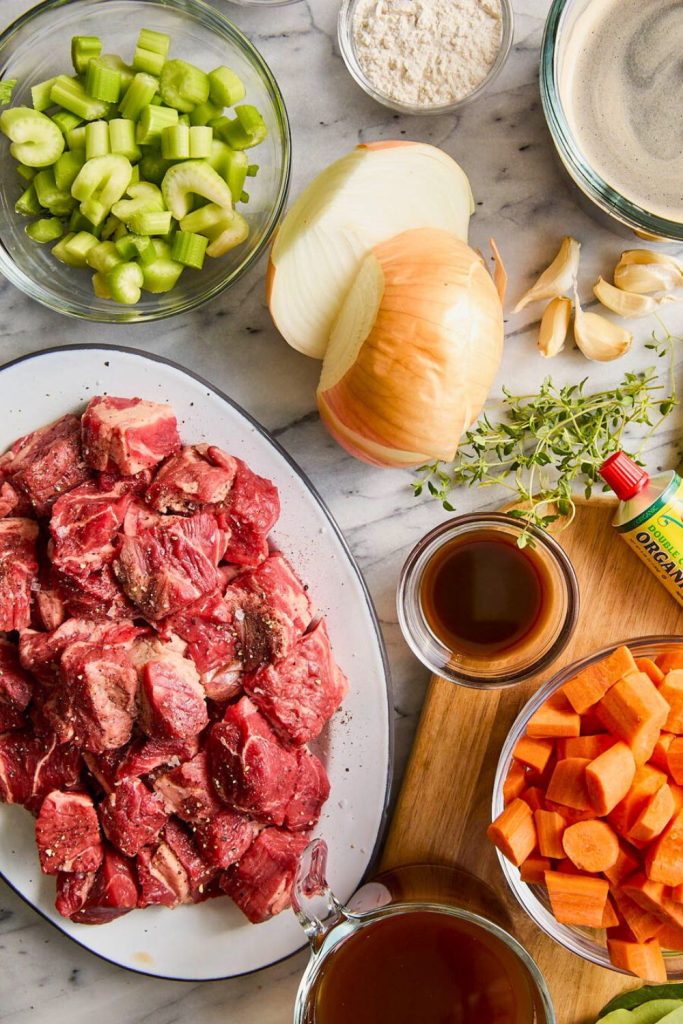
Use the ingredient table below to organize the beef, vegetables, seasonings, and optional finishing ingredients:
| Ingredient | Measurement | Notes |
|---|---|---|
| Chuck roast (or stew beef) | 2 pounds | Cut into similar-sized chunks; chuck suits a long, gentle simmer. |
| Salt | To taste | Season the beef before browning, then adjust the finished stew. |
| Avocado oil | 2–3 tablespoons | Use in batches for browning, with a little more if the pot becomes dry. |
| Red potatoes | 4–5 medium | Scrub and halve or quarter evenly; add with the celery near the end. |
| Carrots | 3–4 large | Peel and cut into fairly thick, bite-sized pieces. |
| Celery stalks | 2–3 | Wash and slice; add with the potatoes for about the final 30 minutes. |
| Yellow onion | 1 large | Dice for the aromatic base. |
| Garlic paste | 2 tablespoons | Minced fresh garlic is an alternative. |
| Tomato paste | 2 tablespoons | Cook briefly with the vegetables before adding flour. |
| Better Than Bouillon (beef) | 1 tablespoon | Adds concentrated savory flavor; check equivalent amounts for other bouillon products. |
| All-purpose flour | 2 tablespoons | Stir into the vegetables and cook for 1–2 minutes. |
| Beef broth or stock | 3 cups | Low-sodium broth makes final seasoning easier to control. |
| Fresh rosemary | 1–2 sprigs | The method uses 2 sprigs; remove woody stems before serving. |
| Fresh thyme | 1–2 sprigs | The method uses 2 sprigs; remove woody stems before serving. |
| Bay leaves | 2 | Simmer with the beef and remove before serving. |
| Worcestershire sauce | 1 tablespoon | Stir into the broth before the long simmer. |
| Frozen peas (optional) | ½ to 1 cup | Add during the final 10 minutes if using. |
| Black pepper | To taste | Adjust after the beef and vegetables are tender. |
| Garlic powder | ½ teaspoon (or to taste) | Start with the listed amount and adjust after tasting. |
| Onion powder | ½ teaspoon (or to taste) | Optional additional seasoning near the end. |
| Cayenne pepper (optional) | A pinch | Add only if you want some heat. |
| Chopped parsley (garnish) | 1–2 tablespoons | Scatter over the finished stew if desired. |
💡 Seasoning Tip: Start with the listed quantities and adjust salt and spices gradually. Changing the amount of beef, potatoes, or liquid can also change the cooking time and consistency.
Step-by-Step: How to Make the Perfect Beef Stew
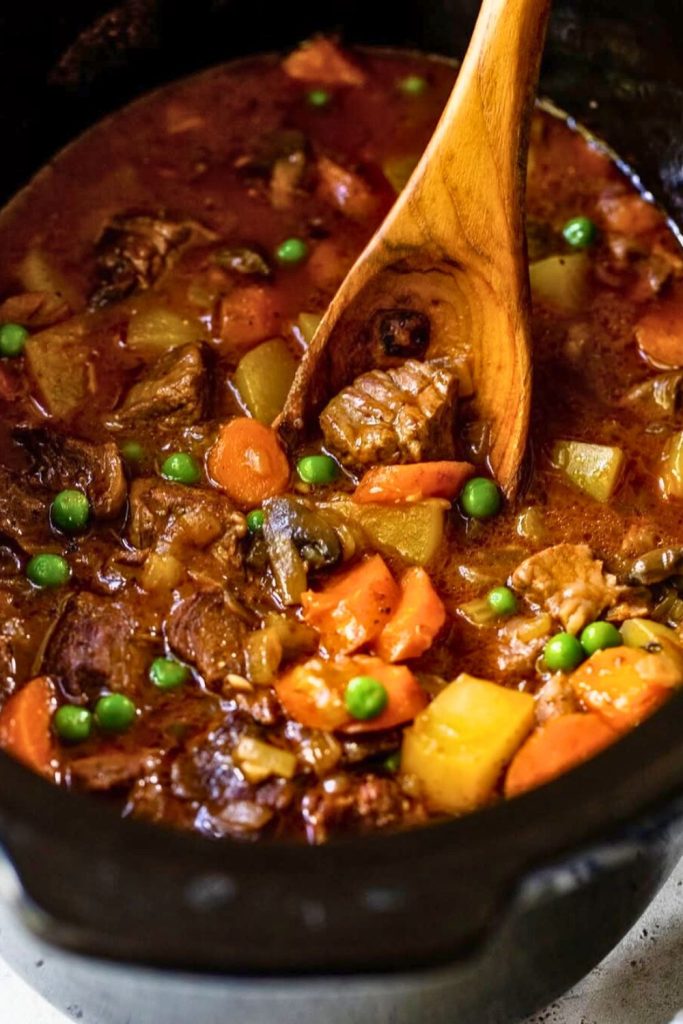
Making beef stew is mainly a matter of preparing evenly sized ingredients and allowing the meat enough time to soften.
The steps below explain what to look for at each stage, whether you are making dinner for the evening or cooking ahead.
Begin with the vegetables, then move on to browning and simmering:
Step 1: Prep the Veggies Like a Pro
Prepare the vegetables before heating the pot so they are ready at the appropriate stage.
Prepare the Potatoes
Red potatoes are useful here because they tend to keep their shape as they cook in the broth.
Scrub the potatoes and leave the skins on or peel them, according to preference. Halve smaller potatoes and quarter larger ones so the pieces are similar in size.
Chop the Carrots
Peel the carrots and cut them into fairly thick, bite-sized pieces. Keeping them similar in size helps them soften evenly without disappearing into the broth.
Slice the Celery
Wash and trim the stalks, then slice them and keep them separate. They will be added with the potatoes for roughly the final 30 minutes of cooking.
Dice the Onion
Chop the yellow onion into small pieces. It will soften into the broth with the carrots and provide the base for the garlic and tomato paste.
🔪 Preparation Tip: Use a stable chopping board and a sharp knife. Uniform pieces are more useful than perfectly shaped ones.
Step 2: Choose the Right Beef & Sear for Flavor
Next, prepare the cut of beef that gives the stew its substance.
Cut 2 pounds of chuck roast into bite-sized chunks. Chuck contains connective tissue that softens during a long, gentle cook, while its marbling adds richness.
Season the beef with salt before browning. Leave the final pepper and spice adjustment until the stew has simmered and you can taste the finished broth.
Warm some of the 2–3 tablespoons avocado oil in a heavy Dutch oven over medium-high heat. Add the beef in a single layer, leaving room between pieces and working in batches.
Let the first side brown for about 2–3 minutes before turning. Brown the remaining sides, then remove the pieces; they do not need to cook through at this stage.
🔥 Browning Tip: Give the beef space and time to form a crust. The browned residue left in the pot is useful flavor, but lower the heat if it starts to burn.
Transfer browned beef to a plate and keep the same pot for the vegetables.
Step 3: Sauté the Flavor Base
Build the vegetable base in the pot while its browned residue is still available for the broth.
Turn the heat down to medium. Add a little of the remaining avocado oil if the base looks dry.
Add the diced onion and chopped carrots. Cook for a few minutes, stirring, until the onion softens. Keep the celery aside for later.
Stir across the bottom as the vegetables cook, taking care not to scorch the browned bits.
Stir in these concentrated seasonings:
- 2 tablespoons garlic paste, or minced fresh garlic.
- 2 tablespoons tomato paste.
- 1 tablespoon beef bouillon base, such as Better Than Bouillon. If using another form, follow its label for equivalent strength.
Mix until the pastes coat the vegetables and begin to smell fragrant.
Sprinkle over 2 tablespoons all-purpose flour. Stir for 1–2 minutes, until the flour is incorporated and no dry patches remain.
This small quantity of flour will lightly thicken the broth as the stew simmers.
🥄 Keep stirring during this stage so the flour cooks without catching on the bottom.
Step 4: Build the Broth
Once the flour is mixed through, add the liquid gradually.
Pour in 3 cups beef broth while stirring, then bring the mixture to a simmer.
Scrape the base and sides of the pot to dissolve the browned residue into the broth. This also helps prevent stuck-on flour from scorching later.
Add the herbs and Worcestershire sauce:
- 2 sprigs fresh rosemary.
- 2 sprigs fresh thyme.
- 2 bay leaves.
- 1 tablespoon Worcestershire sauce.
Return the browned beef and its collected juices to the pot. Settle the pieces into the broth so they are mostly covered.
Bring the liquid back to a gentle simmer before covering the pot.
Step 5: Slow Simmer to Tender Perfection
The stew now needs a period of slow, controlled cooking to soften the beef.
Cover and reduce the heat to medium-low or lower as needed. Simmer gently for about 90 minutes, stirring occasionally and checking that the pot does not run dry.
As the meat simmers, its connective tissue gradually softens. If the pieces are still firm at the end of this stage, give them more time before adding the potatoes.
For an oven option, use an oven-safe covered pot in a 325°F (165°C) oven. Check tenderness rather than assuming it will finish at exactly the same time as the stovetop version.
The vegetables and herbs flavor the broth as it cooks. Add a little water or extra broth if needed to keep the meat mostly covered and prevent scorching.
🕐 Check about every 30 minutes. Stir gently and adjust the burner so the stew simmers rather than boils hard.
Step 6: Add Potatoes and Finish Seasoning
When the beef is becoming tender, add the prepared potatoes and celery. Cover and simmer for about 30 minutes more, or until the vegetables and beef are fork-tender. Add the optional peas during the final 10 minutes, as described below.
Once the main ingredients are tender, taste the broth and adjust with small amounts of:
- Salt, if needed after the broth and bouillon.
- Black pepper to taste.
- Garlic powder, starting with the listed amount.
- Onion powder, if desired.
- A pinch of cayenne pepper for optional heat.
Stir each addition through before tasting again. The broth may already be well seasoned from the bouillon.
🎯 Final adjustment matters because the liquid concentrates as it simmers. Add salt gradually rather than guessing at the beginning.
Before serving, remove the bay leaves and any woody herb stems.
Step 7: Optional Peas & Garnish
If using peas, stir in ½–1 cup frozen peas during the final 10 minutes of the potato-and-celery cooking stage.
The peas contribute:
- A contrasting green color.
- A little natural sweetness.
- Small, tender bites alongside the beef and potatoes.
Peas are optional, so leave them out if you prefer. If included, cook them only long enough to heat through and soften.
Finish with 1–2 tablespoons chopped fresh parsley, if desired, just before serving.
Serving Ideas: What to Serve with Beef Stew?
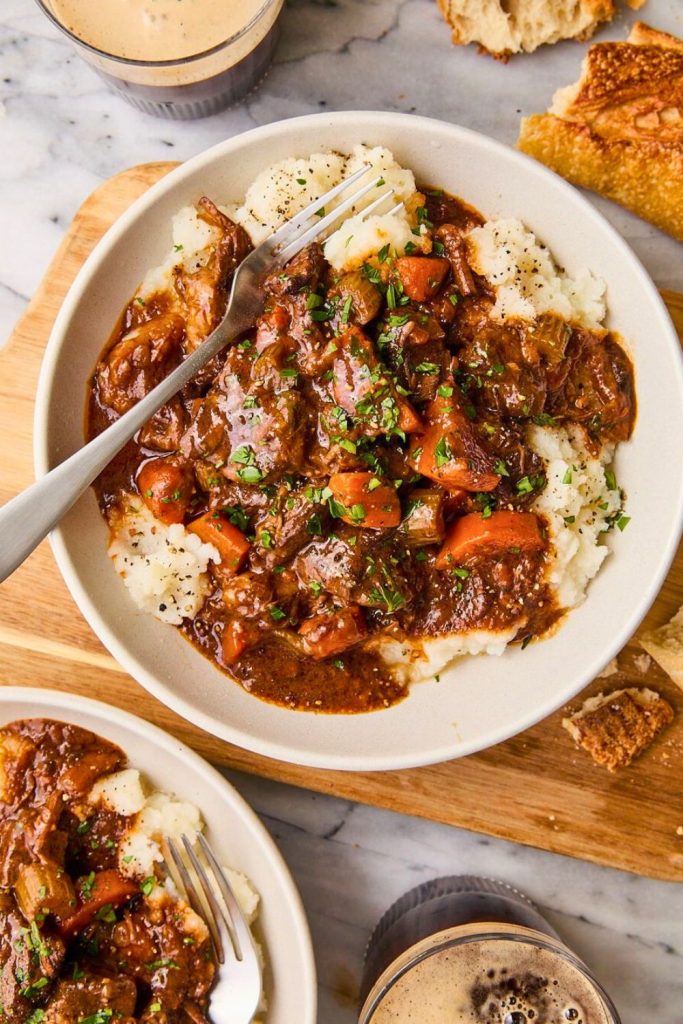
With beef, potatoes, and vegetables in the pot, this stew can stand alone as dinner.
For a larger spread, choose one of these simple sides to serve with the savory broth:
1. Bread or Garlic Toast
A sturdy slice of crusty bread is useful for soaking up the broth. Sourdough adds a slight tang, while garlic toast makes the side a little richer.
2. A Bed of Mashed Potatoes
For an especially substantial meal, spoon a smaller portion of stew over creamy mashed potatoes. The smooth mash contrasts with the chunky vegetables and beef.
3. Rice or Egg Noodles
Cooked rice or buttered egg noodles are useful alternatives when you leave potatoes out of the stew, or when you want to stretch the pot across more servings.
4. A Roasted Vegetable Side
Serve roasted Brussels sprouts, cauliflower, or butternut squash for another vegetable texture and flavor alongside the stew.
5. Crisp Greens with Dressing
A green salad with vinaigrette brings freshness to a rich meal. Try arugula, spinach, or mixed leaves with lemon or balsamic dressing.
5 Tips for Beef Stew Edition

Keep these five points in mind to avoid the most common texture and seasoning problems:
1. Give the Beef Time to Brown
Browning before simmering builds flavor; it does not seal moisture inside the meat. Let each batch develop a crust before transferring it to the plate.
➡️ Leave space between the pieces. An overcrowded pan holds moisture and makes browning more difficult.
2. Add Vegetables in Stages
Reserve potatoes and celery for the final part of cooking, and peas for the last few minutes. This gives you more control over their texture.
➡️ Allow about 30 minutes for the potatoes and celery, and add frozen peas for the final 10 minutes. Check tenderness before serving.
3. Adjust the Final Seasoning Carefully
Salt the beef before browning, then let the broth, bouillon, and herbs contribute their flavor. Taste again after simmering before adding more salt or spices.
➡️ Use a clean spoon for each taste and add seasoning in small increments.
4. Prepare the Stew Ahead
The flavors often settle together after a night in the refrigerator. Cool promptly in shallow containers and refrigerate covered; use leftovers within 3–4 days.
➡️ Reheat while stirring until the stew reaches 165°F throughout, adding a little liquid if it has become too thick.
5. Remove Excess Surface Fat
If more fat collects on the surface than you want, skim it off with a spoon before serving. Leave enough to keep the broth flavorful without an oily finish.
➡️ After safe overnight refrigeration, the firm layer of fat is easy to lift off before reheating.
Final Thoughts: A Bowl Full of Comfort
This beef stew turns familiar ingredients into a substantial, warming meal through careful browning and a gentle simmer.
It is well suited to a cool evening or a make-ahead dinner when you want something hearty ready to reheat.
Let tenderness guide the cooking, then taste and adjust the broth before bringing the pot to the table.
Try the recipe with your preferred optional finishes, and share any variations you enjoy in the comments.
Hearty Beef Stew

More Cozy Recipes You’ll Love
For more warming meals with familiar comfort-food flavors, explore these recipes:
👉 5-Ingredient Mississippi Pot Roast Recipe
A slow-cooked beef roast with a buttery, tangy seasoning mixture and a short ingredient list.
👉 Velvety Tomato Bisque Soup Moms Love
Roasted tomatoes, herbs, and a creamy finish make a smooth soup to serve with toast or grilled cheese.
👉 Cheesy Lasagna Soup Recipe Gen Z Loves
A tomato-based soup with beef, broken lasagna noodles, and creamy cheese toppings—without assembling a layered bake.


Dana Brooks is a home-cooking writer at Feastbears, where she shares easy family recipes, cozy dinners, quick desserts, and beginner-friendly kitchen tips. Her goal is to make everyday cooking feel simple, warm, and enjoyable for busy home cooks.