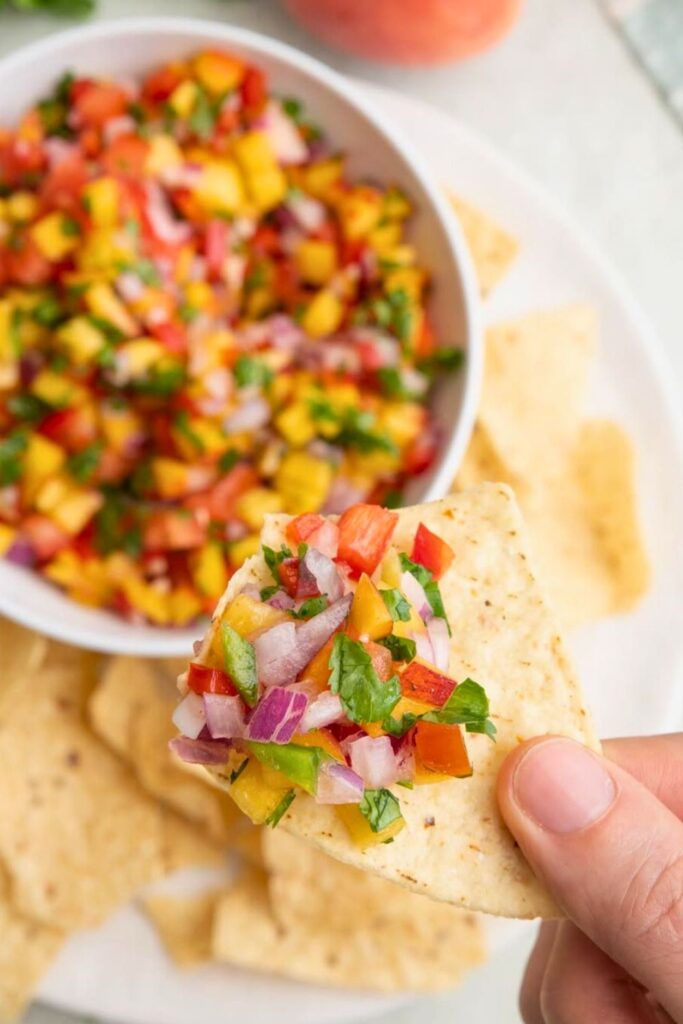
This peach salsa balances ripe fruit and tomatoes with peppers, warm spices, vinegar, and honey. The finished condiment is sweet at first, followed by savory depth, fresh acidity, and enough chile heat to work with chips, grilled meat, tacos, or grain bowls.
The original ingredient proportions remain intact, but the storage direction is deliberately conservative: this flexible recipe belongs in the refrigerator or freezer. Shelf-stable canning requires a laboratory-tested formula whose acidity and processing time have been validated.

🍑 What Makes This Peach Salsa So Special
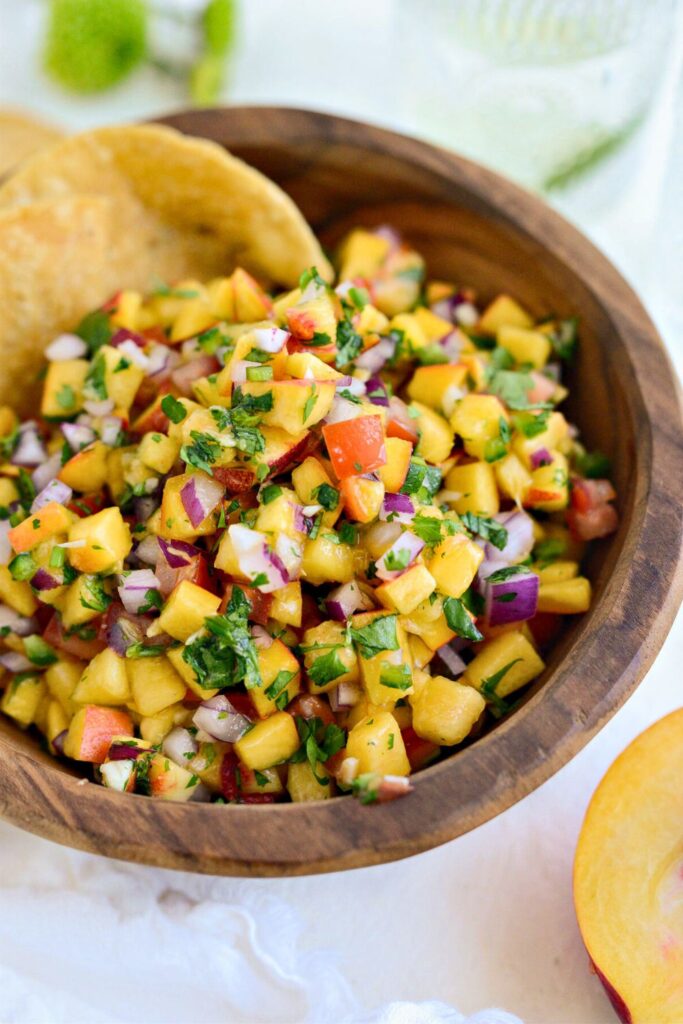
- Balanced flavor: Peaches and honey soften the acidity of tomatoes and vinegar.
- Adjustable heat: Remove jalapeño seeds for a gentler salsa or retain some for extra spice.
- Useful beyond chips: Spoon it over chicken, fish, tacos, burgers, or grain bowls.
- Large-batch friendly: The recipe makes roughly seven pints for sharing or freezing.
- Simple technique: Careful chopping and a brief simmer are the main steps.
Cumin and paprika anchor the fruit with earthy, smoky notes, while cilantro lightens the finish. A short simmer softens the raw edges of the onion and pepper but keeps the peaches and tomatoes visibly chunky.
🥕 Ingredients You’ll Need
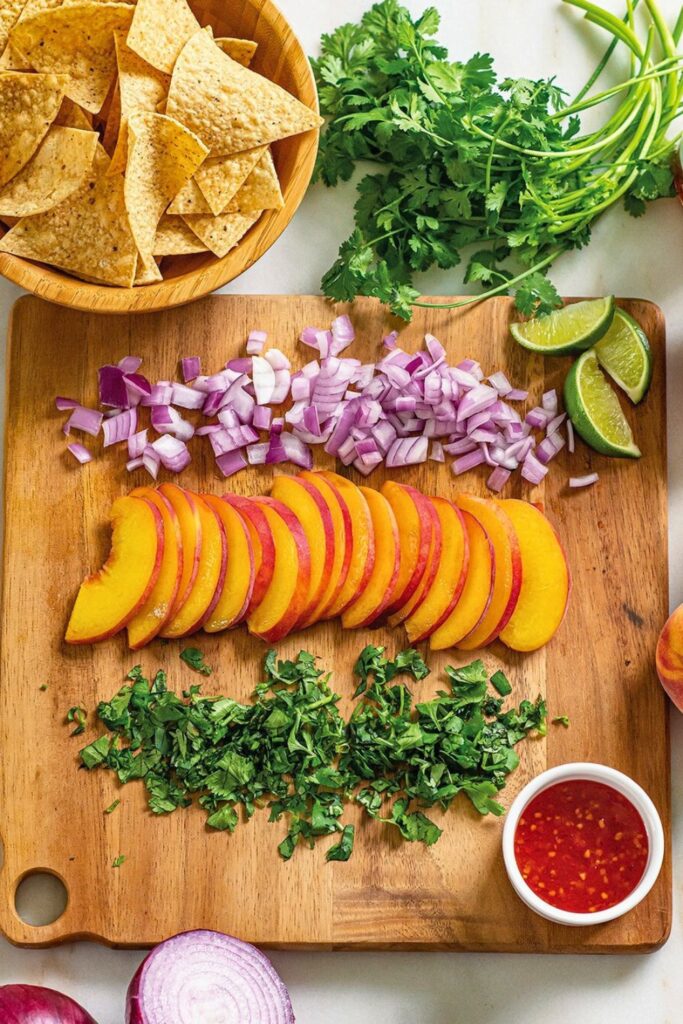
Chop and measure every ingredient before the pot goes on the heat. Pieces of similar size cook at the same pace and make the salsa easier to scoop without turning the softer fruit into purée.
| Produce | Amount | Preparation |
|---|---|---|
| Tomatoes | 8 medium | Blanch, peel, and dice |
| Ripe peaches | 8 medium | Peel if desired, pit, and dice |
| Red bell pepper | 1 large | Seed and dice |
| Red or purple onion | 1 medium | Dice finely |
| Jalapeños | 4 | Seed for mild heat; leave some seeds for more spice |
| Seasoning | Amount | Flavor role |
|---|---|---|
| Minced garlic | 2 teaspoons | Adds savory depth |
| Dried cilantro | 3 teaspoons | Adds herbal, citrusy notes |
| Ground cumin | 2 teaspoons | Provides warm earthiness |
| Paprika or cayenne | 1 teaspoon | Adds smokiness or heat |
| Liquid | Amount | Purpose |
|---|---|---|
| 5% acidity white vinegar | ½ cup | Adds measured tang; does not make this untested formula shelf-stable |
| Honey | ¼ cup | Rounds out acidity and heat |
Food-safety note: Do not use this flexible salsa formula for room-temperature canning. Changing vegetables, fruit, or acid can change the pH. Refrigerate it promptly or freeze it; use only a published, tested canning formula for pantry storage.
👩🍳 How to Make Peach Salsa (Step-by-Step)
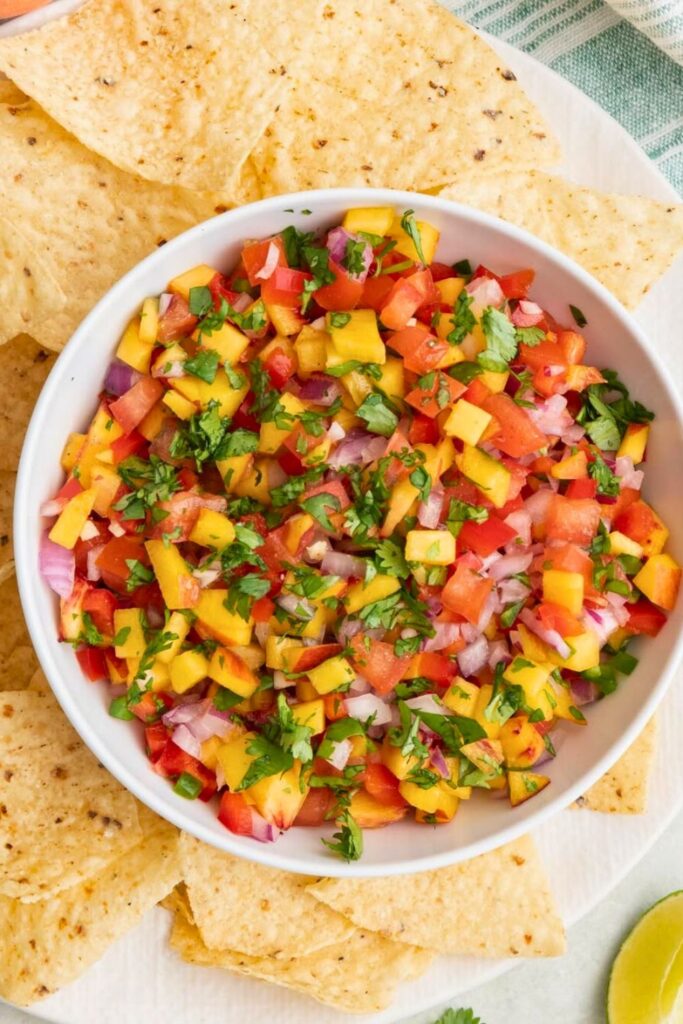
Choose a wide, nonreactive pot so the mixture heats steadily and excess moisture can escape. Stainless steel or enamel is suitable for acidic ingredients; avoid reactive cookware that may affect flavor or color.
Step 1: Prepping the Tomatoes and Peaches
Cut a shallow X in the bottom of each tomato, lower it into boiling water for 30–60 seconds, and transfer it to ice water. Slip off the skin, remove the core, and dice. Peel the peaches only if the skin is tough, then pit and cut them into pieces close to the size of the tomato.
Step 2: Chop All the Veggies
Dice the bell pepper and onion evenly. Wear gloves while handling jalapeños and avoid touching your eyes. Remove membranes and seeds for a milder batch, or keep a small portion for more heat.
Step 3: Combine & Season
Add the tomatoes, peaches, bell pepper, onion, jalapeños, garlic, dried cilantro, cumin, and paprika to the pot. Pour in the vinegar and honey, then fold gently until the seasonings are distributed.
Flavor check: Taste only after the mixture has heated. If needed, adjust dry spices or heat at serving time; do not treat flavor adjustments as a safe canning formula.
Step 4: Simmer and Soften
To simmer:
- Bring the mixture to a gentle boil over medium-high heat.
- Reduce the heat and simmer for about 5 minutes, stirring regularly.
- Stop when the tomato is saucy and the peach pieces are tender but still visible.
Control the texture with simmering time rather than aggressive stirring. Stop sooner for distinct pieces of peach and tomato, or cook a little longer for a softer spooning salsa, keeping the heat moderate so the honey and fruit sugars do not scorch.
Step 5: Choose a Safe Storage Method
Serve this batch fresh, chill it for short-term use, or freeze it. If you need pantry-stable jars, use a research-tested salsa recipe from the National Center for Home Food Preservation or a university extension service and follow it without changing ingredient ratios.
For refrigerated storage:
- Wash jars or airtight containers in hot, soapy water and rinse well.
- Use containers made for food storage and leave room for the salsa to cool.
- Do not assume a vacuum seal makes an untested salsa shelf-stable.
Step 6: Fill the Jars
How to fill:
- Ladle the hot salsa into clean heat-safe jars, leaving about 1 inch of space if you plan to freeze it.
- Wipe the rims and apply clean lids without overtightening.
- Label the containers with the recipe name and date.
A jar may seal as it cools, but that seal is not proof that the food is safe at room temperature. Keep these jars refrigerated or frozen.
Step 7: Refrigerate or Freeze
To store safely:
- Cool the filled containers promptly and refrigerate within two hours.
- Use refrigerated salsa within about one week.
- For longer storage, freeze in suitable containers for up to 3 months for best quality.
Thaw frozen salsa in the refrigerator. Freezing may soften the peach and tomato pieces, so stir gently before serving.
Step 8: Cool & Store
Cooling:
Let steam escape briefly, then cover and chill. Avoid leaving the pot or filled jars at room temperature for an extended period.
Check the containers:
Discard salsa that develops mold, an off odor, unusual bubbling, or a swollen lid. When in doubt, throw it out without tasting.
🍽️ What Does Peach Salsa Pair Well With
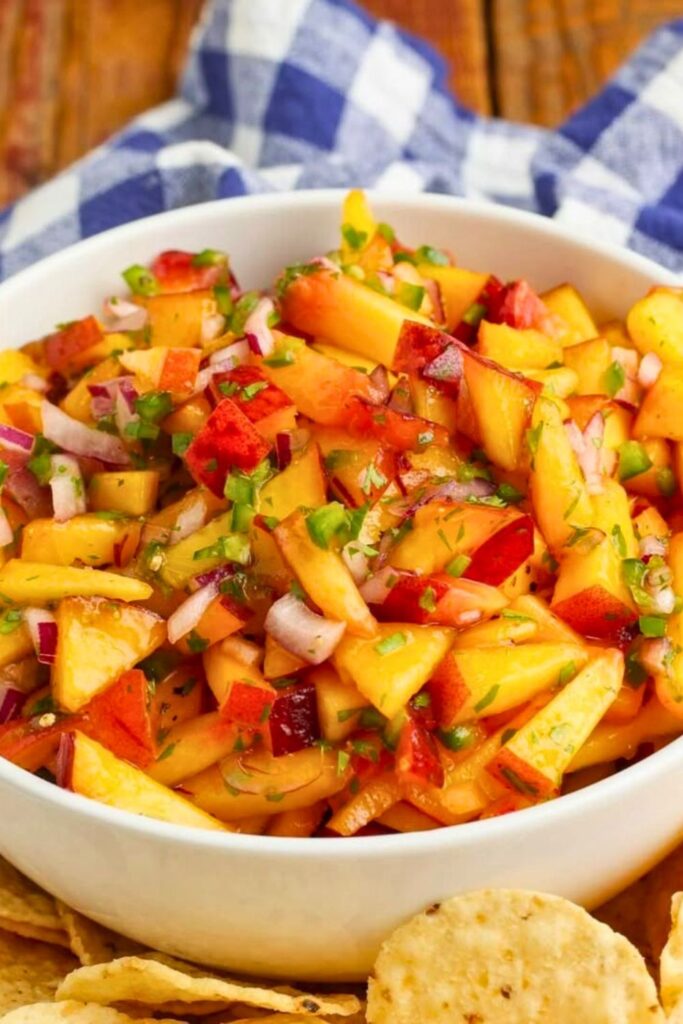
- Grilled chicken or pork: The fruit and vinegar balance smoky, savory meat.
- Fish tacos: Peach adds sweetness while jalapeño supplies fresh heat.
- Burgers and sandwiches: Use it in place of a sweet relish.
- Grain bowls: Spoon it over rice, quinoa, beans, and greens.
- Chips: Chill the salsa first so the flavors settle and the texture firms.
A little chopped fresh cilantro or a squeeze of lime can be added just before serving for extra brightness.
🍑 Can You Use Canned Peaches in Peach Salsa
Canned peaches work when fresh fruit is unavailable. Choose peaches packed in juice rather than heavy syrup, drain them thoroughly, and pat them dry before dicing. Because they are already soft, fold them in gently and shorten the simmer.
Taste before adding the full amount of honey. Canned fruit can be sweeter than fresh peaches, so you may need less sweetener for a balanced result.
🌶️ Why Does Mexican Restaurant Salsa Taste So Good?
Restaurant salsa tastes lively because it balances several elements at once: acidity, salt, chile heat, aromatics, and cooked or toasted depth. A short rest after preparation also gives those flavors time to blend instead of tasting separate.
This version applies the same balance to peaches. Vinegar supplies tang, jalapeño brings heat, cumin adds earthiness, honey rounds the sharper edges, and ripe fruit contributes fragrance and natural sweetness.
🍑 Final Thoughts
Peach salsa is a useful way to turn peak-season fruit into a topping that can move from tortilla chips to grilled dinners. Even chopping, gentle simmering, and careful sweet-acid-heat balance preserve both its fresh character and spoonable texture.
Keep this adaptable recipe refrigerated or frozen. For shelf-stable canning, do not improvise with low-acid vegetables, vinegar quantities, or processing time—choose a tested formula and follow it exactly.
Sweet and Spicy Peach Salsa
📌 You May Also Love:
Finish your peach menu with one of these related desserts:
- Homemade Peach Pie — Juicy peach filling inside a flaky lattice crust.
- Easy Peach Dump Cake — A simple canned-peach dessert with a crisp cake-mix topping.
- Easy Peach Crumble — Warm peaches with a buttery oat topping.

Dana Brooks is a home-cooking writer at Feastbears, where she shares easy family recipes, cozy dinners, quick desserts, and beginner-friendly kitchen tips. Her goal is to make everyday cooking feel simple, warm, and enjoyable for busy home cooks.