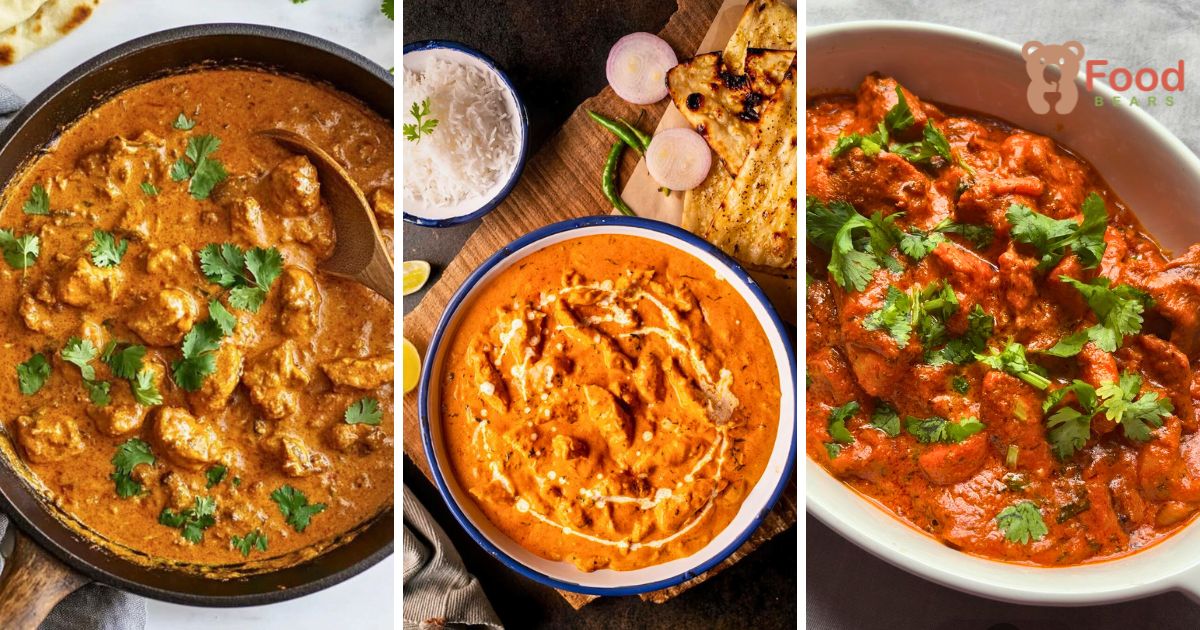
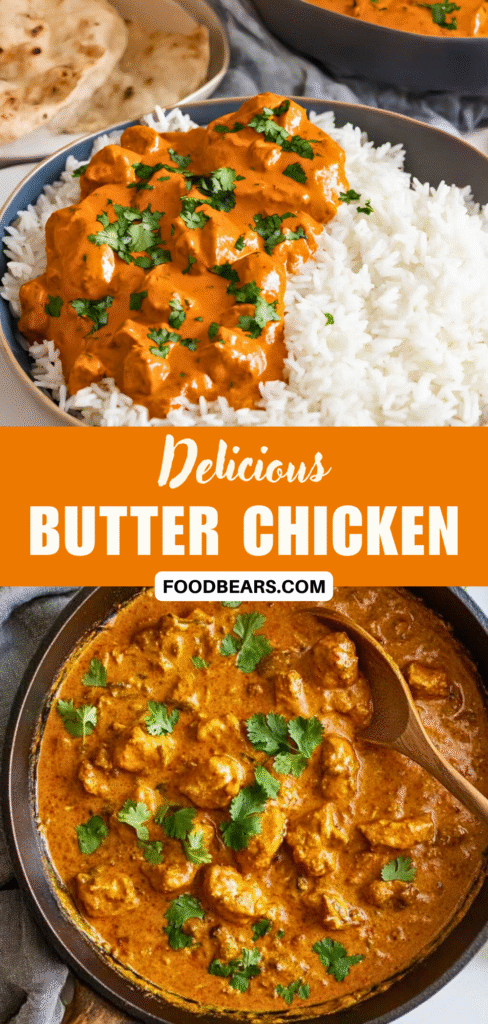
This coconut-milk butter chicken variation turns everyday chicken into a creamy, warmly spiced stovetop dinner.
Its tomato base and gentle coconut finish make the recipe approachable for cooks who are still becoming familiar with Indian-style spices.
Garam masala, curry powder, ginger, garlic, tomato, and coconut milk simmer together until the chicken is tender and the sauce coats a spoon.
The steps follow the original home-style recipe from sautéing the onion through adding lime at the very end.
🥄 What Is Butter Chicken, Really?
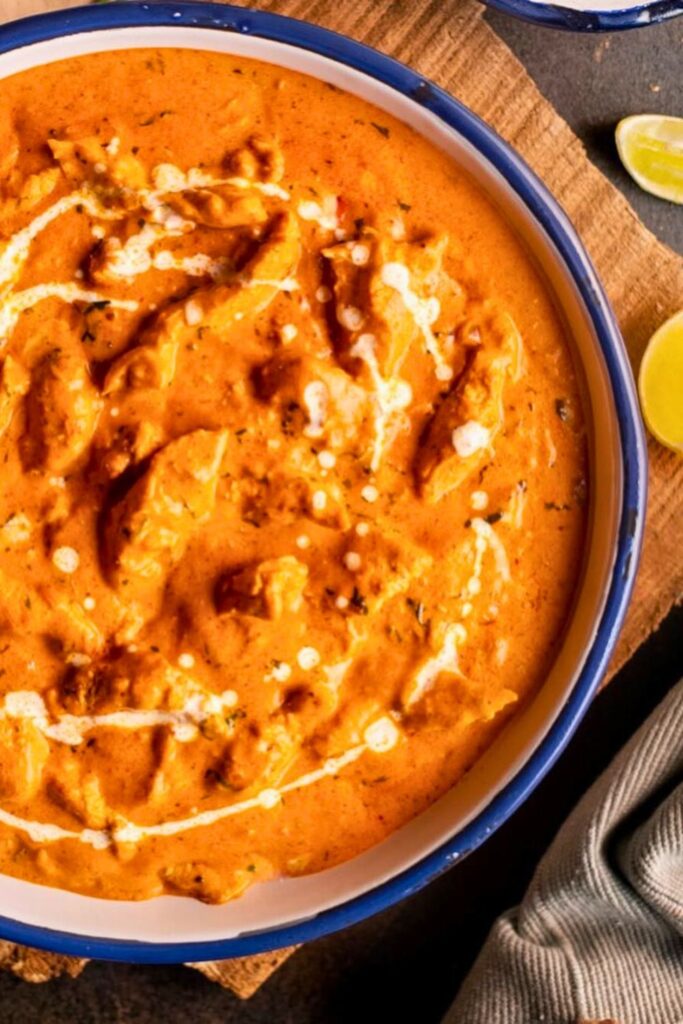
The dish takes inspiration from murgh makhani, but it should be understood as a simplified home variation rather than a traditional restaurant preparation.
Classic butter chicken often begins with marinated tandoori chicken and finishes with dairy cream; this recipe instead uses coconut milk and a streamlined skillet method.
What gives this dish its character?
Flavor develops in stages: the spices bloom in butter, aromatics soften, tomato cooks down, and the chicken gently simmers in the coconut sauce.
Butter carries the spice aroma at the beginning, while coconut milk gives the finished sauce most of its smooth body.
Garam masala provides warming spice, curry powder deepens color and flavor, and fresh ginger and garlic brighten the tomato-rich base.
You can also adjust the finished dish to suit your table:
- For less dairy, keep the coconut milk and replace the butter with a plant-based alternative.
- For extra texture, simmer in a few cashews or reserve toasted cashews for the garnish.
- For more heat, add chili powder or finely chopped green chili to taste.
- For a mild family dinner, start with the listed spices and let diners add heat at the table.
Set aside about 45 minutes from prep to serving; the 25-to-30-minute simmer accounts for much of that time and requires only occasional attention.
The finished curry feels comfortable enough for a weeknight but has the rich, fragrant character needed for a relaxed dinner with guests.
🧂 Ingredients You’ll Need for Butter Chicken
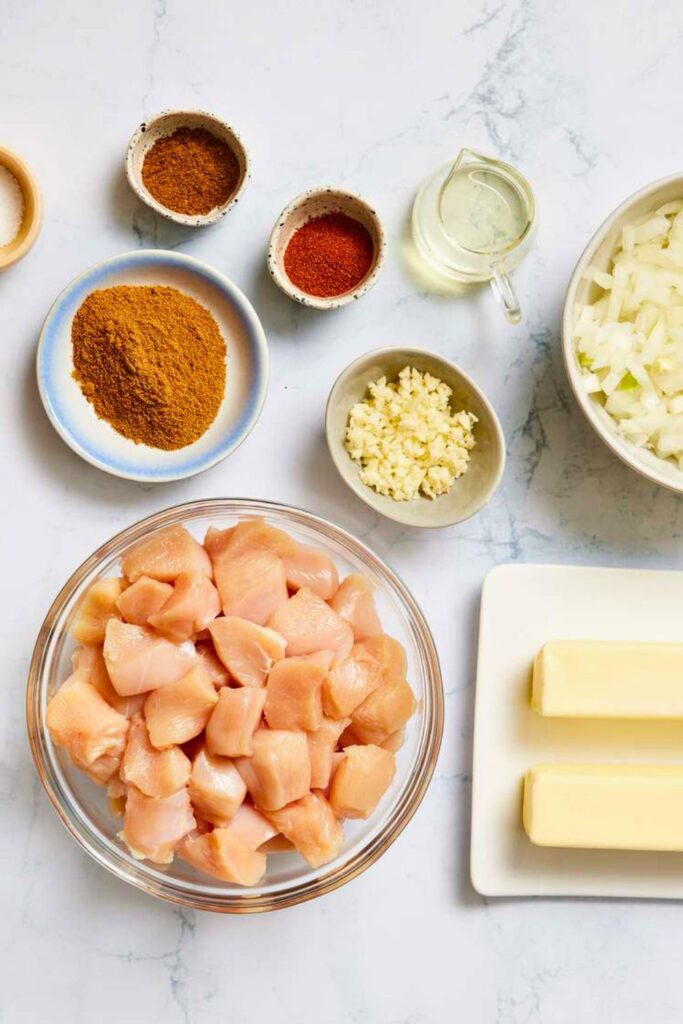
The ingredient table keeps all of the original quantities visible so nothing is missed while the pan is hot.
| Ingredient | Quantity | Notes |
|---|---|---|
| Onion | 1 cup, chopped | About 1 medium onion; a rough chop is fine. |
| Garlic | 3 tbsp (about 6 cloves), minced | Mince finely so it softens into the sauce. |
| Fresh ginger | 3 tbsp, minced | Peel with a spoon and mince the fibrous root well. |
| Chicken | 2 lbs, cubed | Use boneless, skinless thighs or breasts. |
| Butter | 2 tbsp | Used to bloom the spices and enrich the sauce. |
| Curry powder | 1 heaping tbsp | Bloom briefly over moderate heat without scorching. |
| Garam masala | 2 tbsp | Provides warm, aromatic spice. |
| Salt | 1/2 tsp | Use as a starting amount and adjust after cooking. |
| Black pepper | 1 generous pinch | Add with the initial seasoning. |
| Tomato paste | 1/4 cup | Concentrates the tomato base. |
| Crushed tomatoes | 1 can (28 oz) | Creates the main body of the sauce. |
| Full-fat coconut milk | 1 can (14 oz) | Use unsweetened coconut milk and stir the can first. |
| Lime juice | Juice of 1 lime | Add at the end to balance the rich sauce. |
| Cashews (optional) | 1 small handful | Simmer in the sauce or toast for garnish. |
| Coconut flakes (optional) | For garnish | Use unsweetened flakes, toasted if desired. |
If rice is part of the meal, start it before the sauce. Plain rice lets the curry stand out, while turmeric or cardamom can add a subtle fragrance.
🔥 Step-by-Step: How to Make Butter Chicken from Scratch

Measure the spices and open the tomato and coconut milk before cooking; the recipe then moves through a calm, predictable sequence.
Follow the steps below, preparing the aromatics first and letting the sauce finish with a gentle simmer.
🧑🍳 Step 1: Chop the Aromatics
Begin with the onion, garlic, and ginger. These aromatics form the savory backbone of the sauce.
Onion
Roughly chop 1 cup of onion, which is about one medium onion. It does not need to be finely diced because it will soften in the sauce.
Keeping the amount close to 1 cup preserves the sauce balance, although a small variation will not hurt.
Cook’s note: Measure carefully the first time, then adjust the onion in future batches to match your preference.
Garlic
Peel and mince about 6 garlic cloves, enough to make roughly 3 tablespoons.
A quick way to prepare them is:
- Press each clove lightly with the flat side of a knife to loosen the skin.
- Remove and discard the papery peel.
- Mince the cloves finely so they distribute throughout the sauce.
Small pieces soften into the tomato base and prevent harsh bites of undercooked garlic.
Ginger
Peel and finely mince enough fresh ginger to measure about 3 tablespoons.
For an easy method:
- Scrape away the thin peel with the edge of a spoon.
- Cut the ginger into thin slices, stack them, and mince them finely.
Because ginger can be fibrous, a fine mince gives the sauce a smoother texture and spreads its warm flavor evenly.
Optional: start the rice
If rice is part of the meal, put it on now so it finishes near the same time as the chicken.
Use plain white rice, or flavor the cooking water lightly with turmeric, cardamom, garam masala, or a small cinnamon stick.
🍳 Step 2: Heat the Pan and Add Butter
Set a Dutch oven or deep skillet over medium heat and add 2 tablespoons of butter.
Melt the butter until it is foamy. A faint nutty color is fine, but lower the heat if the milk solids begin to darken quickly.
The butter provides richness and creates the fat needed to release the spices’ aromas.
🌶️ Step 3: Bloom the Spices
Add the measured spices to the melted butter:
- 1 heaping tablespoon curry powder
- 2 tablespoons garam masala
Heating ground spices briefly in fat helps their fragrant compounds open up before the wet ingredients enter the pan.
Stir for 1 to 2 minutes over gentle heat. Keep the mixture moving so the spices become aromatic without scorching.
🍗 Step 4: Add and Sear the Chicken
Add 2 pounds of bite-size chicken. Thigh meat stays especially juicy, although breast meat also works.
Toss to coat the pieces in the spiced butter, then let them sit briefly between stirs so the surfaces pick up a little color.
The chicken does not need to be cooked through at this stage; it will finish safely during the simmer.
🧄 Step 5: Add Onion, Garlic & Ginger
Stir in the prepared onion, garlic, and ginger.
Cook for about 5 minutes, stirring from time to time, until the onion begins to soften and the aromatics smell mellow rather than raw.
At this point, the fragrant base should be clearly noticeable but nothing in the pan should be browned hard.
🧂 Step 6: Add Salt and Pepper
Add the initial seasoning:
- 1/2 teaspoon salt
- A generous pinch of black pepper
This is only a starting point. Taste the fully cooked sauce later before adding more salt.
🍅 Step 7: Stir in Tomato Paste and Crushed Tomatoes
Next, deepen the tomato base by adding:
- 1/4 cup tomato paste
Stir the paste through the chicken and cook it briefly so its raw edge softens and it coats the pan ingredients evenly.
Then pour in:
- 1 can (28 ounces) crushed tomatoes
The paste supplies concentration while the crushed tomatoes create the body of the sauce.
🥥 Step 8: Add Coconut Milk for Creaminess
To round out the acidity and make the sauce creamy, stir in:
- 1 can (14 ounces) full-fat coconut milk
The sauce may look lighter at first; its color and consistency will deepen as moisture cooks away.
Heavy cream can replace the coconut milk if preferred, but it changes the flavor and makes the result closer to a dairy-based sauce.
Choose unsweetened full-fat coconut milk and stir the can well before measuring so the solids and liquid are evenly combined.
🥜 Step 9 (Optional): Add Cashews
For an optional nutty addition, add cashews before the simmer.
Use a small handful, adjusting to taste. They soften in the sauce and give the finished dish extra texture.
Cashews are an optional variation, not a defining ingredient in traditional butter chicken.
⏳ Step 10: Simmer and Reduce
Reduce the heat and bring the sauce to a gentle simmer.
Cook uncovered or partially covered for 25 to 30 minutes, stirring occasionally and scraping the bottom to prevent sticking.
The chicken must reach 165°F (74°C) in its thickest pieces while the sauce thickens around it.
If the sauce becomes too thick, loosen it with a small splash of water or broth. If it is thin, simmer a few minutes longer.
Keep the bubbling gentle so the coconut milk stays smooth and the chicken remains tender.
🍋 Step 11: Add Fresh Lime Juice
Just before serving, add:
- The juice of 1 fresh lime
Lime brings fresh acidity that balances the butter, coconut milk, and concentrated tomato.
Offer extra wedges separately so each person can brighten the bowl to taste.
🥄 Step 12: Taste, Plate, and Garnish
Taste only after the chicken is fully cooked, then adjust the salt, pepper, chili, or lime as needed.
Spoon the chicken and sauce over hot rice and finish with any of these garnishes:
- Toasted unsweetened coconut flakes
- Extra toasted cashews
- Fresh cilantro leaves
Serve while the sauce is hot and creamy, with rice or naan ready to catch every spoonful.
🧊 Leftovers? They’re Even Better!
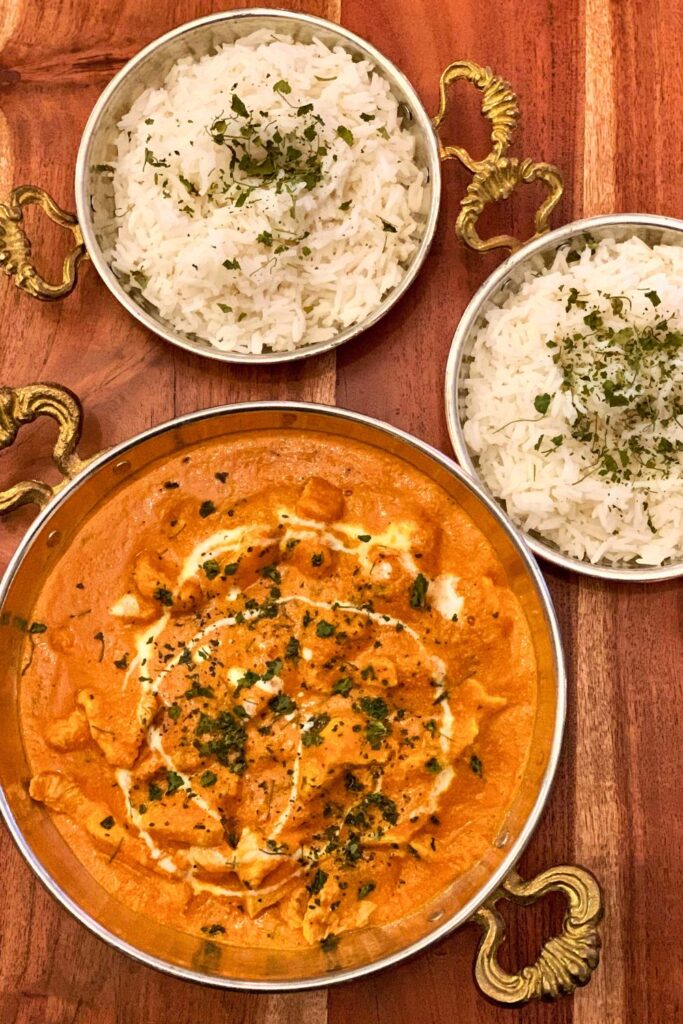
Leftovers are useful here because the sauce’s spices continue to mingle after chilling.
Why the flavor develops overnight
A night in the refrigerator gives the aromatics and ground spices time to settle into the tomato-coconut base.
The sauce often tastes more rounded the next day, and the chicken and optional cashews absorb some of its seasoning.
Reheat a portion with fresh rice or naan for an easy second meal.
Make only as much rice as you need; freshly cooked rice pairs best with the reheated sauce.
Safe storage
Handle the leftovers promptly so both quality and food safety are protected:
- Transfer the chicken to shallow containers and refrigerate within 2 hours, or within 1 hour when the room is hotter than 90°F (32°C).
- Cover the container once the food is cooled enough not to steam heavily, and keep it refrigerated at 40°F (4°C) or below.
- Use refrigerated leftovers within 3 to 4 days.
Freeze extra portions if you will not use them during that window.
Freezing butter chicken
The sauce and chicken can be frozen, although the coconut milk may look slightly separated after thawing.
For best results:
- Cool the dish promptly in shallow portions rather than leaving a large pot at room temperature.
- Pack portions in freezer-safe containers, leave a little expansion space, and label them with the date.
- For best quality, use the frozen butter chicken within about 2 months.
Thaw overnight in the refrigerator, then reheat on the stovetop or in the microwave until every portion reaches 165°F (74°C). Add a little water or coconut milk if needed.
Flat, well-sealed freezer bags can save space and usually thaw faster than deep containers.
Ways to repurpose leftovers
If another bowl of rice does not appeal, turn the chilled chicken into a different meal:
- Butter chicken wraps: Spoon the reheated filling into warm naan or a tortilla and add plain yogurt or raita.
- Butter chicken naan pizza: Spread a modest amount over naan, add cheese, and bake until the topping is hot.
- Butter chicken bowl: Pair it with rice, cucumber salad, and roasted chickpeas.
- Butter chicken pasta: Toss a small portion of sauce with cooked penne for an Indian-inspired fusion dinner.
Whichever option you choose, reheat the chicken fully and refrigerate any remaining portion promptly.
🧂 Secret Tips to Amazing Butter Chicken Every Time

A few small technique choices can noticeably improve the flavor and texture without changing the recipe.
Focus on careful heat control, fresh aromatics, and a patient simmer rather than adding more ingredients.
1. Don’t Skip the Fresh Ginger and Garlic
Freshly minced ginger and garlic give the sauce a cleaner aroma than pre-minced products that have been stored in liquid.
- Pressing garlic makes the cloves easier to peel.
- Finely mincing both aromatics helps them soften evenly into the sauce.
Treat the ginger and garlic as part of the sauce base, not as a last-minute garnish.
2. Use Full-Fat Coconut Milk
Coconut milk is the main creamy element in this version, so its texture matters.
Choose one that is:
- Full-fat and unsweetened
- Well mixed, with a smooth consistency after stirring
- Free from added flavors that would compete with the spices
Brand is less important than using a full-fat, unsweetened product you enjoy.
3. Let the Spices Bloom in Butter
Give the curry powder and garam masala their brief time in the melted butter because this step:
- Makes their aroma more noticeable
- Takes away some of the raw, dusty taste of ground spice
- Distributes the seasoning evenly through the cooking fat
One or two attentive minutes is enough; longer cooking can scorch the spices.
If the spices begin to smell burnt, start again because a scorched base will make the whole sauce bitter.
4. Cook the Onions Low and Slow
Let the onion soften fully after it enters the pan so its sweetness can blend with the tomato.
A firm, raw onion bite usually means this stage was rushed; keep the heat moderate and give it the listed time.
5. Cashews Are the Secret Weapon
Cashews remain an optional, nontraditional addition.
When simmered in the sauce, they soften and pick up the butter, tomato, and coconut flavors.
Skip them for a smoother sauce or when serving anyone with a tree-nut allergy.
For crunch, use toasted cashews only as a garnish and add them immediately before serving.
🍽️ Final Thoughts
This coconut-milk variation shows how ordinary stovetop steps can produce a creamy, deeply aromatic chicken dinner.
Blooming the spices in butter, cooking the fresh aromatics, and simmering tomato with coconut milk build richness in distinct layers.
Keeping the original order gives the chicken time to become tender without muddying the flavor of the ginger, garlic, or finishing lime.
Bring it to the table with rice or naan for a family meal, then cool and refrigerate any leftovers promptly.
Add lime only after the sauce is finished, and offer cilantro, extra chile, or another preferred garnish at the table.
Indian-Style Butter Chicken with Coconut Milk
🥗 You’ll Also Love These Easy Dinner Recipes:
1. Healthy Chicken Stuffed Peppers Under 45 Min
Protein-rich peppers filled with seasoned chicken and plenty of melted cheese make a colorful dinner.
2. Best P.F. Chang’s Chicken Lettuce Wraps at Home
Crisp lettuce cups hold a savory P.F. Chang’s-inspired chicken filling for a fresh takeout-style meal.
3. Easy Honey Garlic Chicken Bites in 25 Min
Sweet, garlicky glazed chicken bites work over rice, in a salad, or as a shareable appetizer.

Dana Brooks is a home-cooking writer at Feastbears, where she shares easy family recipes, cozy dinners, quick desserts, and beginner-friendly kitchen tips. Her goal is to make everyday cooking feel simple, warm, and enjoyable for busy home cooks.