Easter celebrations call for a dessert that feels festive without being fussy. This moist Easter carrot cake combines freshly grated carrots, warm spices, and tangy cream cheese frosting while keeping the original baking guidance, variations, and serving tips easy to follow.
A well-made carrot cake is moist, flavorful, and perfectly complements the festive spirit of Easter. The pairing of spiced layers, grated carrots, and cream cheese frosting makes it a beloved tradition for many.

When I think of Easter, the classic carrot cake comes to mind, not just for its taste, but also for its vibrant colors and appealing aroma.
Whether you prefer a traditional recipe or a fun twist, there are many ways to create a memorable dessert. Mini carrot cakes or unique variations add a playful touch to your celebration.
In this blog post, I will share some of the best Easter carrot cake recipes. These range from classic options to creative spin-offs, making it easy to find the perfect dessert for your holiday table.
Get ready to explore these recipes and impress your guests with an appealing cake this Easter!
Ingredients
The original guidance is retained here, with the most useful details explained in clearer language. When preparing an Easter carrot cake, selecting the right ingredients matters. Each component plays a vital role in achieving flavor, texture, and moisture. Here’s an in-depth look at what you need.
Flour Choices
Flour is the foundation of any cake. I typically opt for all-purpose flour in my carrot cake. It offers a good balance between structure and tenderness.
Here’s a quick comparison of flour types:
| Flour Type | Texture | Best Use |
|---|---|---|
| All-Purpose Flour | Light and fluffy | Standard cakes |
| Cake Flour | Very soft and tender | Delicate cakes |
| Whole Wheat Flour | Denser and nuttier | Healthier, denser cakes |
Using cake flour may make the cake lighter, but blending it with all-purpose flour can offer the best of both worlds.
Types of Sweeteners
Sweeteners add flavor and moisture. I generally use granulated sugar, which blends easily and offers the right sweetness.
- Brown Sugar: contributes moisture and a slight caramel flavor.
- Honey or Maple Syrup: Offers a more complex sweetness and may make the cake extra moist.
Experimenting with different sweeteners can enhance the overall taste. Just remember to adjust liquids if using liquid sweeteners.
Fresh vs Pre-Packaged Carrots
Carrots are the star ingredient. I strongly recommend using freshly grated carrots for the best taste and texture.
Fresh carrots provide:
- Flavor: They have a natural sweetness and moisture.
- Texture: Freshly grated carrots keep the cake moist without adding excess water.
Pre-packaged carrots can be convenient, but they might lack the freshness that elevates the cake’s flavor. If you choose pre-packaged, ensure they are finely grated.
Spices and Flavorings
Spices add warmth and complexity to the cake. I usually use a blend of cinnamon, nutmeg, and ginger for a classic taste.
Here’s what each spice contributes:
- Cinnamon: Sweetness and warmth.
- Nutmeg: A slight nutty flavor.
- Ginger: A subtle bite and brightness.
Adding vanilla extract improves the overall flavor. A splash can transform a simple carrot cake into something special.
Additional Add-Ins
I like customizing my carrot cake with various add-ins. Consider these popular options:
- Nuts: Chopped walnuts or pecans add crunch and flavor.
- Raisins or Cranberries: Dried fruits provide sweetness and chewiness.
- Pineapple: Crushed pineapple can increase moisture, but be careful with the amount.
Selecting the right add-ins improves both flavor and texture, preparing each bite appealing.
Baking Techniques
This part keeps the same baking advice while making the reasoning easier to follow. Mastering the right baking techniques matters to a successful Easter carrot cake. Here’s what For me, important to ensure your cake comes out flavorful and moist.
Mixing Methods
Using proper mixing methods is crucial for the texture of the cake. I usually employ the following techniques:
- Creaming Method: Start by beating together sugar and fat (like butter) until light and fluffy. This contributes air and gives a tender crumb.
- Incorporation of Wet Ingredients: Gradually mix in eggs, vanilla, or any liquid ingredients. That helps blend the flavors without overworking the batter.
- Adding Dry Ingredients: Combine flour, baking powder, and spices. I fold them gently into the wet mix. This keeps the cake light and prevents it from becoming dense.
Using a spatula rather than a mixer for the last step can prevent overmixing, which keeps my cake soft.
Ideal Baking Temperatures
Baking at the right temperature is important to achieve the best results. I consistently preheat my oven to 350°F (175°C), which is well suited to carrot cake.
- Temperature Control: An oven thermometer ensures consistent heat. This prevents uneven baking.
- Oven Position: I place my cake pans in the center of the oven for even heat distribution.
- Baking Time: Generally, carrot cakes take about 25 to 35 minutes to bake. It’s vital not to rush this process.
Setting a timer ensures the cake is baked perfectly. Too high a temperature can burn the edges, while too low results in underbaking.
Testing for Doneness
Knowing when my carrot cake is done is important to avoid a gooey center. I use these simple steps:
- Toothpick Test: I insert a toothpick or cake tester in the center. If it comes out clean or with a few crumbs, the cake is ready.
- Spring Back Method: Gently press the top of the cake. If it springs back, it’s done; if it leaves an indentation, it needs more time.
- Visual Cues: I look for a golden-brown color and a slight pull from the sides of the pan.
Frosting and Decoration
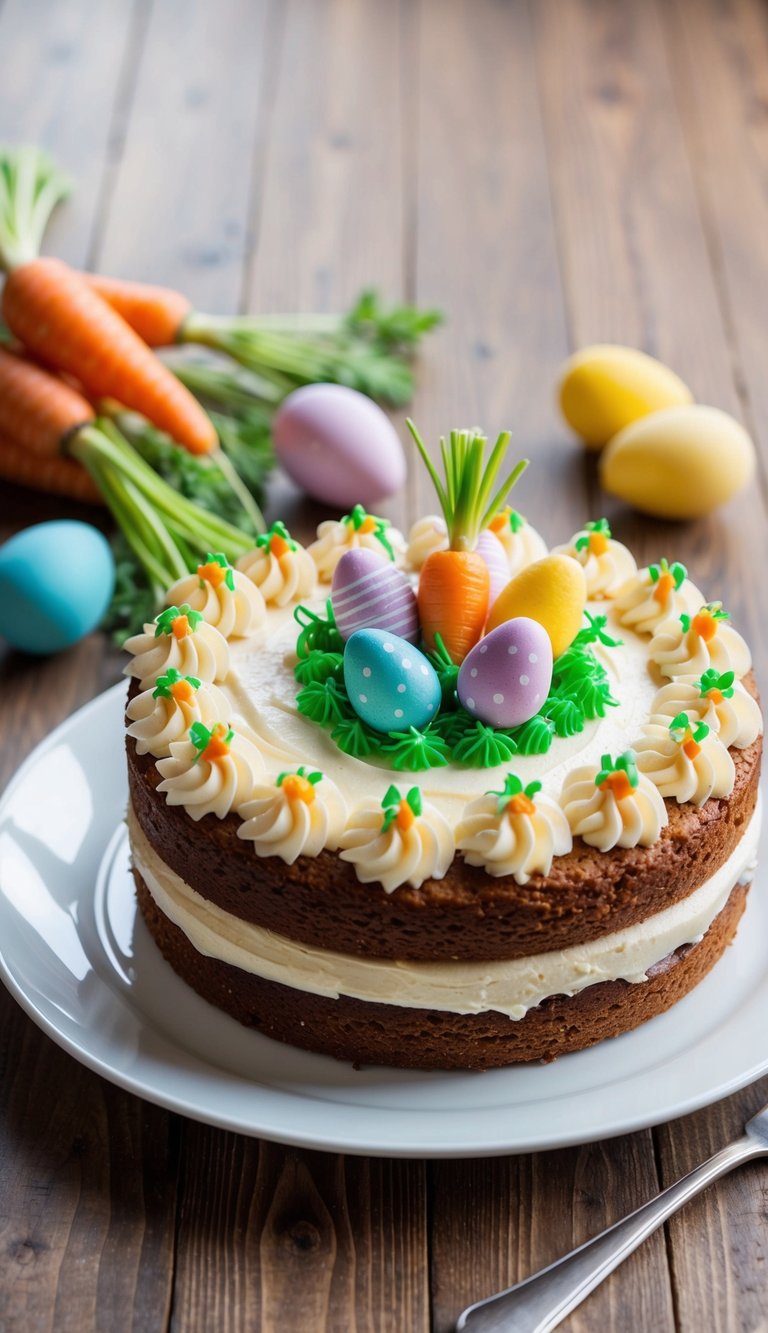
The underlying method remains unchanged, but the choices and results are described more directly. Frosting and decoration are essential parts of creating an Easter carrot cake that not only tastes great but also looks beautiful. The right frosting improves the flavor, while attractive decorations can bring festive charm to the dessert.
Cream Cheese Frosting Varieties
Cream cheese frosting is a classic choice for carrot cake. Its tangy flavor balances the sweetness of the cake perfectly. I prefer to prepare several variations to suit different tastes.
- Classic Cream Cheese Frosting: This standard version is made with cream cheese, butter, powdered sugar, and vanilla. It is creamy and smooth.
- Lemon Cream Cheese Frosting: Adding lemon juice and zest gives a bright, citrus flavor that complements the spices in the cake.
- Spiced Cream Cheese Frosting: Incorporating cinnamon and nutmeg into the frosting contributes warmth and ties in with the cake’s spices.
Each variety offers a unique taste experience, allowing for customization depending on personal preference.
Decorative Toppings
Decorative toppings can upgrade the look of your carrot cake. Consider these toppings For me, particularly appealing:
- Chopped Nuts: Adding walnuts or pecans gives an appealing crunch and earthy flavor.
- Edible Flowers: These can bring a vibrant touch to the cake and are well suited to special occasions.
- Grated Carrot: Freshly grated carrot sprinkled on top contributes color and a playful nod to the cake’s main ingredient.
- Coconut Flakes: Toasted coconut gives a tropical flair and contrasting texture.
Piping and Presentation Tips
Piping frosting can be an art. I have a few tips to help achieve a professional look:
- Use a Piping Bag: A piping bag with various tips can create beautiful borders and decorations. I suggest a star tip for rosettes.
- Practice on Paper: Before piping on the cake, I practice on a piece of parchment paper to get the hang of it.
- Chill the Cake: Ensuring the cake is chilled makes it easier to frost. This also reduces the chances of the layers shifting.
For an elegant finish, I usually place decorative elements like edible flowers or candied carrots on top after piping. That gives a stunning focal point on the cake.
Health and Dietary Considerations

This section preserves the original tips and organizes them in a more practical way. When baking an Easter carrot cake, it’s important to consider various health and dietary needs.
There are several options available that cater to gluten-free and vegan diets. I also provide relevant nutritional information to help make informed choices.
Gluten-Free Alternatives
for anyone avoiding gluten, several alternatives can replace traditional wheat flour in carrot cake recipes.
Common gluten-free options include:
- Almond Flour: Nutty flavor and soft crumb.
- Coconut Flour: High in fiber but absorptive; use less than standard flour.
- Oat Flour: Ground oats provide a mild taste and good structure.
When using these alternatives, I usually combine different flours to achieve the right consistency. For example, a mix of almond and coconut flour can create a soft crumb while maintaining moisture.
Be sure to check for certified gluten-free labels to avoid cross-contamination. This is crucial for anyone with gluten intolerance or celiac disease.
Vegan Variations
If I want to make a vegan version of carrot cake, there are simple swaps for traditional ingredients. A few good choices include:
- Egg Replacers: Use flaxseed meal or chia seeds mixed with water. This acts as a binder and contributes healthy fats.
- Dairy-Free Milk: Almond, coconut, or soy milk can substitute cow’s milk without sacrificing taste.
- Oil: Coconut oil or vegetable oil ensures the cake remains moist.
Many recipes also incorporate mashed bananas or applesauce for added sweetness and moisture. These substitutions help maintain the cake’s taste and texture, making it enjoyable for everyone.
Nutritional Information
A slice of carrot cake can offer some nutritional benefits due to its ingredients. Here’s a breakdown:
| Nutrient | Amount per Slice |
|---|---|
| Calories | Approximately 300 |
| Carbohydrates | 40 grams |
| Fiber | 2-3 grams |
| Protein | 3-4 grams |
| Sugars | 20-25 grams |
Carrots contribute vitamins like A and K, along with fiber. While carrot cake is a treat, For me, it offers more nutrition than standard cakes, thanks to the healthy ingredients. Just be mindful of portion sizes, especially with added sugars.
Storing and Serving Suggestions
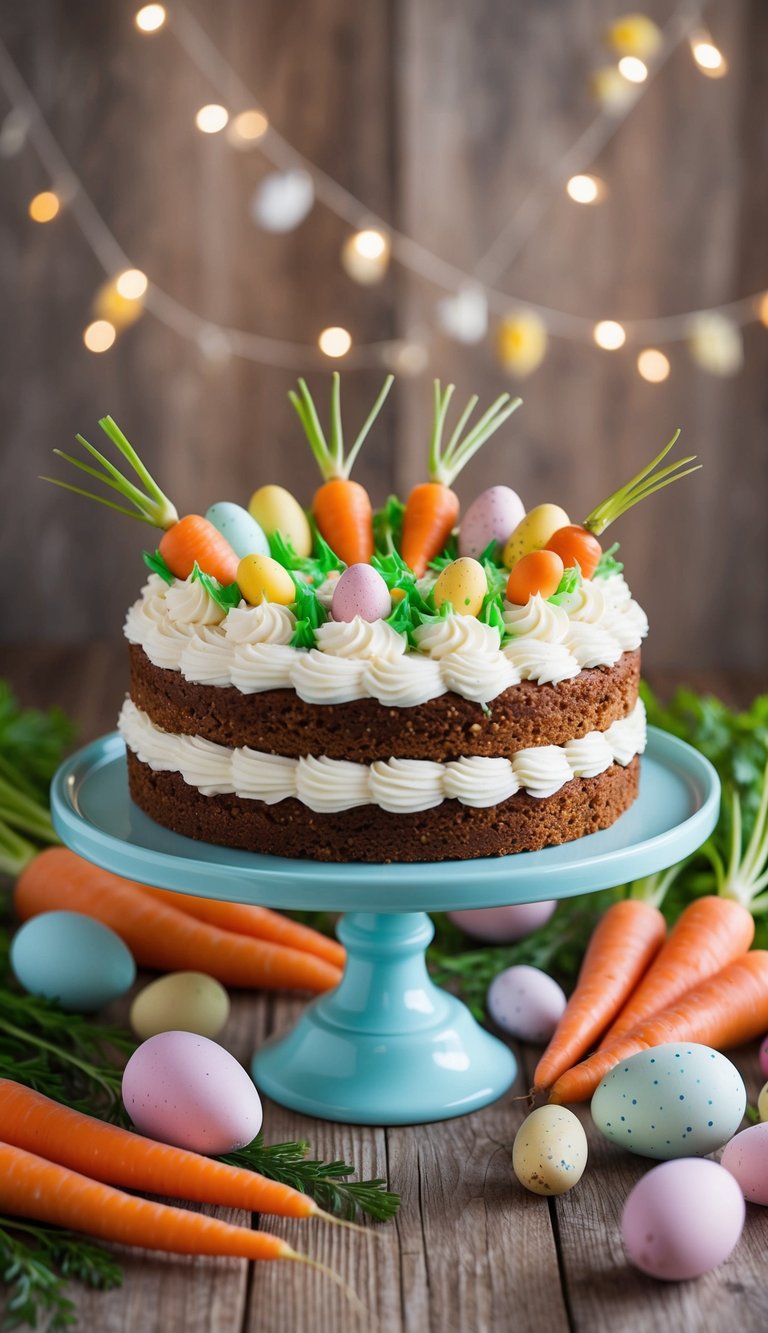
The same idea is carried forward here with clearer wording and a stronger focus on useful details. Proper storage and presentation of Easter carrot cake can enhance its flavor and keep it fresh. I’ve gathered practical methods to ensure your cake stays flavorful and appealing when it’s time to serve.
Proper Storage Methods
To keep your Easter carrot cake fresh, choose the right storage method. If the cake has cream cheese frosting, it must be refrigerated. Consider these effective ways to store it:
- Refrigerator: Cover the cake with plastic wrap or a cake dome. This protects it from drying out and odors. It can last up to five or six days in the fridge.
- Freezer: For longer storage, wrap the cake tightly in plastic wrap and then in aluminum foil. That helps prevent freezer burn. When you’re ready to eat it, let it thaw at room temperature.
- Room Temperature: If you plan to serve the cake within a couple of days, it can be stored at room temperature. Just make sure it’s in a cool, dry place, covered with a cloth.
Serving Size and Presentation
Appealingly serving carrot cake improves the dessert experience. I suggest the following tips for serving:
- Slice easily: For neat slices, use a sharp knife. Warm the knife in hot water, then dry it off before cutting to make serving easier.
- Portion Size: A standard slice of carrot cake is about 1-2 inches wide. Consider serving with a dollop of whipped cream or a scoop of vanilla ice cream for added flavor.
- Decorative Touch: Garnish each slice with chopped walnuts or a sprinkle of cinnamon. A decorative plate may also enhance the visual appeal.
Popular Easter Carrot Cake Variations

The original guidance is retained here, with the most useful details explained in clearer language. There are many exciting ways to enjoy carrot cake during Easter. Each variation offers a distinctive spin while keeping the classic flavors. Here, I explore three popular adaptations that add fun and creativity to this beloved dessert.
Cupcake Adaptations
Carrot cake cupcakes are an appealing choice for Easter celebrations. They are easy to serve and great for kids and adults alike. The small size makes them well suited to individual portions.
Key features of carrot cake cupcakes:
- soft crumb: These mini cakes retain the signature moistness of traditional carrot cake.
- Toppings: Cream cheese frosting is a popular choice, often topped with shredded coconut or tiny carrot decorations.
These cupcakes may also incorporate other flavors, such as pineapple or spices like cinnamon and nutmeg. In my experience, adding crushed walnuts or pecans improves both taste and texture.
Bundt Cake Versions
A bundt cake is an elegant way to present carrot cake at an Easter gathering. The unique shape produces an eye-catching design that’s well suited to a festive table setting.
Elements of a bundt cake:
- Dense and moist: The bundt version is rich and typically taller than traditional cakes.
- Glaze options: A simple glaze made from powdered sugar and vanilla pairs well, allowing the cake’s flavor to shine.
Some recipes even suggest adding a swirl of cream cheese filling or incorporating chocolate chips. That gives the bundt a surprise element that can impress guests.
Layer Cake Innovations
Layer cakes upgrade carrot cake to another level, making it a centerpiece for Easter dinners.
The traditional three-layer format allows for stacking and gives room for plenty of frosting.
Features of a layer cake:
- Filling choices: Adding fruit preserves or thick cream cheese frosting between the layers produces appealing surprises with every slice.
- Decorative options: I usually use toasted coconut or edible flowers for a polished touch.
This style also opens up creative opportunities, such as using different types of carrots or adding spices.
The layered presentation makes it a showstopper that all ages will enjoy.
More Spring Desserts to Try
If this carrot cake belongs on your Easter table, these seasonal cake and dessert ideas are worth exploring next:
- Fresh Spring Dessert Ideas: Bright cakes, bars, tarts, and fruit-forward sweets for the season
- Berry Chantilly Cake Ideas: Soft cake layers, berries, and airy Chantilly cream in several styles
- Easy Summer Cake Ideas: Colorful warm-weather cakes for birthdays and casual gatherings

Dana Brooks is a home-cooking writer at Feastbears, where she shares easy family recipes, cozy dinners, quick desserts, and beginner-friendly kitchen tips. Her goal is to make everyday cooking feel simple, warm, and enjoyable for busy home cooks.