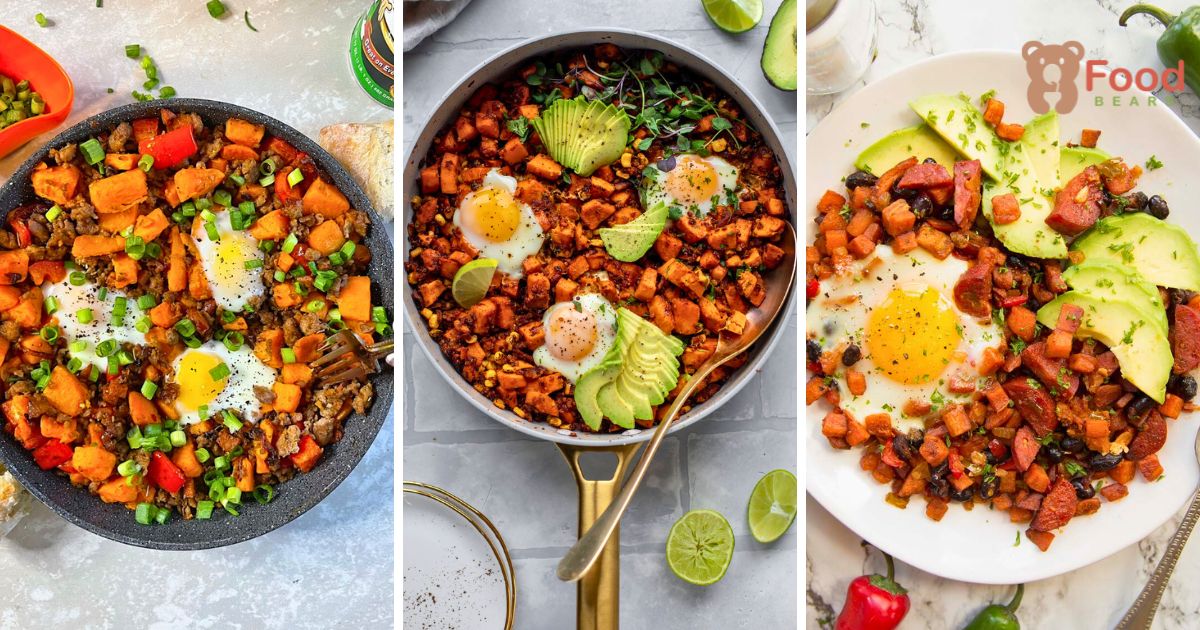
This sweet potato hash brings crisp sweet potatoes, Russet potato, breakfast sausage, onion, warm spices, cheese, and optional eggs together in one skillet.
Savory sausage and browned potatoes make it substantial enough for breakfast, brunch, or an easy breakfast-for-dinner.
It also puts pantry sweet potatoes to good use while keeping most of the cooking in a single pan.
Follow the original order below to prep, brown, season, crisp, top, and finish the hash.
Why You’ll Love This Sweet Potato Hash
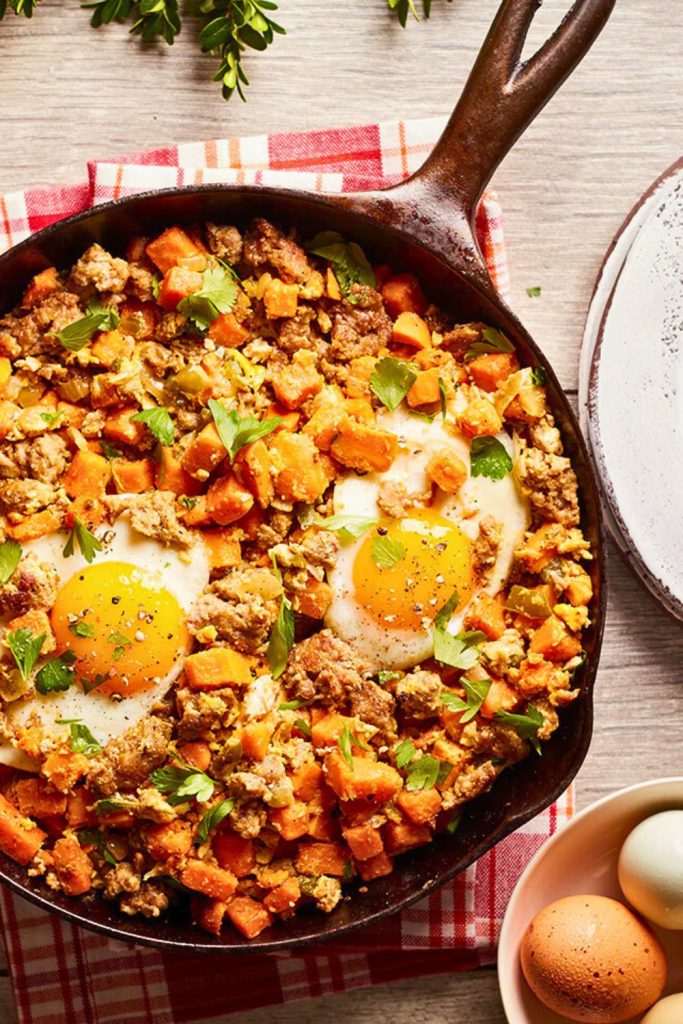
Natural sweetness from the potatoes is balanced by sausage, onion, smoky seasoning, Parmesan, and rich baked eggs.
Several details make this skillet especially dependable for a relaxed morning meal:
- One-pan cooking: The sausage, vegetables, potatoes, cheese, and eggs finish in the same skillet.
- Easy to share: One batch provides enough for a family breakfast or brunch table.
- Flexible: Replace the sausage, adjust the vegetables, or change the cheese to suit the meal.
- Nutrient-dense base: Sweet potatoes contribute fiber, color, and beta-carotene.
A properly preheated skillet browns the cut sides of the potatoes while allowing the centers to become tender.
Ingredients You Need
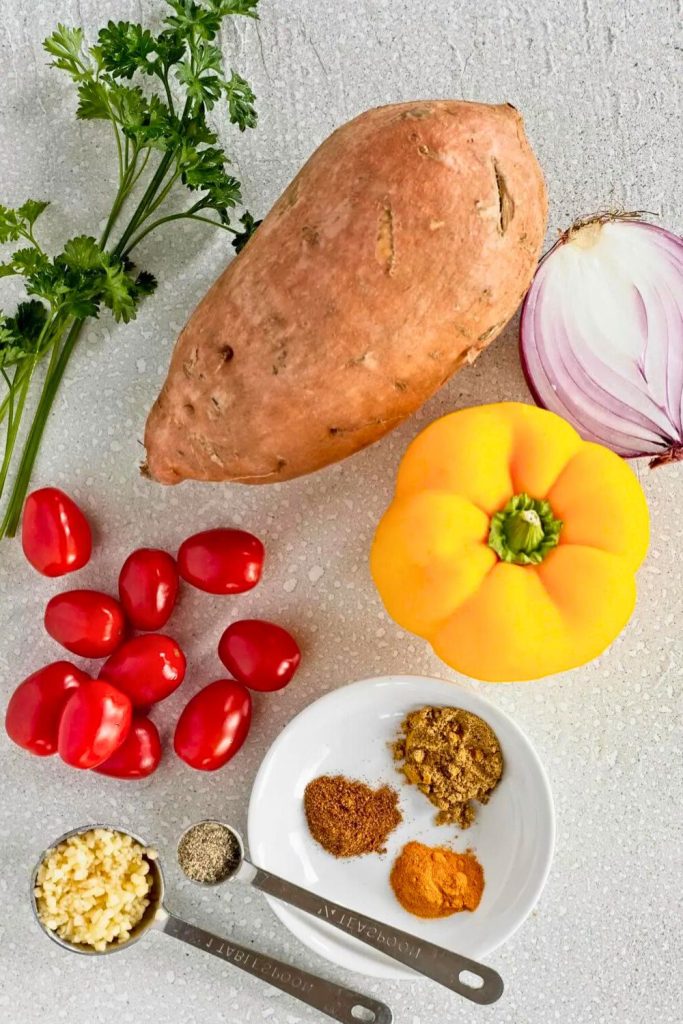
| Ingredient | Quantity | Purpose / Notes |
|---|---|---|
| Sweet potatoes | 2 medium | Add color, fiber, and natural sweetness. |
| Russet potato | 1 medium | Provides starch and crisp edges. |
| Breakfast sausage | 1 pound | Adds savory flavor and protein. |
| Yellow onion | 1 medium, chopped | Builds sweetness and depth. |
| Jalapeño | 1, chopped, optional | Adds mild heat. |
| Avocado oil | 2–3 tablespoons | Used for browning and crisping. |
| Garlic powder | 1 teaspoon | Adds garlic aroma. |
| Onion powder | 1 teaspoon | Reinforces the savory base. |
| Salt and black pepper | To taste | Balances all other flavors. |
| Smoked paprika | 1/2 teaspoon, optional | Adds smoky warmth and color. |
| Roasted garlic bouillon base | 1 teaspoon | Supplies concentrated savory flavor. |
| Italian seasoning | 1/2 teaspoon | Adds dried herbs. |
| Parmesan | 1/2 cup, grated | Creates a salty, creamy finish. |
| Eggs | 4–6, optional | Turns the hash into a complete skillet meal. |
| Fresh parsley | For garnish | Adds color and freshness. |
How to Make Sweet Potato Hash (Step-by-Step Guide)
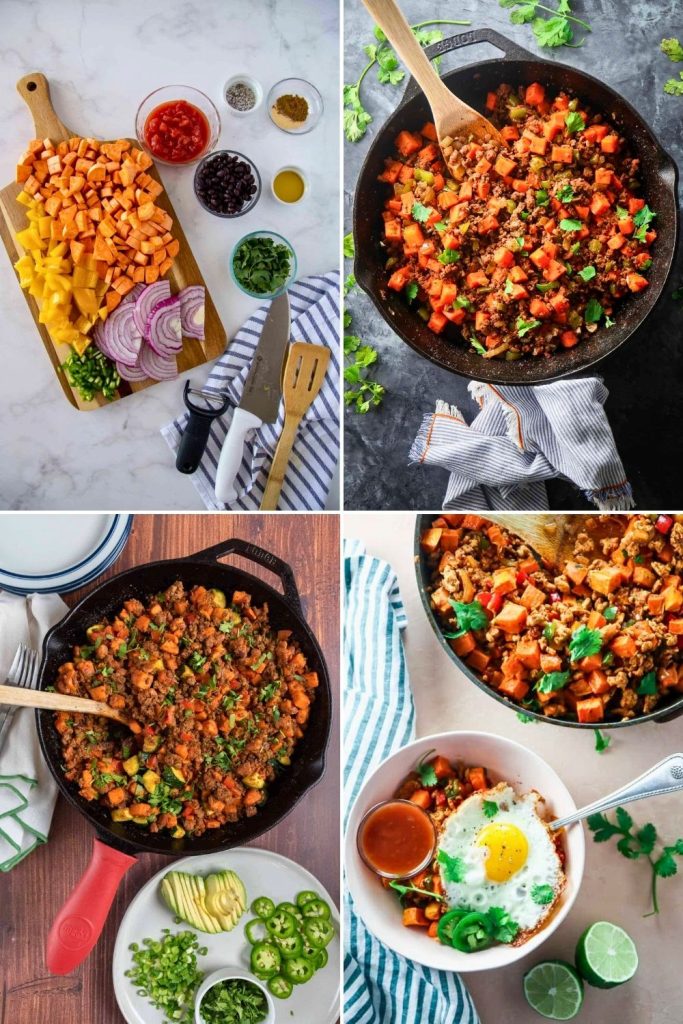
Cook each component in order so the sausage develops color, the onion softens, and the potatoes get enough direct contact with the hot pan.
Once everything is chopped and measured, the skillet method moves at an easy pace.
The steps keep the original technique and add clear visual cues for browned potatoes and eggs cooked to your preference.
Step 1: Prepping Your Potatoes Like a Pro
Start with the two potatoes that form the heart of the hash:
- 2 medium sweet potatoes
- 1 russet potato
Trim the potatoes and peel them if you prefer a smoother texture. Leaving well-scrubbed skins on adds an earthier bite.
Cut both potatoes into even ½-inch cubes so the sweet and white potato pieces cook at roughly the same speed.
🧡 Pro Tip: Sweet potatoes are denser and tougher to cut than russets, so check that your knife is sharp. A dull knife is not only frustrating but also risky.
Set the diced potatoes aside while you build the onion-and-pepper base.
Step 2: Add Onion and a Touch of Heat
Onion and a little jalapeño give the skillet its first layer of flavor.
- 1 yellow onion, chopped
- 1 jalapeño pepper, chopped (optional but recommended)
Heat avocado oil in a large skillet over medium heat, then add the chopped onion and jalapeño.
Cook until the onion turns translucent and begins to color. The pepper adds gentle heat that contrasts with the sweet potatoes.
For a milder version, omit the jalapeño or replace it with diced red bell pepper.
🌶️ Pro Tip: Want even more depth? Stir in a pinch of smoked paprika or chipotle powder while the onions cook.
Transfer the softened vegetables to a plate so they do not overcook while the remaining ingredients brown.
Step 3: Brown the Sausage for Big Flavor
Use the same skillet for the sausage so its browned bits season the potatoes later.
Add 1 pound breakfast sausage, break it into crumbles, and let portions sit against the pan long enough to form a browned crust.
Those caramelized bits on the skillet are called fond. Remove the cooked sausage with a slotted spoon but leave the rendered fat behind.
The savory drippings become part of the potato seasoning and add depth without another sauce.
💡 Pro Tip: Prefer turkey or chicken sausage? Go for it! Just add an extra drizzle of oil since they are leaner.
Step 4: Fry the Potatoes Until Golden and Crispy
Add the diced potatoes to the flavorful skillet and give them enough space to sear.
Drizzle in more avocado or olive oil only if the pan looks dry, then toss until the cubes are lightly coated.
Adjust the seasoning with the following:
- Salt
- Black pepper
- Garlic powder
- Onion powder
- Smoked paprika (optional but highly recommended)
Leave the potatoes undisturbed for several minutes at a time. Frequent stirring releases steam and prevents a crisp crust from forming.
🧄 Taste Booster: Stir in a teaspoon of roasted garlic base (like Better Than Bouillon). It’s concentrated umami goodness that instantly deepens taste.
Continue cooking until a fork enters the centers easily and several sides are deeply golden.
Step 5: Season and Build Layers of Flavor
Return the sausage, onion, and jalapeño to the skillet and fold gently to distribute them.
Add the remaining seasonings in stages, tasting as the ingredients warm together.
- Add a pinch of Italian seasoning for restrained herbal flavor.
- Finish with chopped parsley for color and freshness.
- A dash of smoked paprika or Cajun seasoning contributes color and a hint of heat.
At this point the skillet should smell savory and smoky, with a mild sweetness from the browned potatoes.
🧂 Taste Test Tip: Take a small bite now and adjust your seasonings. Don’t be afraid to tweak, that is what makes your dish yours.
Step 6: Add Cheese for the Ultimate Finish
Finish the hot mixture with cheese for a salty, creamy layer.
Sprinkle on freshly grated Parmesan, or substitute cheddar, Monterey Jack, or mozzarella if that is what you have.
As the cheese melts, it lightly binds the sausage and potato pieces without hiding their crisp surfaces.
🧡 Cheese tip: Grating from a block usually produces a smoother melt than packaged shreds coated with anti-caking powder.
Step 7: Create Egg Pockets (Optional but Highly Recommended)
Adding eggs turns the skillet from a hearty side into a complete one-pan breakfast.
Press 4 to 6 shallow wells into the hash with the back of a spoon and crack one egg into each opening.
Bake the skillet at 375°F (190°C) for 5 to 8 minutes, checking early if you prefer softer yolks.
- 5 minutes: runny yolks
- 7 minutes: medium-set
- 8+ minutes: fully cooked yolks
When the whites are set to your liking, finish with a little extra cheese and chopped parsley.
🍳 Variation Idea: If you prefer firm eggs, cook them scrambled and spoon them over the hash.
Step 8: The Final Touches
Remove the hot skillet carefully and let it stand for a minute before serving.
The eggs should sit between crisp potato cubes and savory sausage, with melted cheese across the top.
A scatter of parsley or sliced green onion adds fresh color and a clean onion note.
You eat with the eyes first, and this dish looks as good as it tastes.
How to Serve Sweet Potato Hash
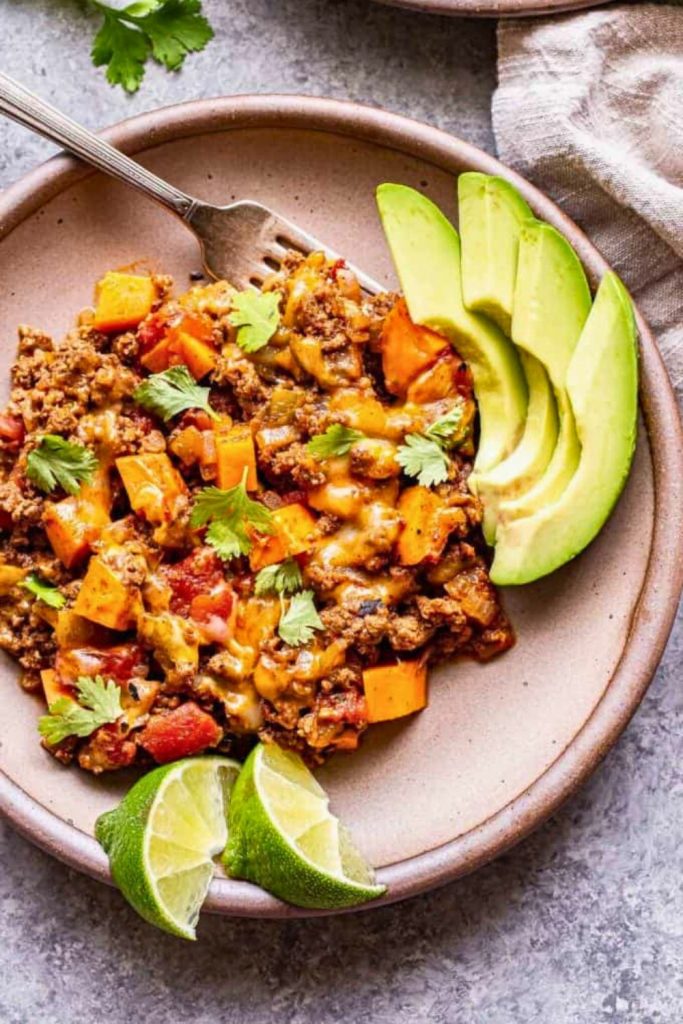
Serve the hash while the potato edges are still crisp and the eggs are warm.
It works equally well for a weekend brunch, a cozy breakfast, or a straightforward evening meal.
Bring the skillet to the table for casual family-style serving, or portion it onto plates with lighter sides.
Here are several simple serving ideas and combinations to help you make the most of this hearty dish.
1. Traditional Breakfast or Brunch
When you are serving this as a breakfast centerpiece, keep it traditional and comforting.
- Toast, biscuits, or English muffins are useful for catching a soft egg yolk.
- Stir in a side of fresh fruit salad or orange juice for a bright, refreshing balance.
- For a brunch spread, offer alongside bacon, sausage links, or avocado toast.
Serving in the cast-iron pan creates an informal weekend-brunch presentation.
2. Lighter Lunch
A smaller portion also works well as a midday meal.
- Balance a scoop of hash with green salad and lemon vinaigrette.
- Stir in a dollop of Greek yogurt or sliced avocado for creaminess.
- Use hot sauce or sriracha mayonnaise when additional heat is desired.
The sweet potatoes and sausage make it filling enough, but the veggies maintain it light and wholesome.
3. Cold-Weather Dinner
Sweet Potato Hash is not just breakfast food; it is comfort food.
- Offer it as a main course with a side of roasted veggies or steamed broccoli.
- For dinner, add tomato soup, butternut-squash soup, or another warm vegetable side.
- Stir in a sprinkle of additional cheese or bake it with eggs on top for a one-pan dinner masterpiece.
Refrigerated leftovers warm well and can become an easy breakfast-for-dinner the following day.
Variations to Try
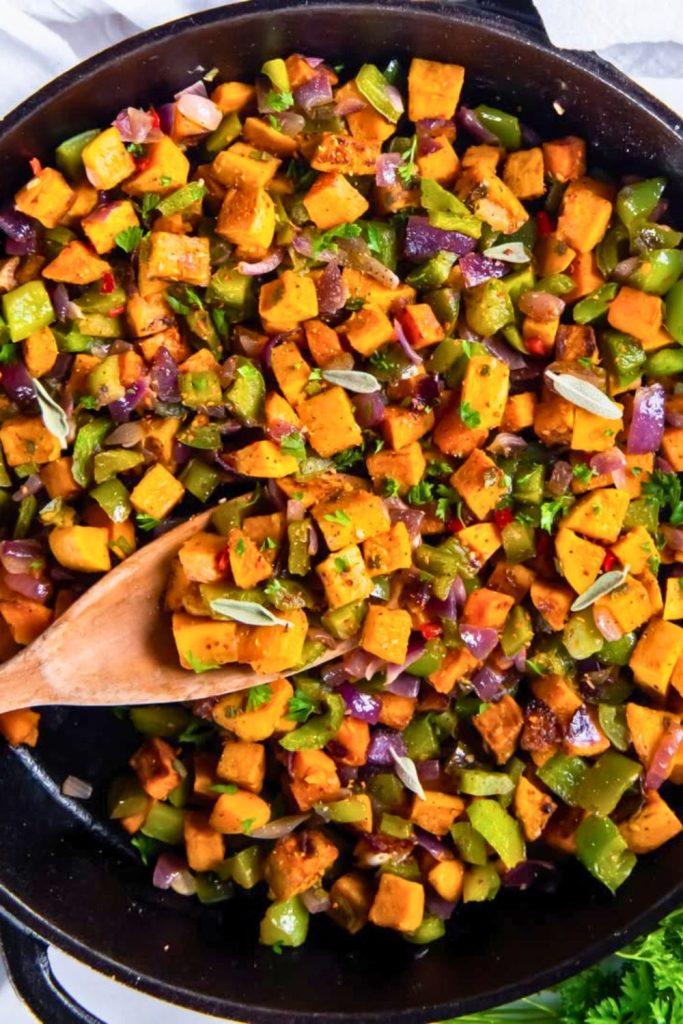
The base hash is easy to adapt by changing the protein, vegetables, cheese, or spice blend.
Use the guide below to keep the cooking method consistent while adjusting the flavor.
| Variation | Change | Result |
|---|---|---|
| Vegetarian | Omit sausage and add black beans, mushrooms, or spinach. | Hearty plant-based hash. |
| Southwest | Add corn, bell pepper, chili powder, and chipotle. | Smoky and spicy; good with avocado. |
| Bacon cheddar | Replace sausage with bacon and add cheddar. | Classic rich breakfast flavor. |
| Mediterranean | Add feta, tomatoes, olives, and spinach. | Tangy and fresh. |
| Fall harvest | Add diced apple, cinnamon, and nutmeg. | Sweet-savory autumn variation. |
| Tex-Mex | Use chorizo, cumin, and queso fresco. | Bold and warmly spiced. |
| Lean vegetable | Use turkey sausage with zucchini, kale, or broccoli. | Lighter with extra vegetables. |
| Cheesy garlic | Increase garlic and use mozzarella or Monterey Jack. | Extra creamy and savory. |
Pro Tips for Perfect Hash Every Time
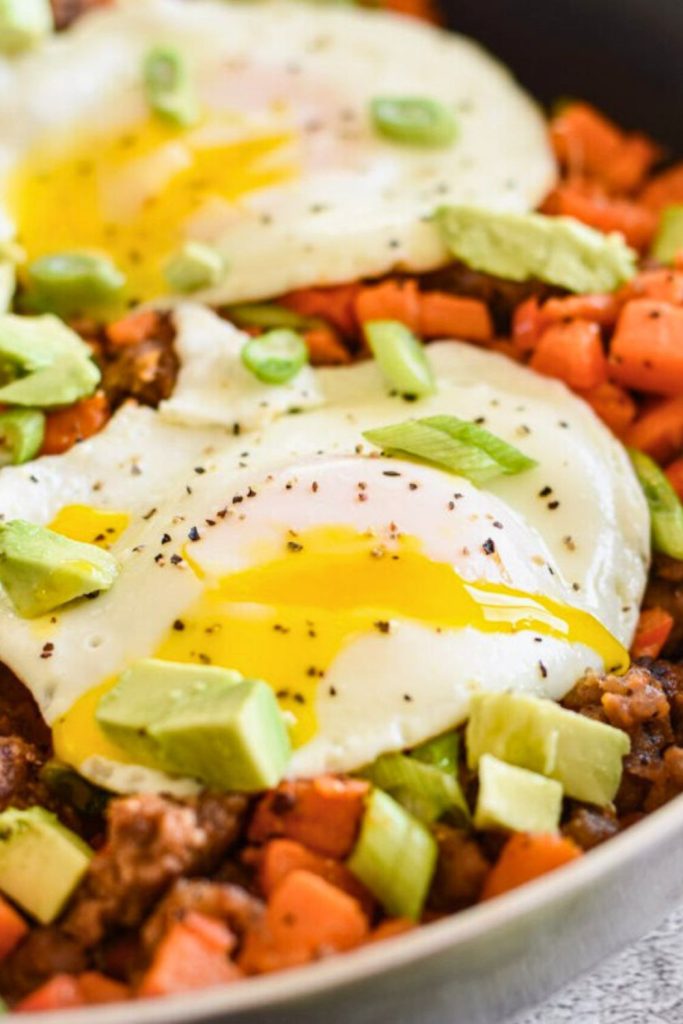
Reliable hash comes down to evenly cut potatoes, a hot spacious pan, gradual seasoning, and enough undisturbed cooking time.
1. Cut the Potatoes Uniformly
Equal-size cubes are essential; mixed sizes leave some pieces overcooked while others remain firm.
- Cut the potatoes into roughly 1/2-inch cubes.
- When you are mixing sweet and russet potatoes, cut the sweet potatoes slightly smaller since they take longer to soften.
2. Choose a Cast Iron Skillet for the Most Reliable Crisp
Cast iron holds heat evenly, giving your potatoes a golden, crisp exterior. If you do not have one, use a heavy-bottomed skillet. Avoid overcrowding, as it causes the potatoes to steam instead of sear.
When you are making a large batch, cook the potatoes in two batches for maximum crispiness.
3. Build Seasoning Gradually
Do not reserve all the salt and spices for the last minute.
- Stir in a light layer of seasoning when cooking the sausage.
- Season again while the potatoes brown.
- Taste after combining everything and make the final adjustment.
Layering the flavors ensures that each serving is evenly balanced, neither bland nor overly salty.
4. Give the Potatoes Time to Brown
Crispy potatoes need time. Allow them sit still for several minutes before stirring. Resist the urge to flip too often, as browning occurs with contact to heat, and constant movement prevents that golden crust from forming.
⏰ Tip: Cook in intervals of 3–5 minutes per side, stirring carefully only when needed.
Final Thoughts
Sweet potato hash is a colorful one-pan meal with protein, vegetables, crisp edges, and optional baked eggs.
Browning the ingredients in stages creates more flavor than cooking everything together from the beginning.
Serve it hot for breakfast, brunch, or dinner, with the eggs cooked exactly as your table prefers.
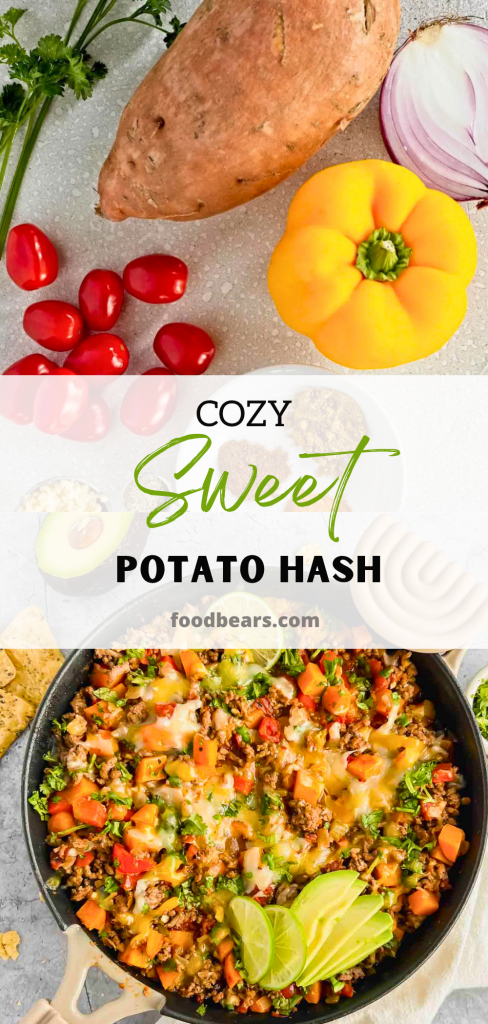
Sweet Potato Hash
More Cozy Recipes You’ll Love
- 🥣 Ham and Potato Soup: A creamy, hearty soup that makes useful use of cooked ham.
- 🥔 Homemade Potato Chips: Thin air-fried chips with a crisp texture and customizable seasoning.
- 🍲 Hamburger Potato Casserole: Layers of potatoes, beef, and cheese baked for a family dinner.

Dana Brooks is a home-cooking writer at Feastbears, where she shares easy family recipes, cozy dinners, quick desserts, and beginner-friendly kitchen tips. Her goal is to make everyday cooking feel simple, warm, and enjoyable for busy home cooks.